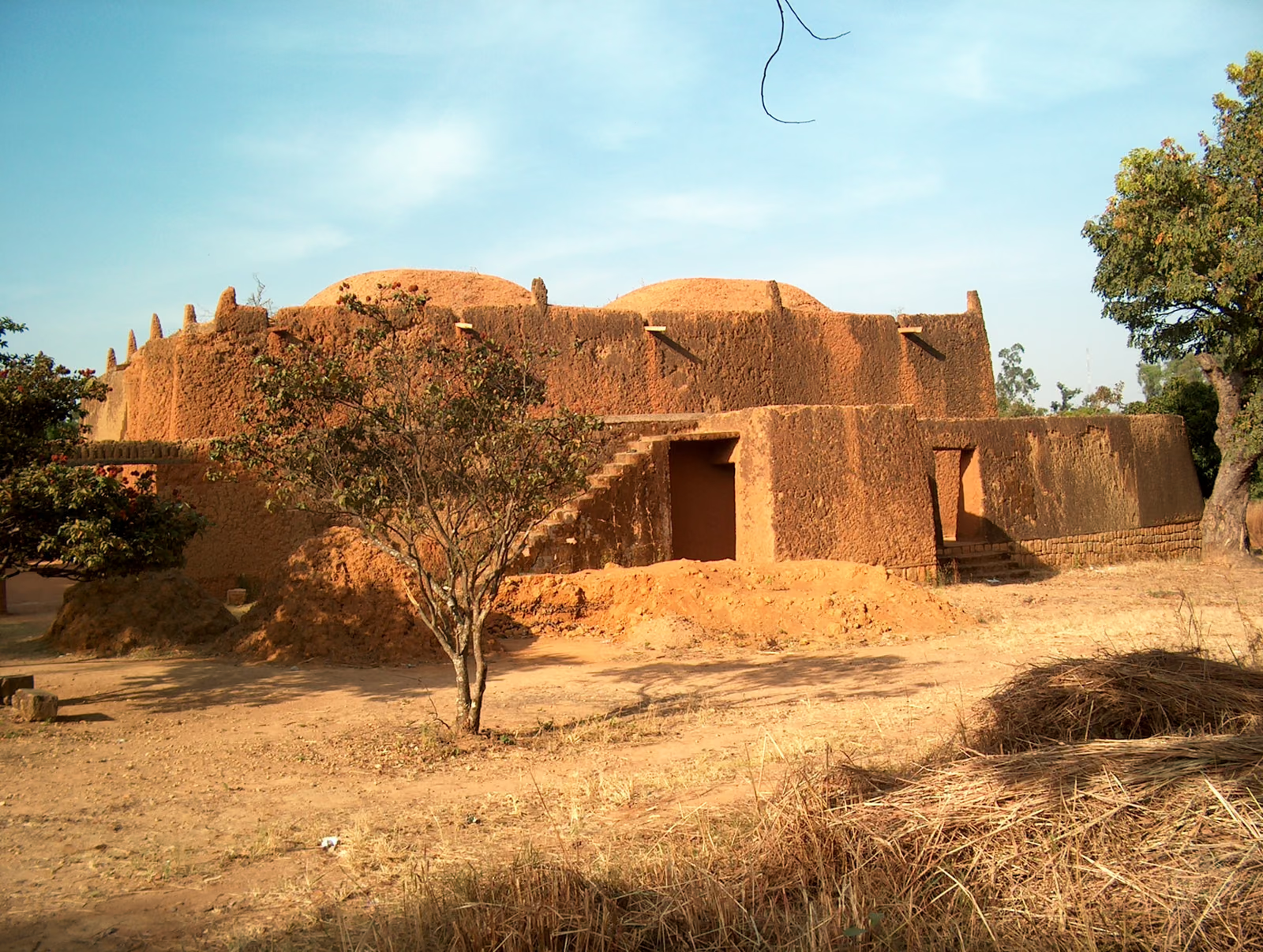
The Friday Mosque of Zaria is the surviving masterpiece of Hausa earthen building and the earliest West African monument that can be given confidently to a named individual. It was raised in the mid-1830s, during the reign of Sarkin Zazzau Abd al-Karim, by the master builder Mallam Mikhaila, known by the title Babban Gwani, 'the great expert'. Its interior is the argument: mud vaults spanning wide rooms on arched ribs of azara palm, a structural idea taken from the bent-pole frames of Fulani tents and made permanent for an aristocracy that had recently stopped being nomadic. Mikhaila is said to have worked without drawings, improvising on site, and to have left his handprint above one of the arches. The mosque has stood for nearly two centuries and remains in use, though a section of roof collapsed in 2023.
The mosque was built with enslaved labour. Accounts of Mikhaila's practice describe a workforce of roughly a hundred labourers, most of them enslaved, who gathered and prepared mud and thatch by day while he built at night. He worked for the emirates established after the Sokoto jihad, which sought monuments that would express the new Islamic order, and slavery was integral to their economy. Mikhaila's own end came from the same patronage relation: the Emir of Birnin Gwari commissioned a mosque from him meant to surpass the one at Zaria, and had him executed so that it could never be equalled. The account is transmitted in the Hausa building tradition and recorded in the modern literature on his career; it is not independently documented, and is reported here as the tradition reports it.
No Wikidata item · Commons: File:Zaria Friday Mosque.jpg · Photo: DipoTayo · Licence: CC BY-SA 4.0