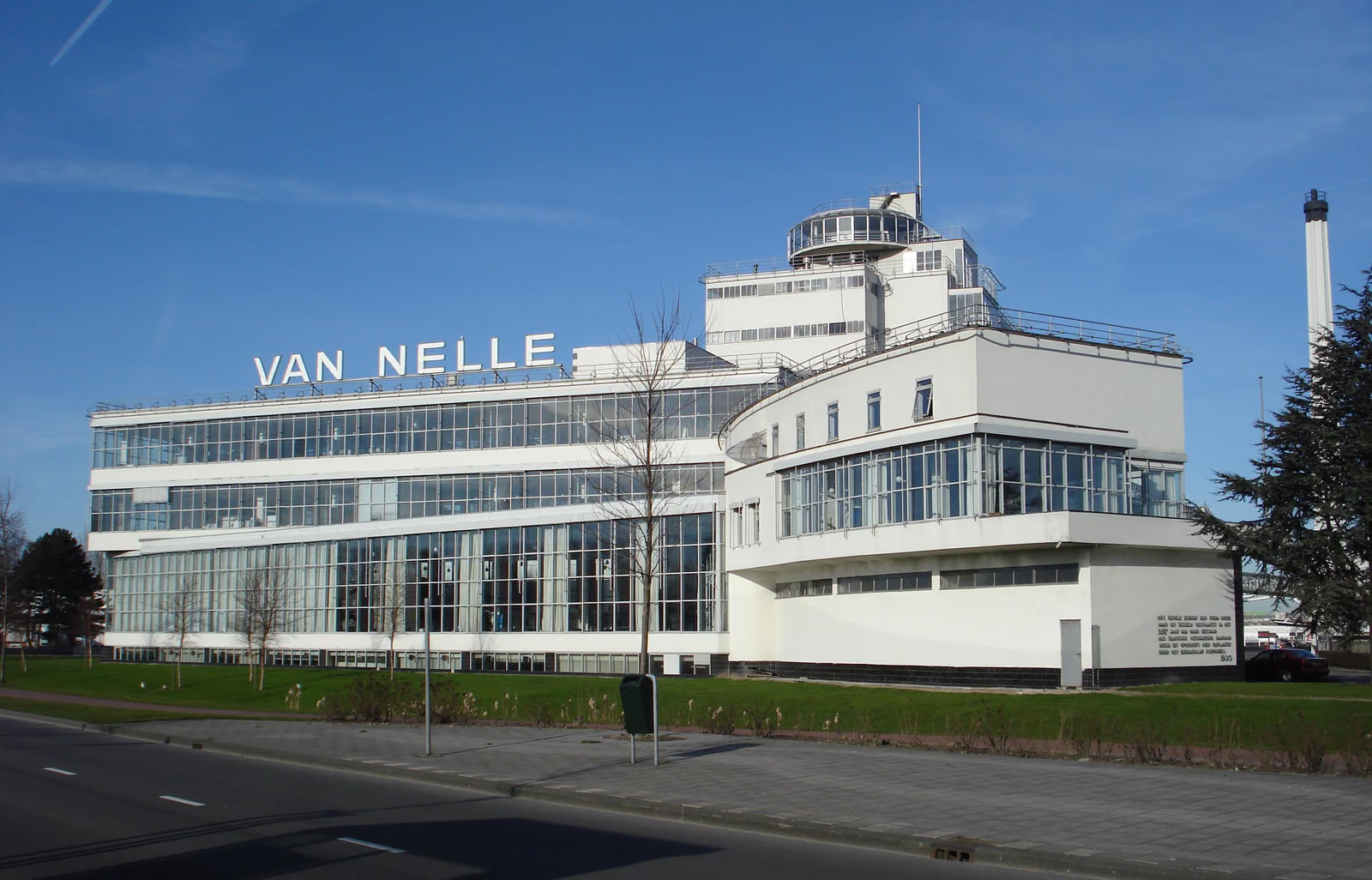
Van Nelle is a factory built as an argument that industrial work deserves daylight. Three production blocks of decreasing height line an internal road; each is a concrete frame whose columns stand back from the edge, so the floor slabs cantilever and the entire perimeter can be glazed as a continuous hung skin — claimed as the first industrially prefabricated curtain wall. Enclosed conveyor bridges leap diagonally across the space between the blocks and the despatch building, turning the movement of goods into the only ornament on the site. UNESCO credits the result to a purpose agreed in common between the entrepreneur — the co-owner Cees van der Leeuw — and his architects and engineers: daylight used to make working conditions pleasant. Le Corbusier called it the most beautiful spectacle of the modern age in 1932. Production stopped in 1996 and UNESCO inscribed the site in 2014.
The goods the building was designed around came out of colonial agriculture. UNESCO's own Statement of Outstanding Universal Value credits the factory with bearing witness to "the long port-related economic tradition of the Netherlands, in the processing of imported food products (coffee, tea and tobacco) and their marketing in Europe." In the 1920s and 1930s the Dutch trade in all three ran overwhelmingly through the Netherlands East Indies, whose plantation economy had been built on the compulsory-cultivation and indenture systems of the nineteenth century. The architecture of the daylit factory floor and the conditions on the estates that supplied it belong to the same enterprise, and the World Heritage listing is for the Rotterdam end of it.
Wikidata Q2328849 · Commons: File:Rotterdam van nelle fabriek.jpg · Photo: F.Eveleens · Licence: CC BY 3.0