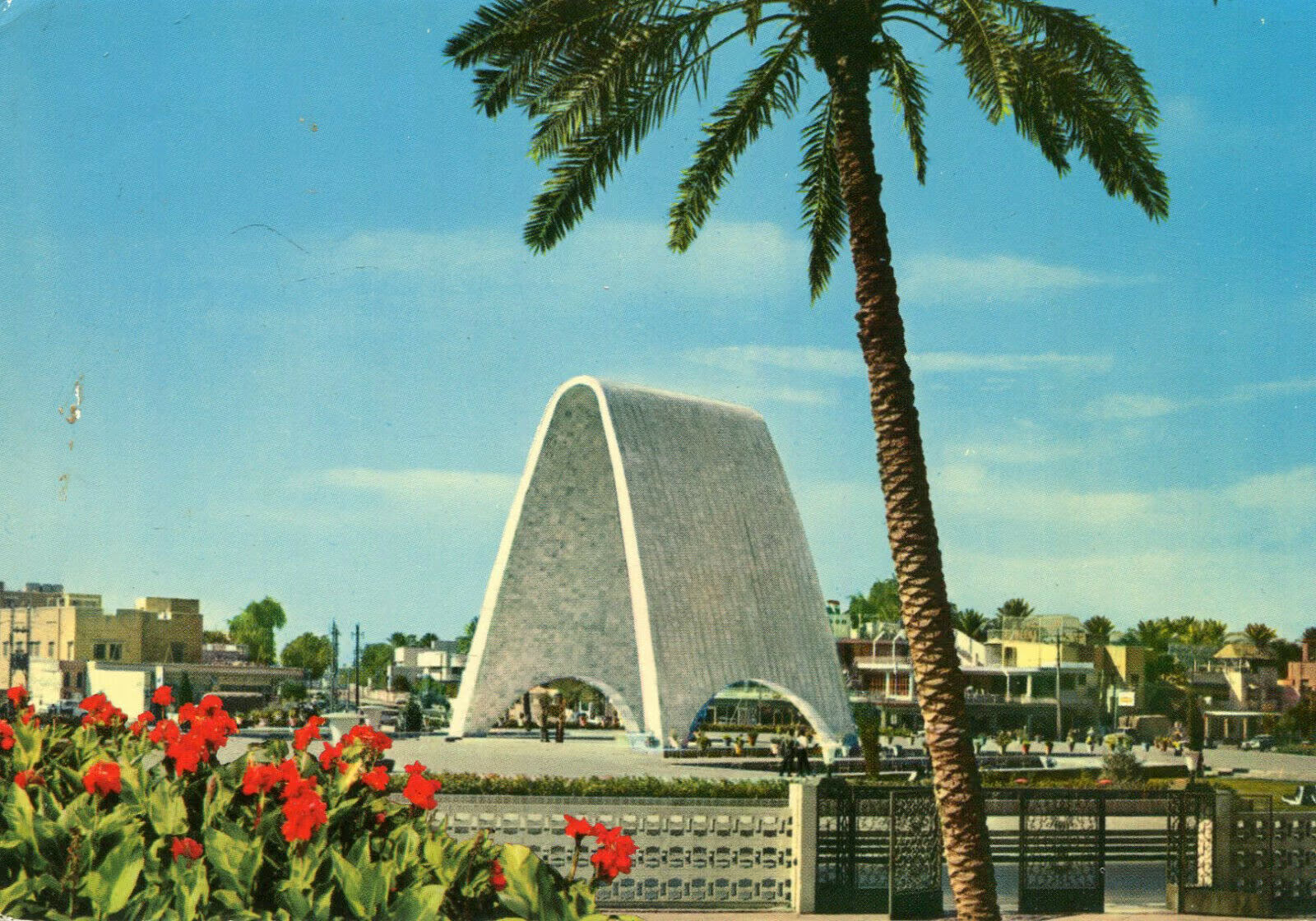
The Iraqi monarchy fell in July 1958; within a year the new republic had commissioned a monument to its unknown soldier, and Rifat Chadirji, then thirty-two, built it. He took the pointed arch of Iraqi building and pulled it out of the wall into a free-standing concrete shell, so that the oldest form in the region's architecture arrived as a piece of mid-century engineering with nothing behind it but sky. It stood on a raised circular platform in a central Baghdad square, an open room with no walls, and it became the image of what a republican Iraq thought it looked like. It lasted twenty-three years. This photograph comes from a 1960s postcard issued by the Iraqi postal service, which is now among the few free-licensed records of the building.
Chadirji's monument was removed in 1982 on the order of Saddam Hussein, two years into the Iran–Iraq War, and its commemorative function was transferred to a new and much larger Monument to the Unknown Soldier built between 1979 and 1982 in the Grand Festivities Square, designed by the Italian architect Marcello D'Olivo from a concept by the Iraqi sculptor Khaled al-Rahal. Chadirji, who had been imprisoned by the same government from 1978 to 1980 and was working as its consultant on Baghdad city planning when the demolition took place, was photographed at the site with the contractor who removed it. The square where it stood, Firdos Square, later carried a statue of Saddam Hussein, pulled down in April 2003.
Wikidata Q108173951 · Commons: File:Monument to the Unknown Soldier, Baghdad.jpg · Photo: Iraqi Post · Licence: PD