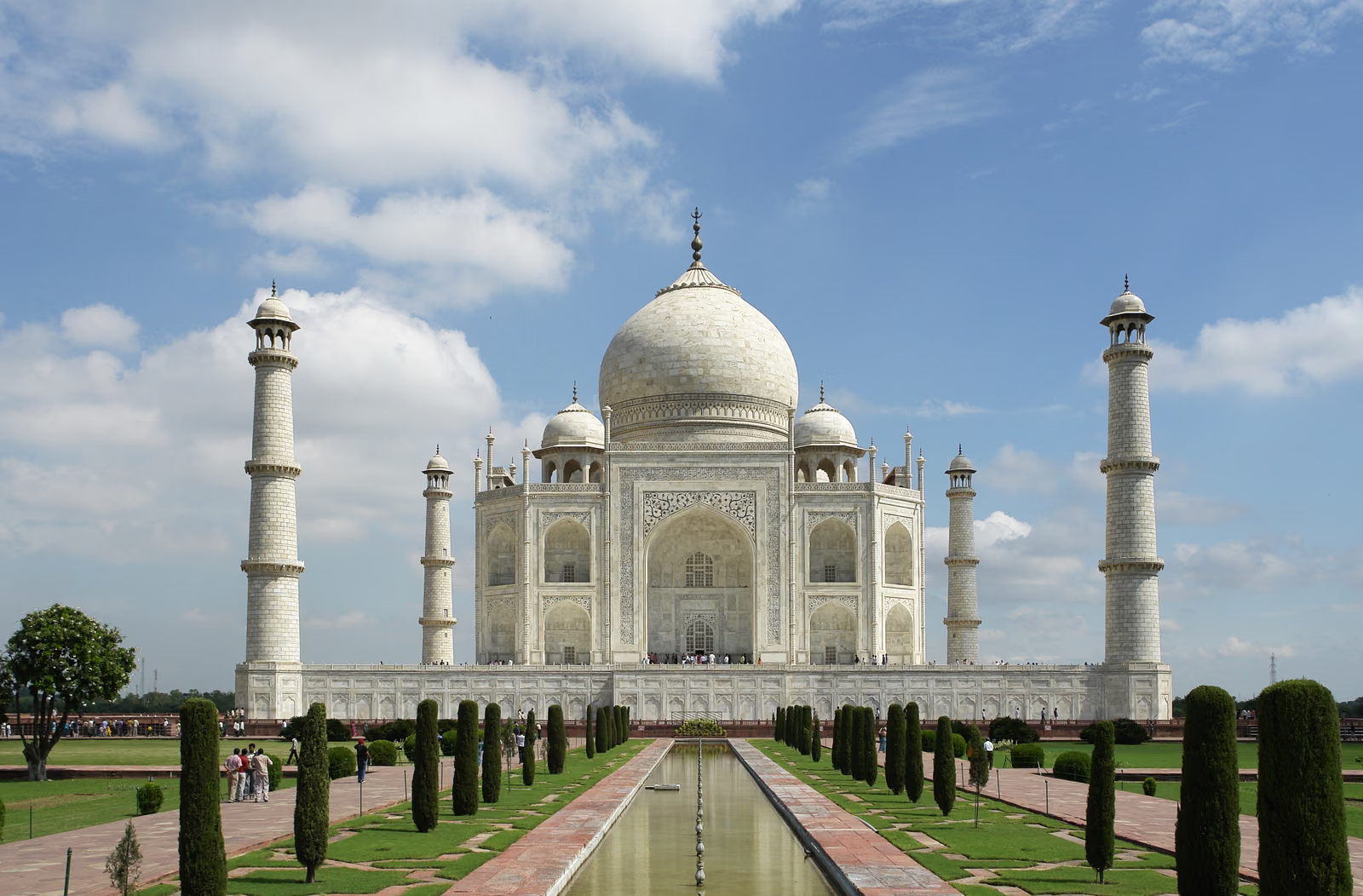
Everything about the Taj Mahal is an argument about symmetry, and the one thing that breaks it is the point. The tomb sits not in the centre of its garden but at the far end, so the whole charbagh becomes a foreground; the plinth lifts it clear of the ground so that the dome is read against sky rather than trees; the four minarets lean fractionally outward so that in perspective they read as vertical. Inside the chamfered-square chamber, the cenotaph of Mumtaz Mahal is exactly on axis, and Shah Jahan’s — added later, unplanned — is set beside it, the only asymmetry in the building. The marble is inlaid with pietra dura in jasper, jade and lapis, and the calligraphic bands around the great iwan are graded in size so they appear uniform from below. Attribution to Ustad Ahmad Lahauri rests on the Persian writings of his son; it is the strongest name attached and not a certainty.
Wikidata Q9141 · Commons: Taj Mahal (Edited).jpeg · Photo: Yann; edited by Jim Carter · Licence: CC BY-SA 4.0