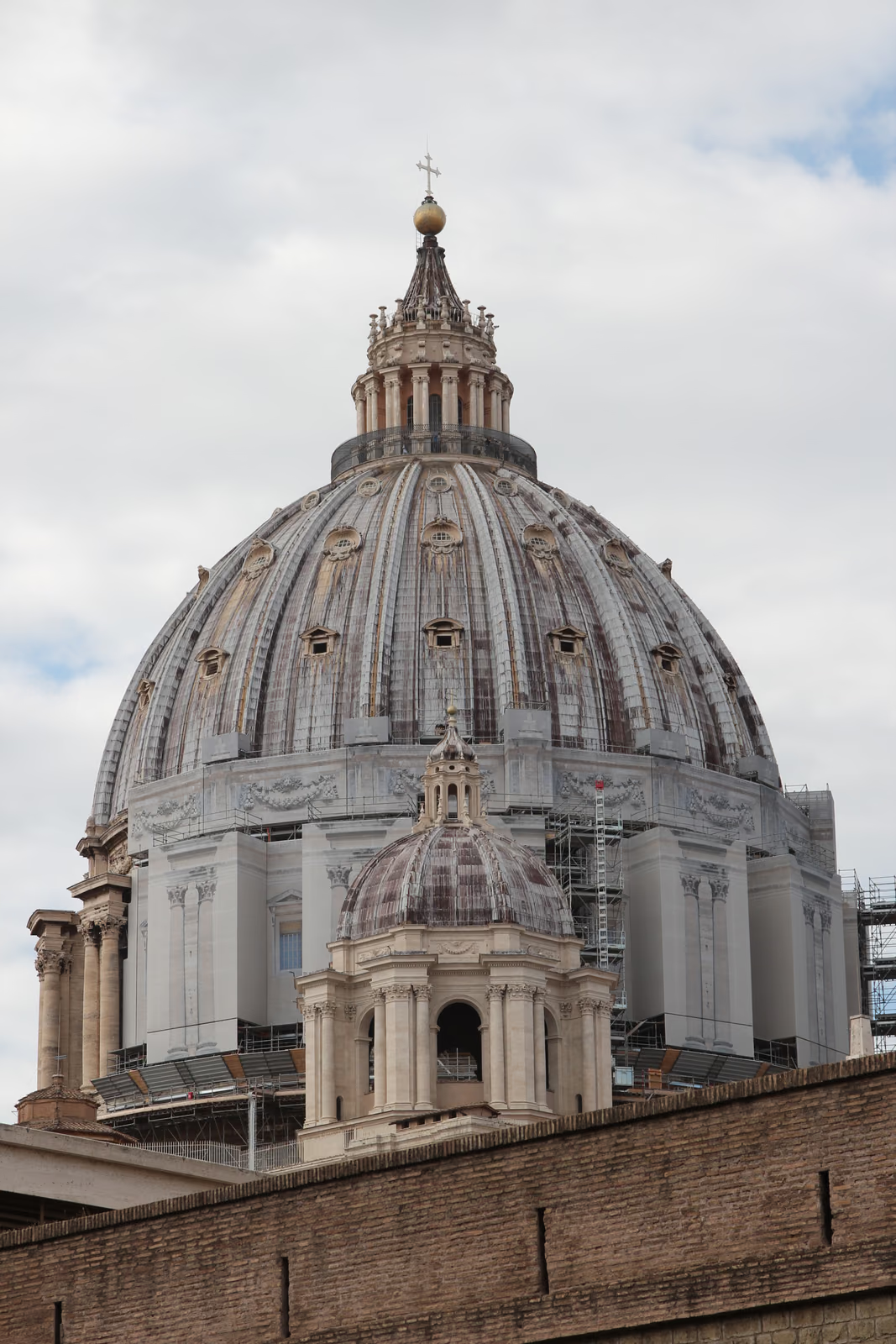
When Pope Paul III appointed Michelangelo chief architect of St Peter's in 1547, at seventy-one, he inherited a rebuilding already a generation old and abandoned Antonio da Sangallo the Younger's model wholesale, returning to Bramante's original centralized Greek-cross plan and designing a single crossing dome to crown it: a double shell of brick and stone, sixteen ribs pairing an inner structural vault with an outer weathering skin, raised on a drum ringed by paired Corinthian columns and sixteen tall windows. Michelangelo left only a wooden model and drawings at his death in 1564; Giacomo della Porta, entrusted with construction, raised the profile from Michelangelo's flatter hemisphere to a taller, more pointed curve before completing it in 1590, a change scholars still debate as improvement or departure. The long nave and the travertine facade seen from the piazza are not this design at all: Carlo Maderno added them between 1607 and 1614, extending the plan and burying Michelangelo's centralized silhouette from ground level. Only from a distance, or from the Vatican gardens, does the dome read as his.
Wikidata Q12512 · Commons: File:Saint Peter's Basilica Dome 2020 P01.jpg · Photo: Fallaner · Licence: CC BY-SA 4.0