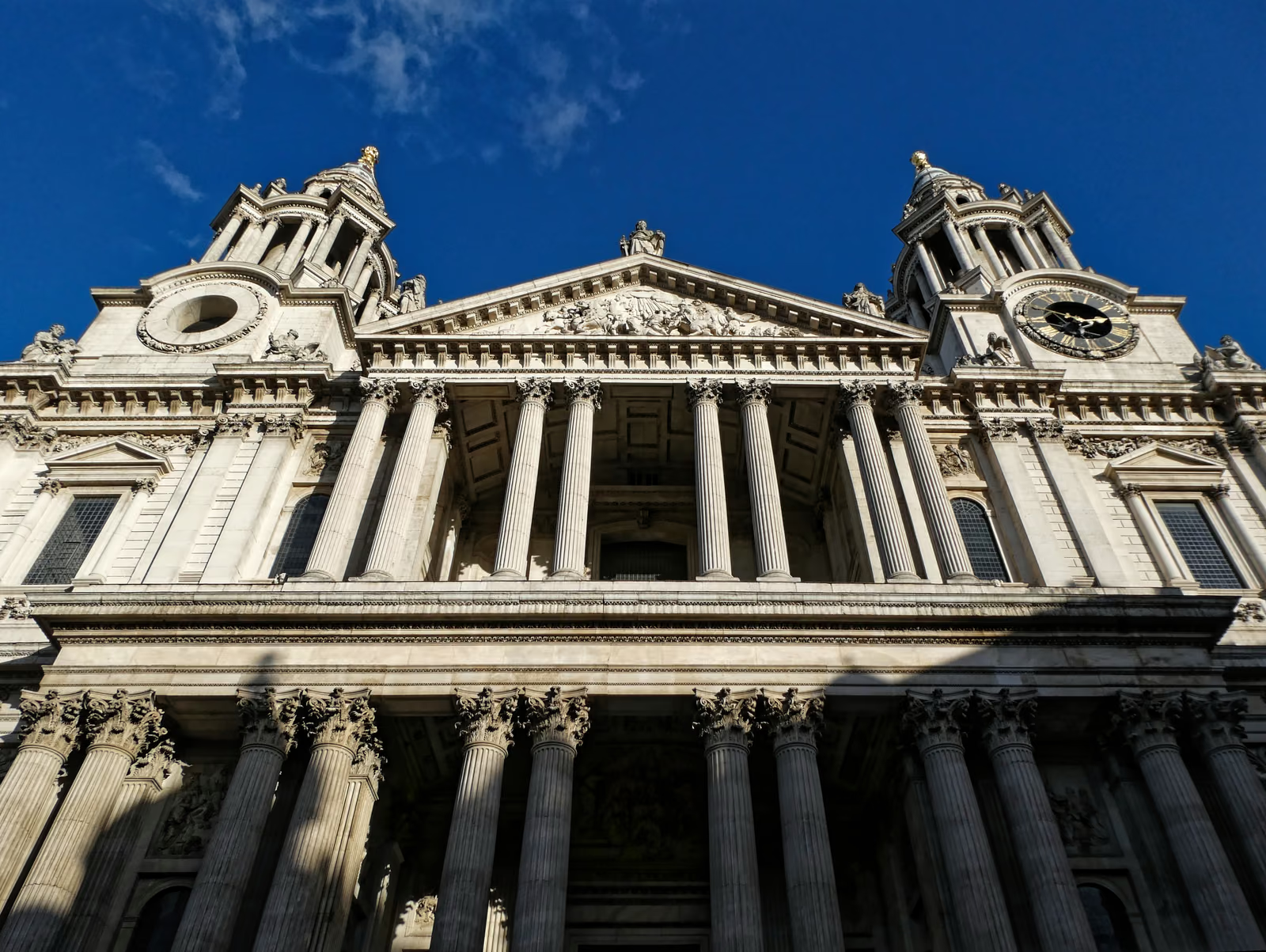
Old St Paul's burned in the Great Fire of 1666, and replacing it occupied Wren for the rest of his working life. The first stone was laid in June 1675; his son set the last stone of the lantern in October 1708; Parliament declared the cathedral complete on Christmas Day 1711. The west front seen here is the part he wrestled with hardest. He had to tie a high nave to lower aisles and work two towers into the composition, and his answer was a portico rising through two storeys on paired columns, the lower stage as wide as the aisles and the upper defining the nave, flanked by clock towers whose stacked drums and paired Corinthian columns are the most baroque thing he ever built. Francis Bird carved the pediment relief of the Conversion of St Paul. Behind the façade the plan stays stubbornly medieval — long nave, deep transepts, a defined clerestory — while the dome is pure structural reasoning, three shells doing three different jobs. The building took two direct hits in the Blitz and survived, becoming in the photographs of December 1940 the image of a city refusing to fall.
Wikidata Q173882 · Commons: St Paul's Cathedral West Front City of London England 01.jpg · Photo: Acabashi · Licence: CC BY-SA 4.0