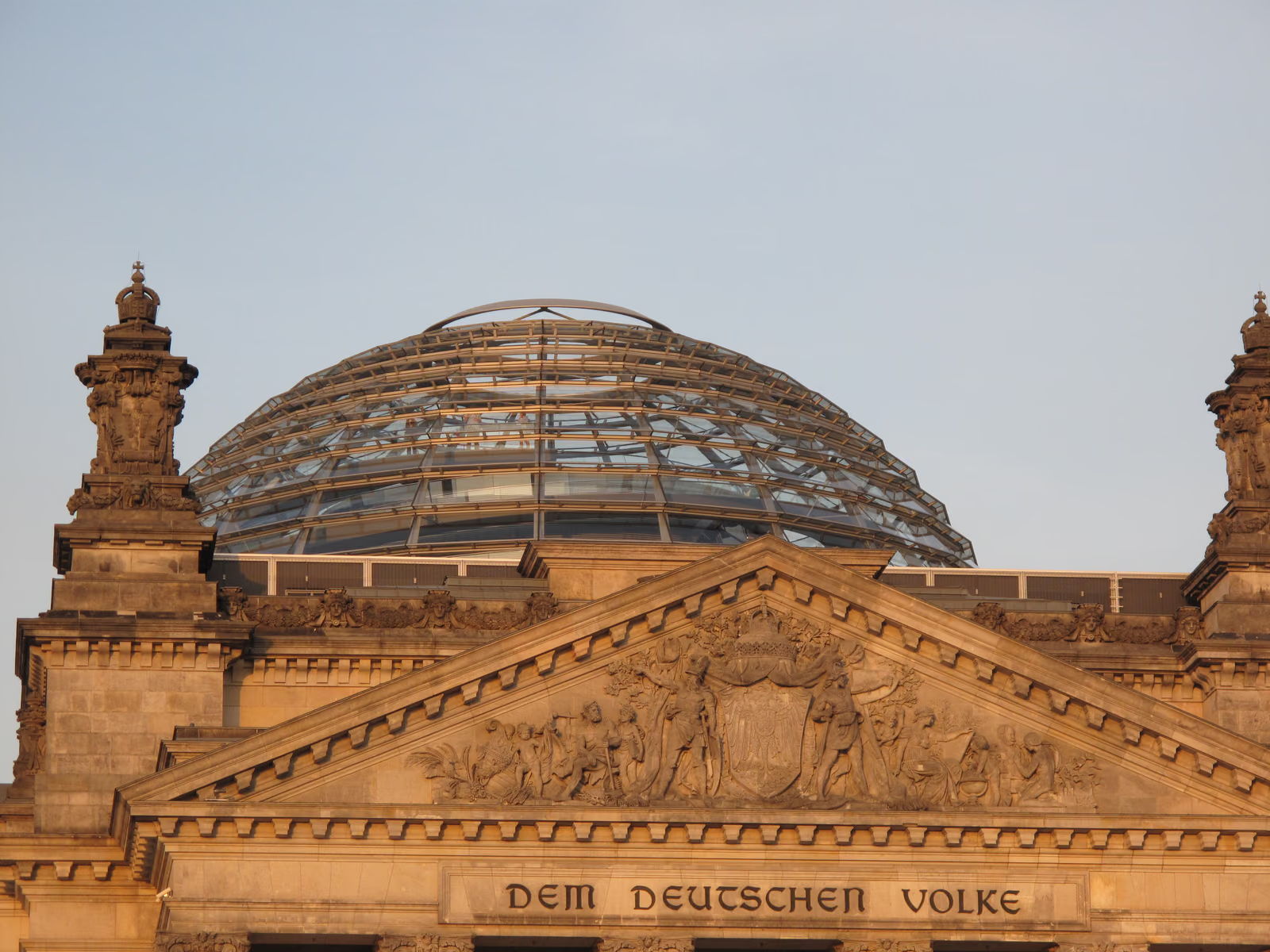
Foster's practice won the international competition to rebuild the Reichstag in 1993, two years after the reunified German parliament voted to return to Berlin from Bonn, and the brief asked for both a working Bundestag chamber and a public symbol of change. The original 1894 dome, already gutted by the 1933 fire and further ruined in 1945, had been removed entirely in the 1950s; Foster's replacement is a fully transparent steel-and-glass drum holding a mirrored, funnel-shaped cone at its centre. The cone bounces daylight down into the debating chamber below while doubling as an exhaust duct for the ventilation system, and a motorised shade tracks the sun to cut glare and heat gain. Two ramps spiral up the inside of the glass in a double helix, letting visitors climb to an open-air platform directly above the chamber roof and look straight down on the elected members meeting beneath their feet — a literal reversal of the older arrangement, in which the public sat below, or outside, power. It opened in 1999 and has drawn queues of visitors ever since.
The design is explicitly political: a transparent public dome sitting directly above the chamber where the Bundestag meets was conceived to dramatise the 1949 Basic Law's principle that sovereignty rests with the people, in deliberate contrast to the opaque, since-demolished 1894 dome under which the Nazi-era parliament last sat before the 1933 fire. Commentators and Foster himself have described the arrangement — visitors literally looking down on their elected representatives — as an architectural statement about accountable government after Nazism and division.
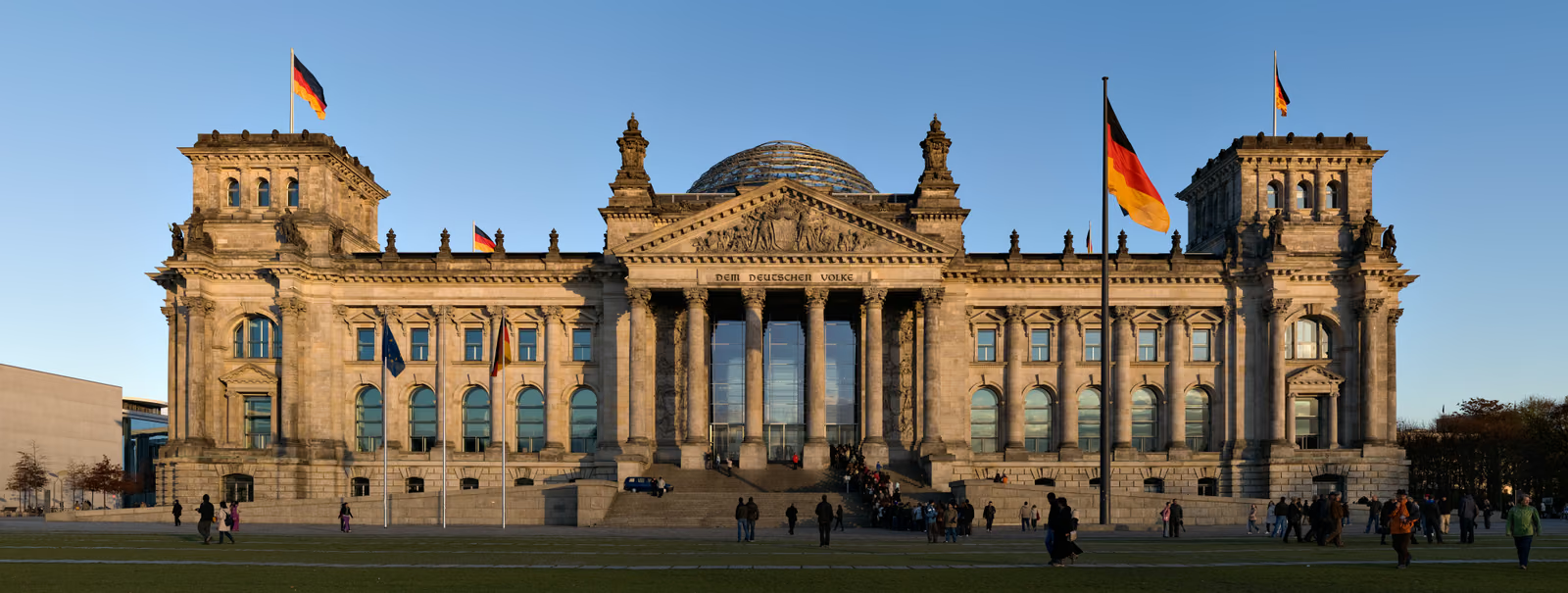
Wikidata Q4809837 · Commons: Glaskuppel des Reichstagsgebäude Deutscher Bundestag Berlin.JPG · Photo: Schlaier · Licence: PD