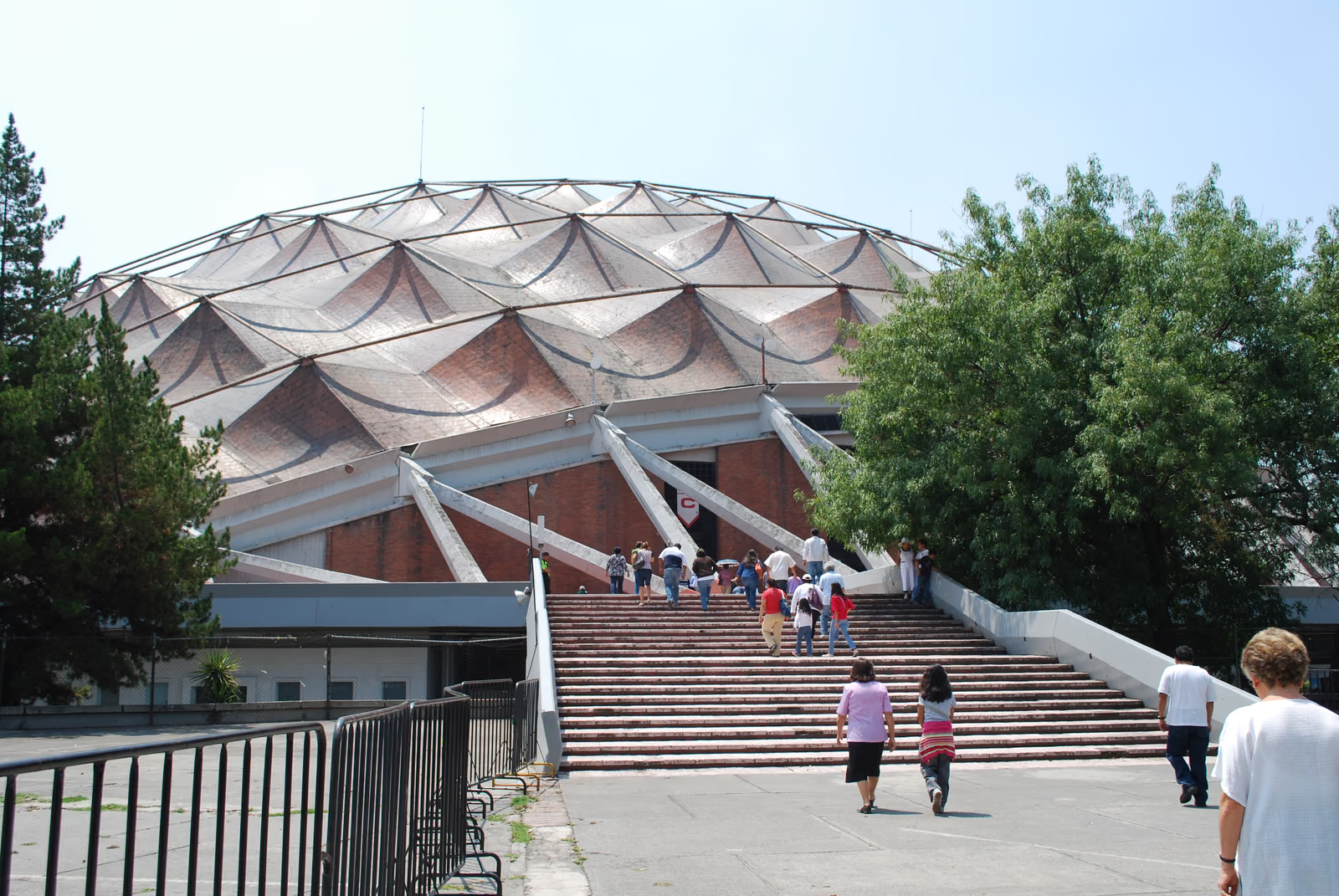
Construction ran from 15 October 1966 to September 1968, 714 days with Álvaro Sánchez as resident engineer, and the design was wind- and earthquake-tested before a single pier went in. Candela worked here with Antonio Peyrí and Enrique Castañeda Tamborrel, and with Nervi's Roman sports halls of 1960 clearly in view, but the solution is his own: the same hyperbolic paraboloid he had spent twenty years casting in thin concrete, this time built in tubular aluminium and skinned in copper alloy over timber, because a shell that size in concrete would have been unbuildable. The result is a faceted dome that reads as a tent pegged to the ground, its diamond panels catching the sun so variously that an American magazine called it the palace of a thousand suns before it was finished. Mathias Goeritz's sculpture "Osa Mayor" stands outside.
The building was inaugurated by President Gustavo Díaz Ordaz on 13 September 1968 and opened its programme on 8 October with Maurice Béjart's company, part of the Cultural Olympiad. Six days before that performance, on 2 October 1968, security forces fired on a student demonstration in the Plaza de las Tres Culturas at Tlatelolco, ten days before the Games opened. Casualty figures remain contested: the government of the day reported a few dozen deaths, the researcher Kate Doyle has documented 44, and estimates of 300 to 400 are widely cited; more than a thousand were injured and 1,345 arrested. President Zedillo authorised a congressional investigation in 1998, Vicente Fox released classified files in 2001 and appointed a special prosecutor in 2002, and former president Luis Echeverría was arrested on genocide charges in 2006; the charges were dismissed in March 2009 for insufficient evidence. Mexico has marked 2 October as a day of national mourning since 2009.
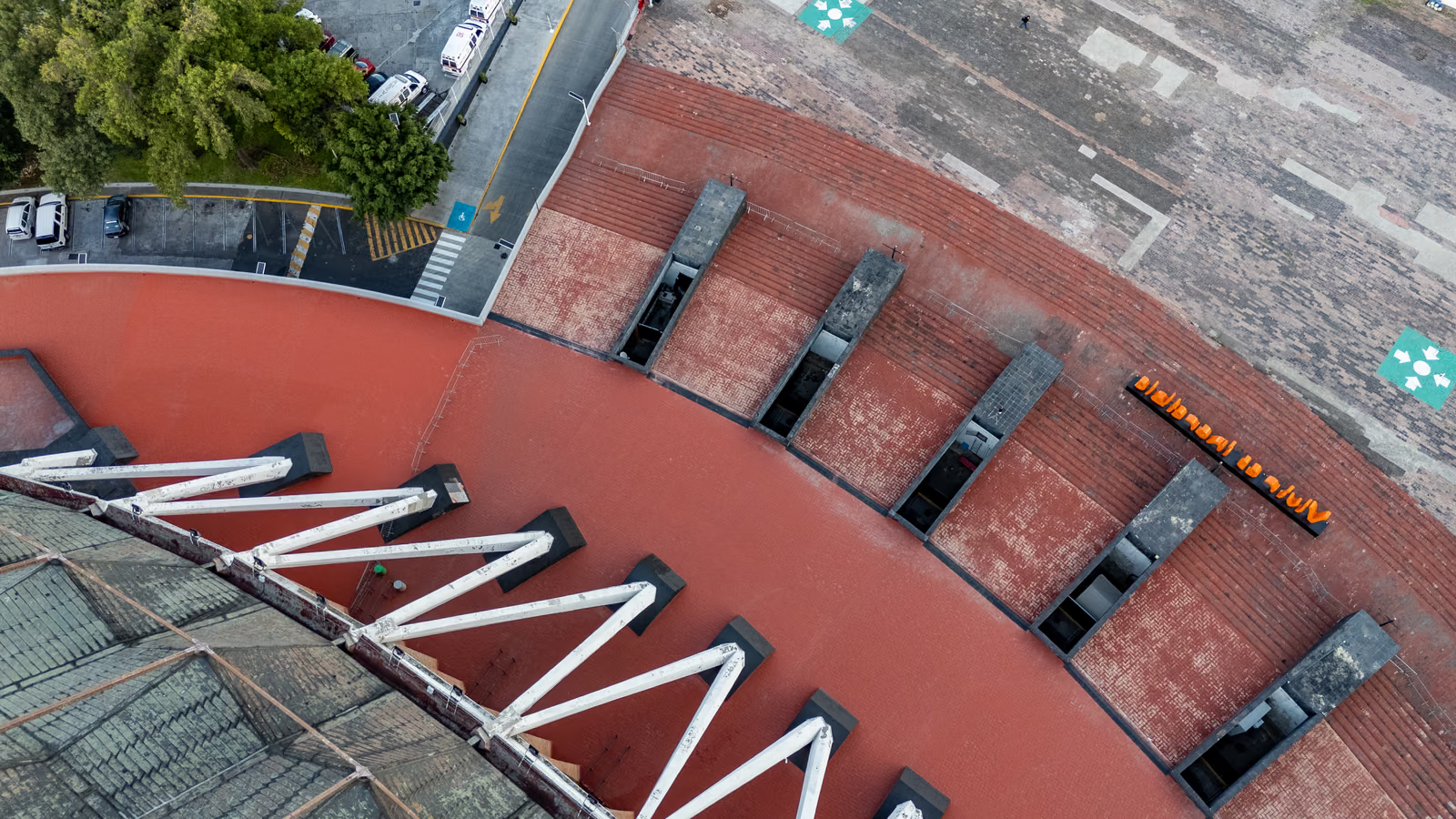
Wikidata Q301937 · Commons: File:PalacioDeportesMex.JPG · Photo: AlejandroLinaresGarcia · Licence: CC BY-SA 4.0