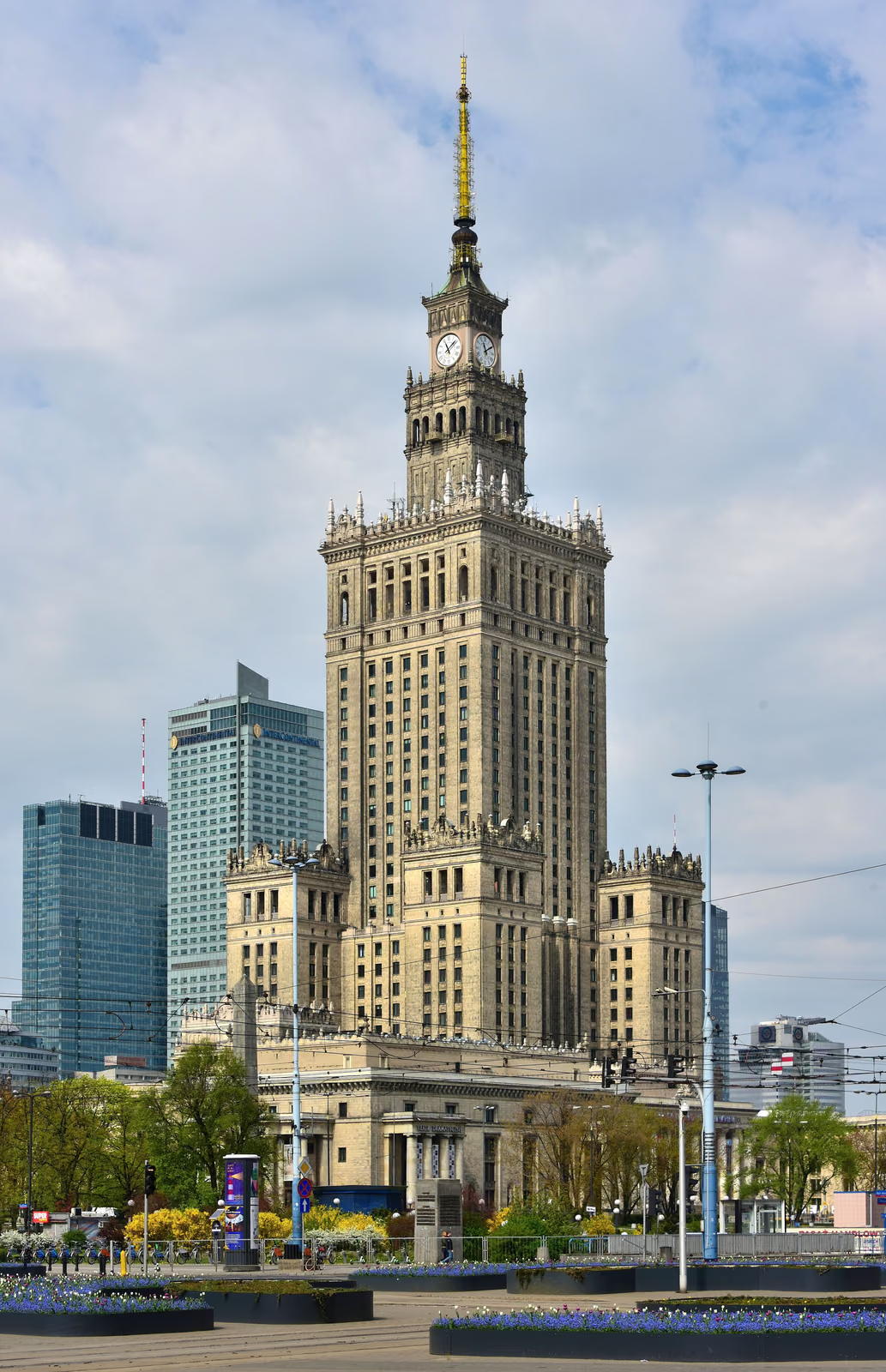
Stalin offered the tower before Poland asked for one: in 1951 the Soviet Union proposed a "gift of the Soviet people to the Polish nation," and Lev Rudnev, chief architect of Moscow State University's own tower, was sent to design it. Ground broke in May 1952, raised by an estimated 3,500 to 5,000 imported Soviet workers alongside some 4,000 Polish ones, on a site cleared in the city centre. Rudnev set a steel skeleton over 42 floors, clad in sandstone-toned ceramic tile made in the Urals and dressed at the base and in its reliefs with limestone, sandstone, granite and marble, its silhouette a tiered form climbing through set-backs to a spire reaching 237 metres — modelled on the Manhattan skyscrapers he had studied, following Stalin's instruction that the gift still read as built "in the Polish style." It opened on 22 July 1955, the state's national holiday, dedicated to Stalin by name on its colonnade and in its lobby; the dedication was revoked during the de-Stalinisation that followed 1956. Warsaw inherited a landmark it could neither demolish nor disown, and gradually filled its floors with theatres, museums, a cinema, a swimming pool, offices and the city council chamber.
The palace's dedication to Stalin, inscribed on its colonnade and in its lobby at the 1955 opening, made explicit what its design already argued: that Warsaw's skyline now answered to Moscow. The tower arrived as an unrequested "gift," built at Soviet initiative rather than Polish request, and was widely resented in Poland as a monument to Soviet political domination even while its theatres, museums, cinema and public halls were put to genuine civic use from the start. The dedication to Stalin was formally revoked during the de-Stalinisation that followed 1956, his name removed from the colonnade, lobby and a sculptural group. The building's fate has stayed politically contested since: demolition has been proposed by nationalist and anti-communist voices at various points after Poland's 1989 transition, and rejected each time on the grounds that the building, whatever the circumstances of its construction, is now simply part of Warsaw's skyline and everyday civic life.
Wikidata Q167566 · Commons: File:Pałac Kultury i Nauki 2019.jpg · Photo: Adrian Grycuk (Boston9) · Licence: CC BY-SA 3.0