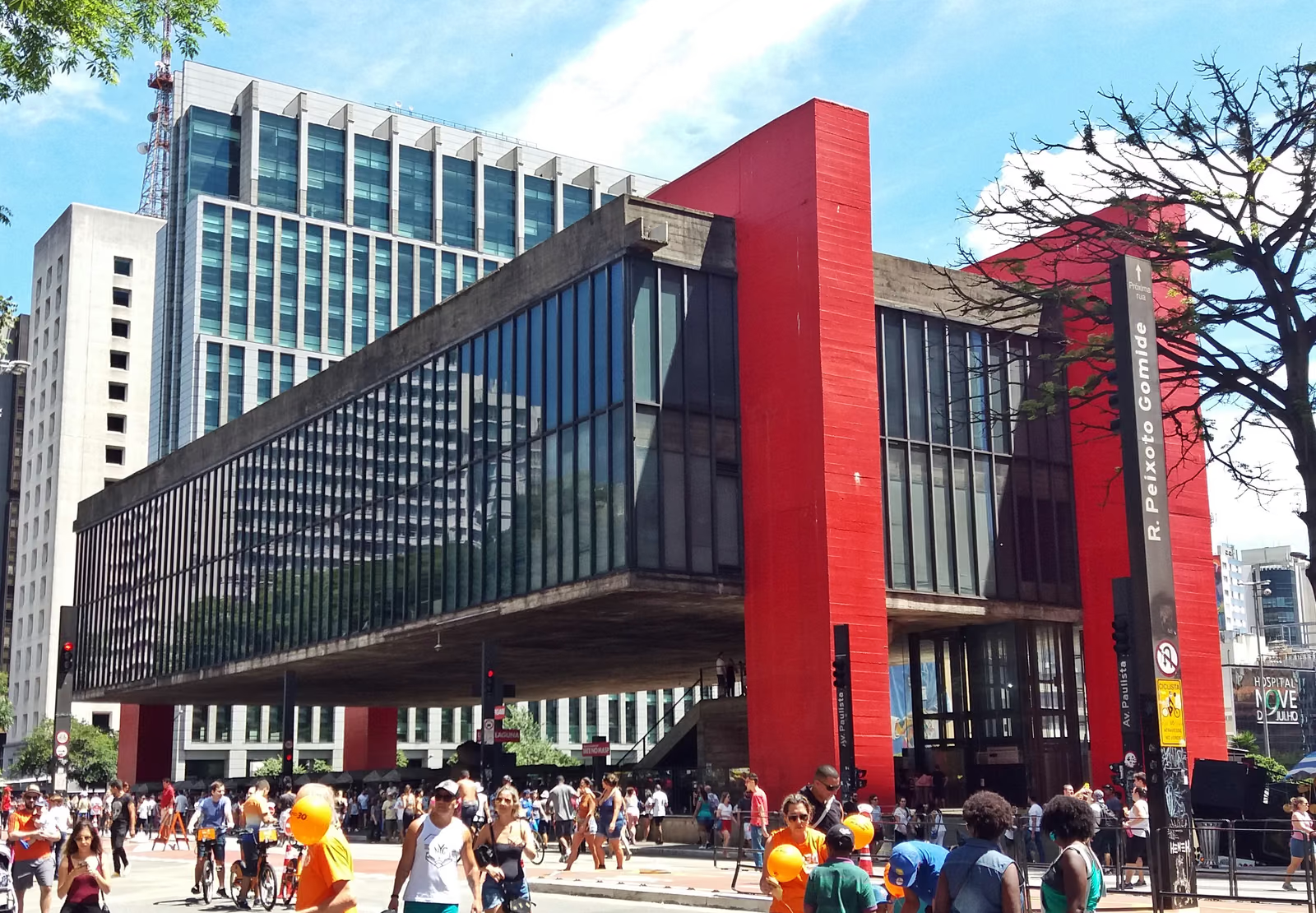
The site on Avenida Paulista had been the Belvedere Trianon, and it came with a condition attached: the view over the city had to survive. Lina Bo Bardi answered by removing the building from the ground altogether. Working with the engineer José Carlos Figueiredo Ferraz, she hung two floors of galleries from a pair of prestressed concrete beams spanning seventy-four metres between four piers — at the time the longest clear span in the world — and sank the auditoria, library and workshops beneath the terrace, leaving a covered public square where the museum ought to have stood. Construction began in 1957 and Queen Elizabeth II opened the building on 7 November 1968. The finishes are deliberately plain: exposed concrete, whitewash, flagstones, tempered glass, black industrial rubber. Inside, Bo Bardi hung the paintings on sheets of glass set in concrete blocks so the collection stood in the room like easels. "I did not look for beauty," she wrote. "I looked for freedom."
MASP's founding director, the Italian critic Pietro Maria Bardi, was a prominent figure in Italian fascism during the 1920s and 1930s, according to Portuguese Wikipedia, writing books and essays defending Benito Mussolini's ideology. He became director of the Galleria di Roma in 1929, and in 1933 organised an exhibition of Italian rationalist architecture in Buenos Aires that doubled as regime propaganda aimed at Italian expatriates in Latin America, though its effects fell short of what the regime intended. He left for Brazil only in 1946, a year after the war ended and Italy was liberated from fascism, like other figures tied to Mussolini's regime, together with his wife, the architect Lina Bo Bardi. In São Paulo he met the newspaper magnate Assis Chateaubriand, and the two founded MASP together in 1947, with Bardi as its director for the next forty-five years.
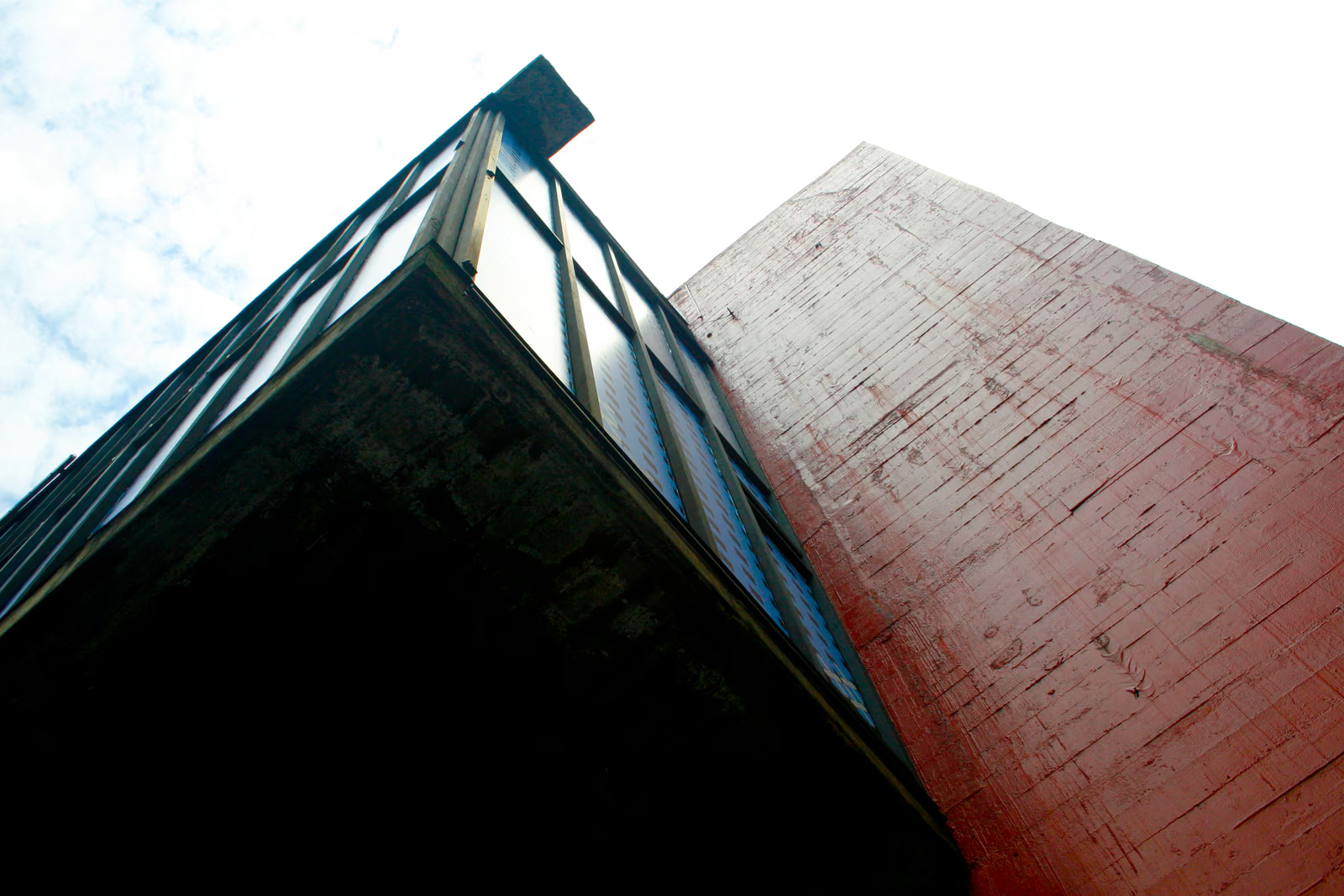
Wikidata Q127603419 · Commons: MASP São Paulo (cropped).jpg · Photo: Naldo Arruda · Licence: CC BY 2.0