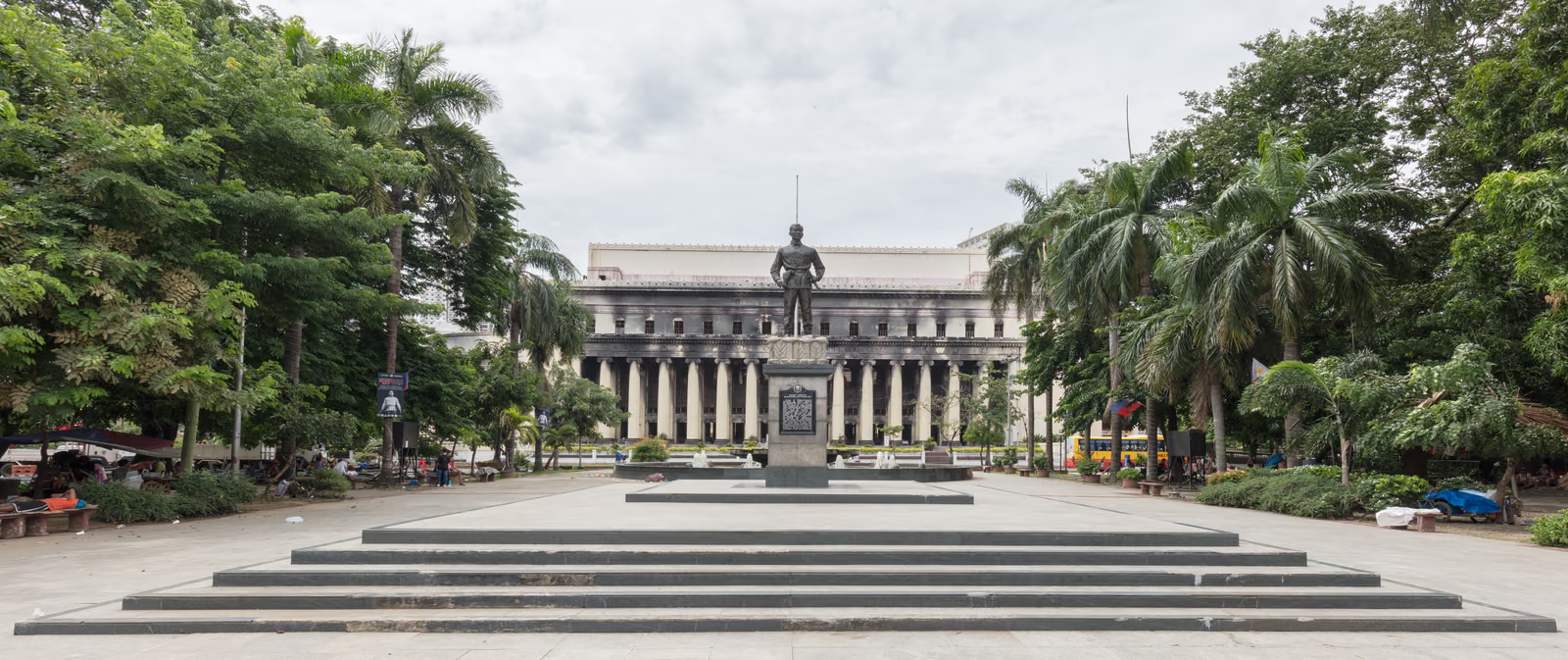
The Manila Central Post Office was designed by Juan M. Arellano with Tomás Mapúa and Ralph Doane, and built on the bank of the Pasig because Daniel Burnham’s plan for Manila treated the river as the city’s mail route. Its foundations were laid between August 1920 and January 1922, then halted for want of funds; construction proper began in 1926 under the firm of Pedro Siochi and Company. The frame was so heavily reinforced that in February 1945 the Japanese garrison held it against American artillery, tank and anti-tank fire, and the Americans had to enter through a window; the interior burned. It was rebuilt in 1946 to substantially the original design, lost its top floor to a fire in 1996, and was declared an Important Cultural Property by the National Museum in 2018. On 21 May 2023 a fire that began in the basement gutted the whole building.
The building is a piece of American colonial state-building. Its site on the Pasig River follows the Burnham Plan of Manila, which envisaged the river as the route by which mail would move; the Bureau of Posts that occupied it had been created by the Philippine Commission under Act No. 462 of 15 September 1902, during the early years of the American occupation. Arellano, who led the design, was himself a product of that system, having gone to the United States as one of the first Filipino government pensionados in architecture.
Wikidata Q1997093 · Commons: Oficina central de correos, Manila, Filipinas, 2023-08-27, DD 41.jpg · Photo: Diego Delso · Licence: CC BY-SA 4.0