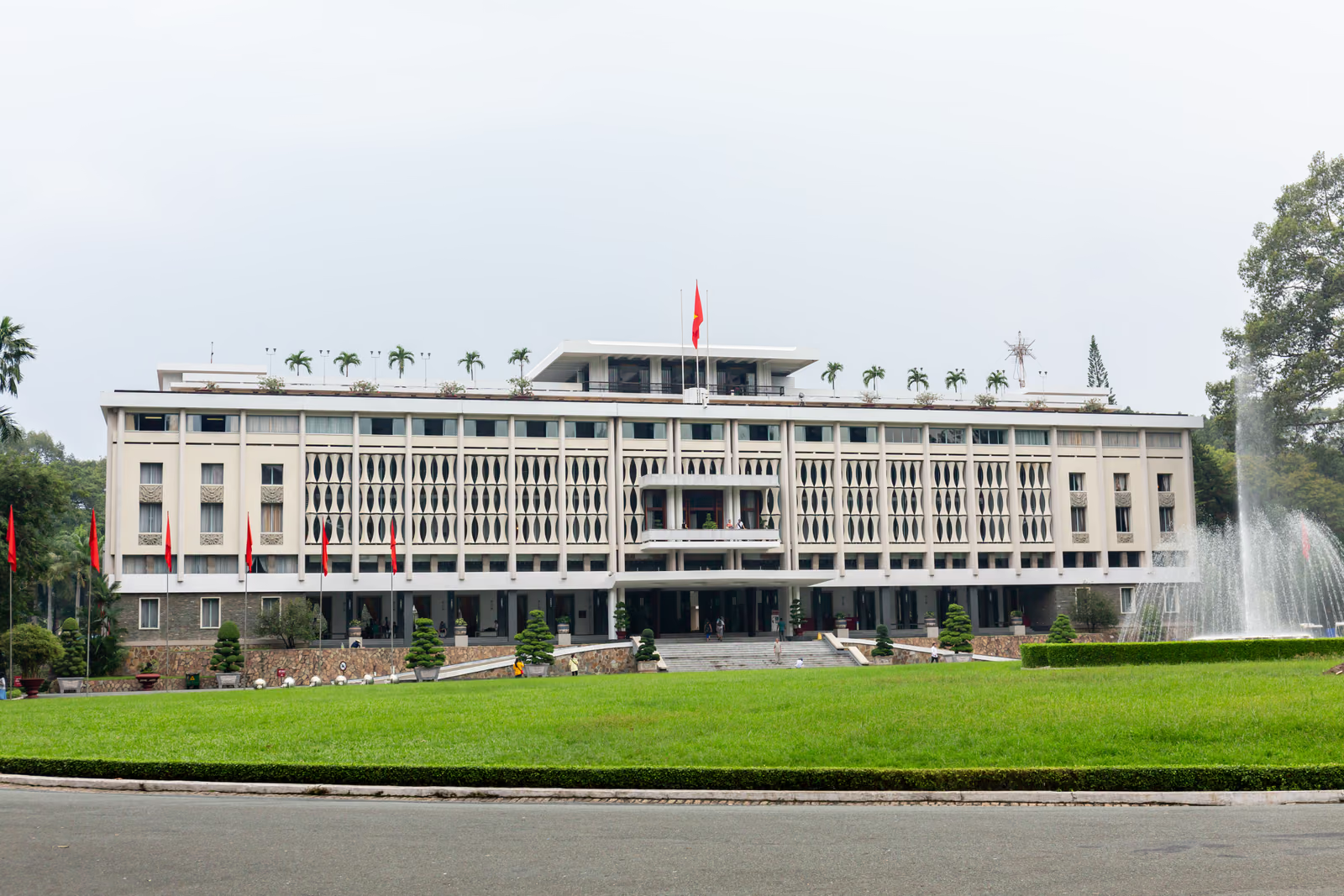
The palace Ngô Viết Thụ was asked to design in 1962 replaced one that no longer existed: two dissident air force pilots had bombed the previous Norodom Palace that February, trying and failing to kill President Ngô Đình Diệm. Thụ, the first Vietnamese architect to win the Grand Prix de Rome, in 1955, and later the first Asian architect named an honorary fellow of the American Institute of Architects, set a reinforced concrete frame behind a screen of precast concrete fins stylised after traditional bamboo lattice-blinds and the ornament of old Vietnamese pagodas, wrapping every south-facing room in shade without closing off the view. Diệm was assassinated in November 1963 and never occupied the finished building; it was inaugurated on 31 October 1966 by General Nguyễn Văn Thiệu, then chairman of the ruling military junta, three years before he became president in his own right. Less than nine years later, on 30 April 1975, a North Vietnamese tank broke through its main gate, the moment now generally treated as the end of the Vietnam War. The palace has stood since as a state guesthouse and public museum, its 1966 interiors largely unaltered.
Ngô Đình Diệm's government, the palace's intended first occupant, was a US-backed administration whose favouritism toward the Catholic minority over South Vietnam's Buddhist majority helped provoke the 1963 Buddhist crisis and the coup that killed him that November, before construction was even finished. The palace built in his name instead became the seat of the successive South Vietnamese governments the United States backed through the war that followed, and its grounds had already been bombed once, in February 1962, by its own air force specifically because of what the previous building on the site stood for politically. Its meaning reversed completely on 30 April 1975, when North Vietnamese and Viet Cong forces broke through its gate and raised their flag from its balcony, an image reproduced ever since as the visual shorthand for the war's end. Vietnam's government has preserved the interiors largely as they stood that morning, and frames the site publicly today as a monument to national reunification rather than to any government that built or occupied it.
Wikidata Q933384 · Commons: File:20190923 Independence Palace-1.jpg · Photo: Balon Greyjoy · Licence: CC0