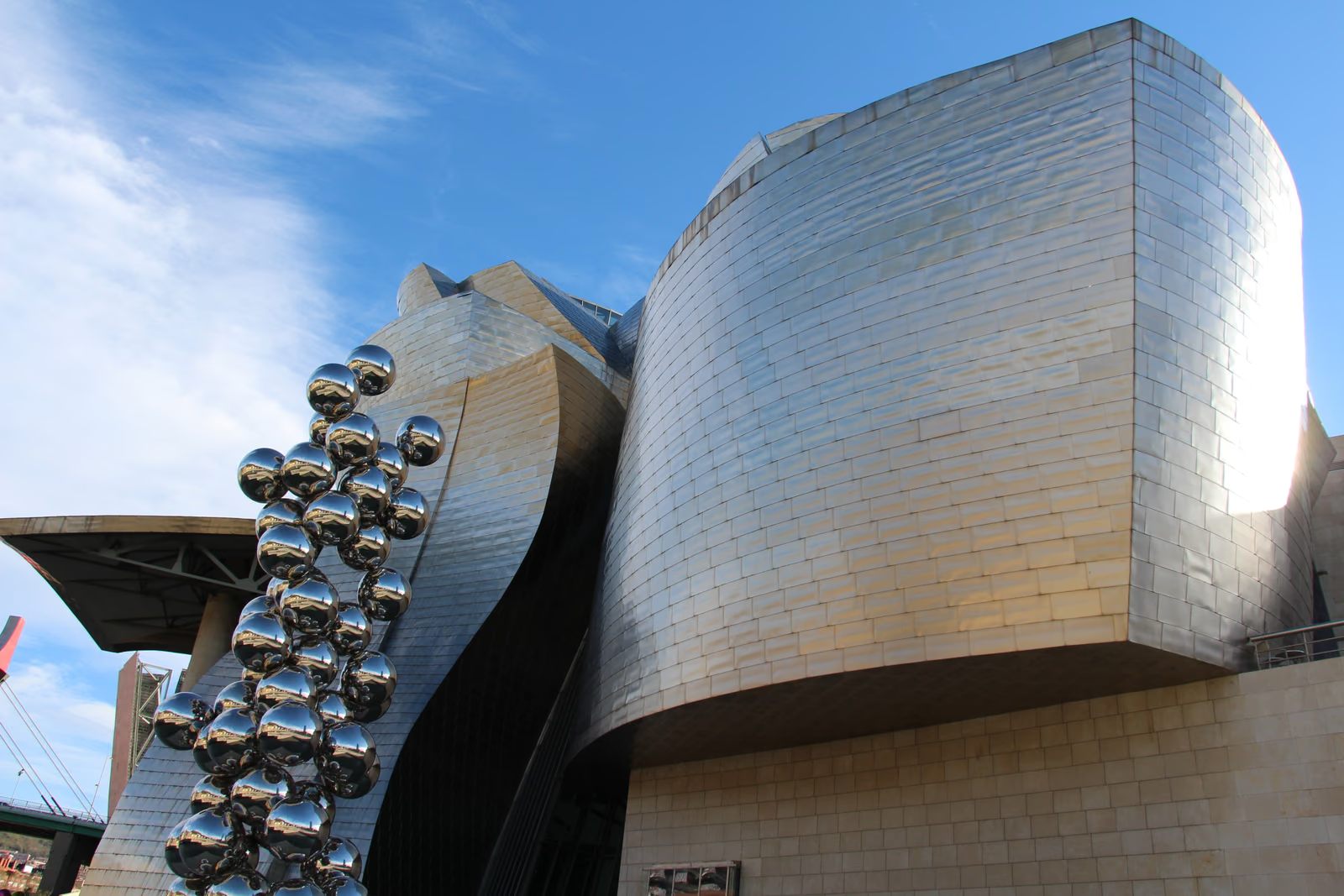
The Basque regional government paid for the building and much of its collection outright, an arrangement unheard of among Guggenheim's other franchises, in exchange for a competition limited to three architects; Gehry's scheme beat Isozaki's and Coop Himmelb(l)au's partly because his office could prove, with CATIA software borrowed from Dassault's jet-fighter division, that the curved titanium skin could actually be fabricated and installed on budget. The panels are only half a millimetre thick, cut to unique shapes and hung like fish scales so the surface flexes slightly and never reads as a flat plane; Gehry chose titanium over the originally specified stainless steel after seeing a sample catch the grey Bilbao light on an overcast test day. The museum opened in October 1997 to reviews that called it the building of the century, and Bilbao's post-industrial waterfront, largely abandoned since the 1980s, filled with hotels and offices within a decade of a single museum's opening — a turnaround economists and planners still cite as the "Bilbao effect," for better and worse.
Wikidata Q179199 · Commons: File:Bilbao - Guggenheim Bilbao Museoa (28620586434).jpg · Photo: Fred Romero · Licence: CC BY 2.0