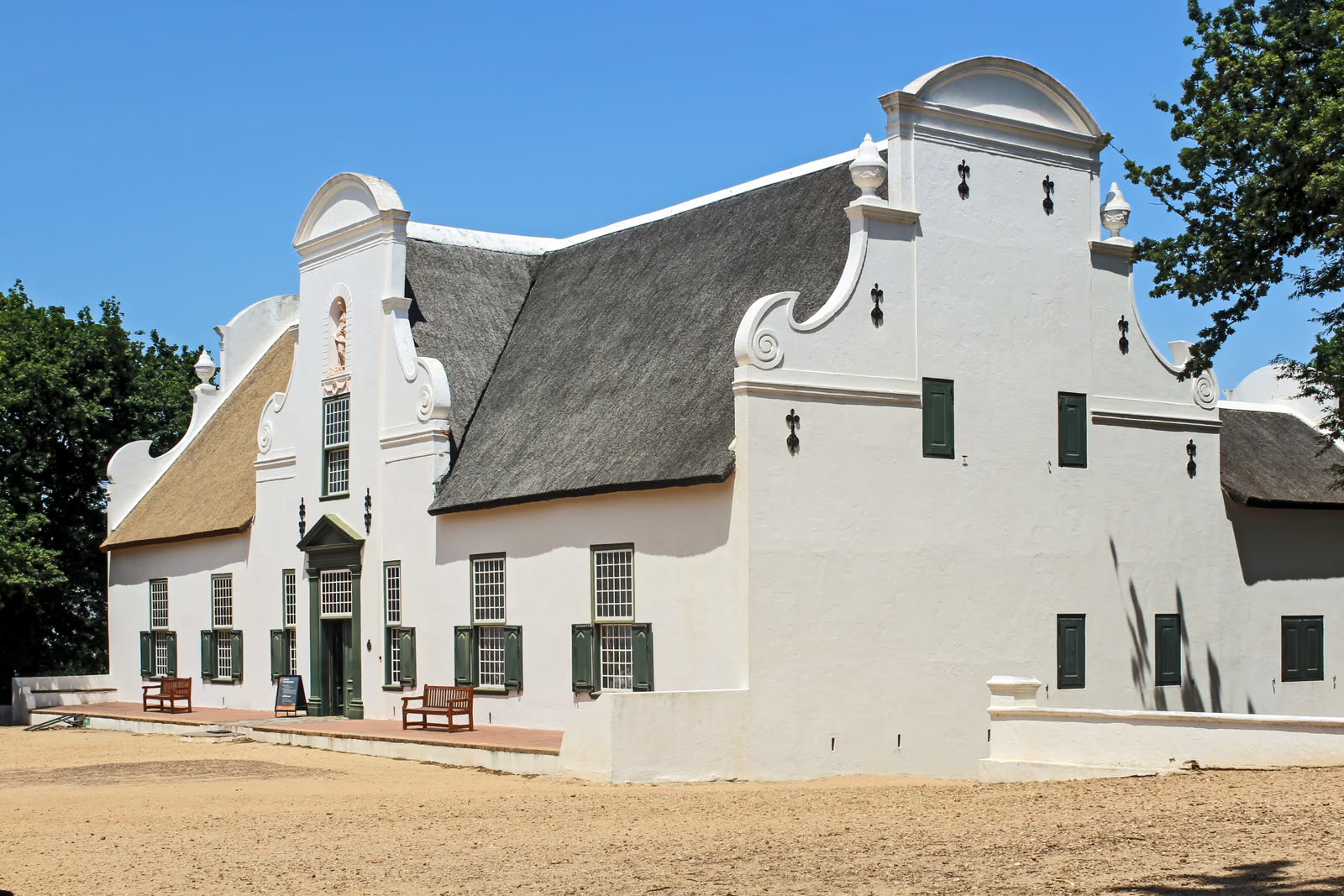
Simon van der Stel, governor of the Dutch Cape, was granted the land in 1685 and built a homestead on it himself; no individual designer is recorded for that first house, which followed the vernacular Cape Dutch manner of thick lime-plastered brick walls, a thatched roof and a raised stoep. After 1779 the estate passed to the Cloete family, who enlarged the vineyards and, through the late 1780s, commissioned Louis Michel Thibault, the Cape's first academically trained architect, to redesign the manor house's facade and gables; his neoclassical entrance and slender gables, carried out with the sculptor Anton Anreith, date the remodelling to around 1790–91, the same campaign in which Cloete built the new wine cellar behind the house, its pediment carrying Anreith's 1791 relief. It is this late-eighteenth-century design, not van der Stel's original building, that Thibault is credited with. The house burned to the ground in 1925, and the architect Franklin Kendall rebuilt it without Thibault's original drawings, to what he judged Cape Dutch architecture at its best — so what a visitor sees today is a 1920s reconstruction of Thibault's design rather than his actual fabric.
Groot Constantia was a slave estate. The vineyards granted to Simon van der Stel in 1685 and enlarged by the Cloete family after 1779 were worked by enslaved people held under the slave regime of the Dutch Cape Colony; a slave bell cast in 1716 hung on the estate until it was stolen in September 2024 and has not been recovered. The manor house is now a museum administered by Iziko Museums of South Africa, and its display is focused particularly on rural slavery and the lives of enslaved people in the early Cape colonial period.
Wikidata Q134395439 · Commons: File:GrootConstantiaHomestead.jpg · Photo: Martinvl · Licence: CC BY-SA 4.0