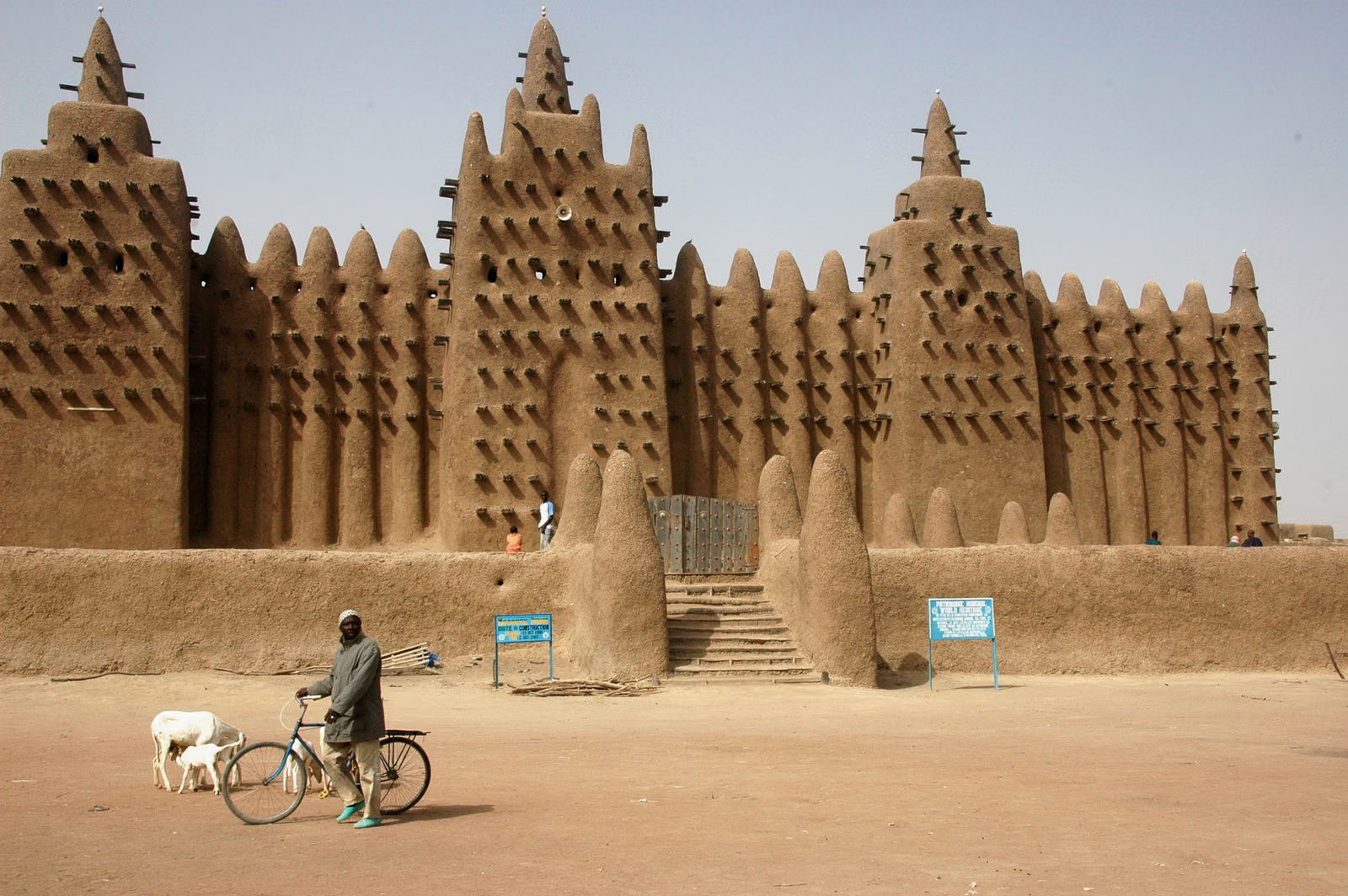
A mosque has stood on this site since perhaps the thirteenth century, but the building everyone photographs is barely older than the aeroplane. By the time René Caillié reached Djenné in 1828 the medieval mosque was a swallow-filled ruin; Seku Amadu built a plainer replacement nearby and let the old one fall. In 1906 the town resolved to rebuild, and the work was completed in 1907 under Ismaila Traoré, head of the barey ton, Djenné's hereditary masons' guild. What is almost certainly new in his design is the symmetrical rank of three towers across the qibla wall, the silhouette that has since stood for West African architecture worldwide. The mosque is the largest mud-brick building on earth, and it survives only because the whole town replasters it every year.
The 1907 reconstruction was carried out using forced labour, in a town that the French army under Louis Archinard had captured in 1893. Who designed it has been argued about ever since. The French journalist Félix Dubois, who had recorded the medieval ruin in 1897, returned in 1910 and was appalled, insisting the colonial administration was responsible for a building he compared to a cross between a hedgehog and a church organ. Michel Leiris, travelling through in 1931, likewise reported the new mosque as European work, and added that residents refused to replaster it until threatened with prison. Against this, Jean-Louis Bourgeois has argued that French involvement extended at most to some internal arches, and that the design is substantially African, executed by the masons' guild in its own techniques. Present scholarship follows Bourgeois, while recording the coercion under which the work was done.
Wikidata Q683632 · Commons: File:Djenne great mud mosque.jpg · Photo: Ruud Zwart · Licence: CC BY-SA 3.0