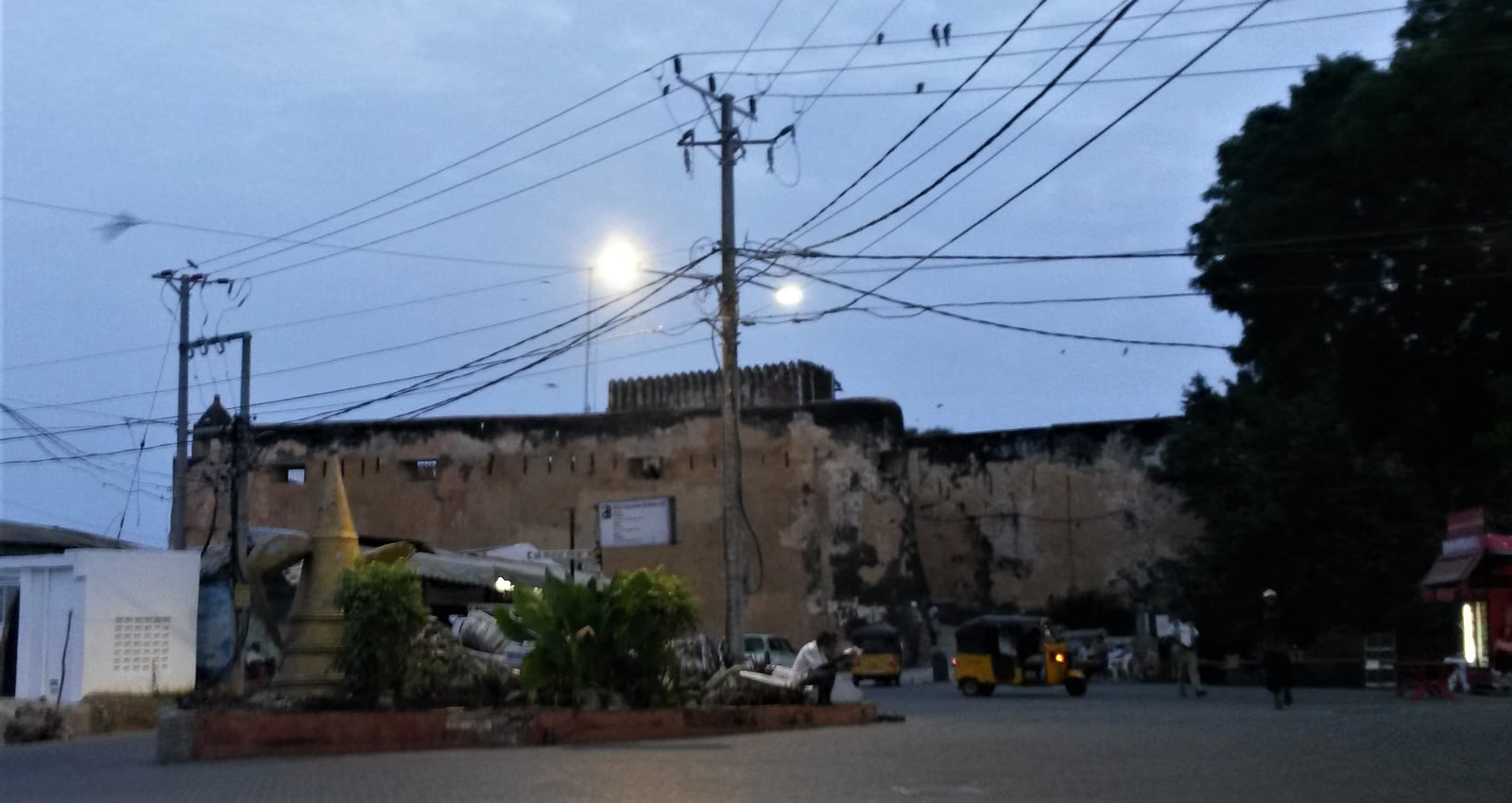
Philip II of Spain, who had ruled Portugal since 1580, sent his chief engineer for the Estado da Índia to the Swahili coast to build a fort that could hold Mombasa's Old Port against artillery. Giovanni Battista Cairati chose the coral outcrop at the harbour mouth and set out a roughly square plan with four angled bastions — the Italian bastioned system transplanted whole to East Africa. Seen from the air the outline reads as a figure lying on its back, which is where the name is said to come from. Work ran from 1593 to 1596. The geometry is Renaissance and Italian, but the coral rag, the lime mortar and the labour were Swahili, so the fort is as much a local building as an imported one. It changed hands at least nine times, was raised three metres by its Omani captors, served the British as a prison from 1895, was excavated by James Kirkman from 1958, and was inscribed by UNESCO in 2011.
Fort Jesus was built to enforce a Portuguese monopoly over Indian Ocean trade, and Mombasa resisted it. The fort was won and lost at least nine times between 1631, when Sultan Yusuf ibn al-Hasan took it and killed the Portuguese garrison, and 1895. Omani forces besieged it from 1696 for nearly three years, and their capture of it ended Portuguese power on the coast. Under British rule from 1895 it was used as a prison. It became a national museum in 1958 and a World Heritage Site in 2011.
Wikidata Q379080 · Commons: File:Fort Jesus Mombasa Old Town 2.jpg · Photo: Bertina Kanaka · Licence: CC BY-SA 4.0