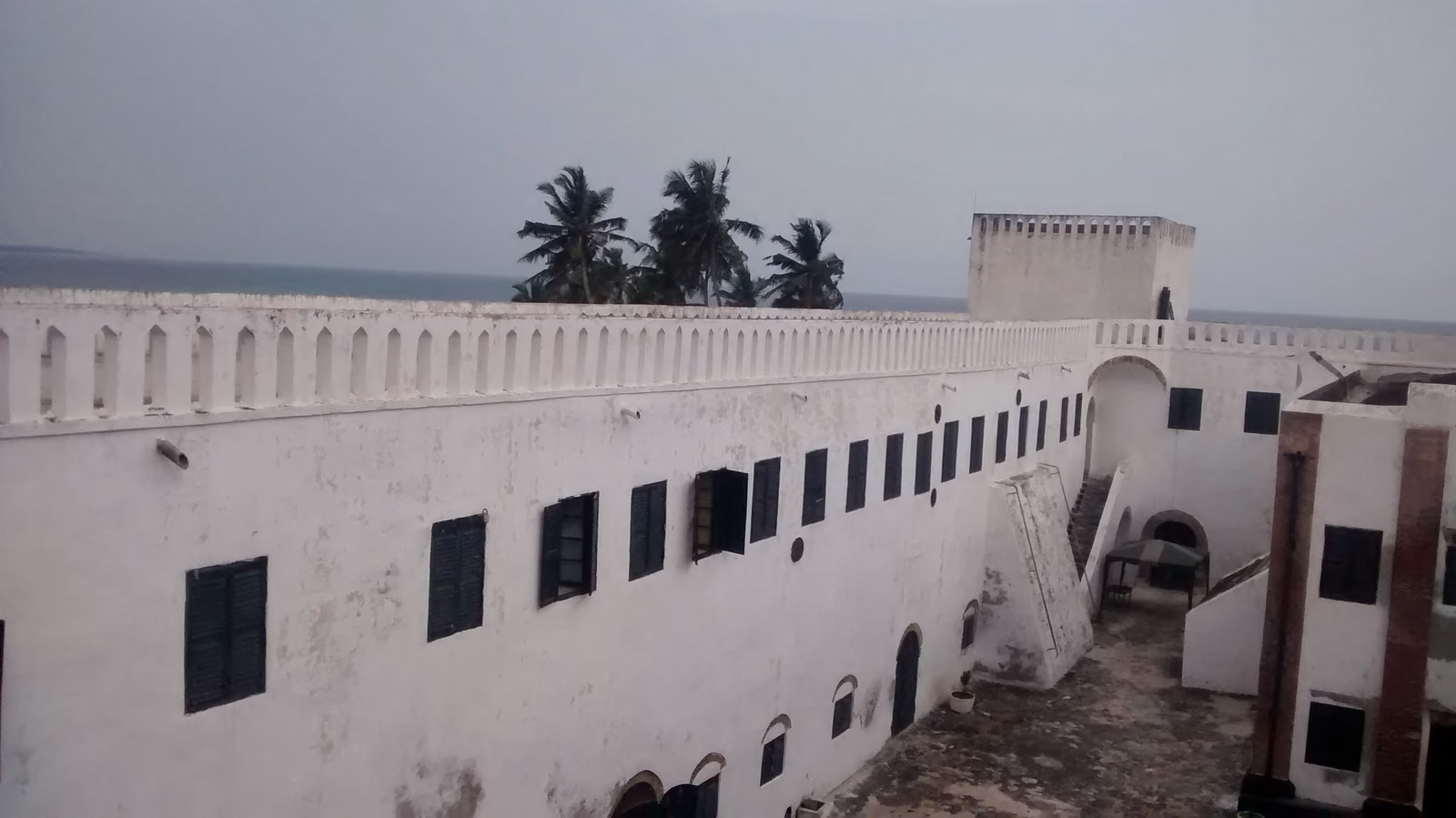
King John II of Portugal sent Diogo de Azambuja to the Gold Coast in December 1481 with ten caravels and two transport ships, six hundred men, and stone already cut and numbered in Portugal for reassembly — foundation blocks to roof tiles. Landing near the fishing town the Portuguese called A Mina, Azambuja negotiated for the site with the local ruler, traditionally named Kwamin Ansah (interpreted from the Portuguese as 'Caramansa'), and construction proceeded despite local resistance to a foreign fortress on the shore; the fort was substantially complete within about twenty days, an unusual speed made possible entirely by the prefabrication. São Jorge da Mina became the first permanent European trading post in sub-Saharan Africa and the anchor of Portugal's Gold Coast trade. The Dutch West India Company seized it in 1637 and held it until 1872, when it passed to Britain with the rest of the Dutch Gold Coast. What began as an installation built explicitly to protect the gold trade from becoming a slaving post did not remain one; that history is set out below.
St. George's Castle was founded explicitly to keep the gold trade separate from slaving: Portuguese policy in the fifteenth century did not want the fort drawn into the trade in captives for fear of destabilising the gold routes it existed to protect. That policy did not hold. By the seventeenth century, most West African trade at the coast had shifted to the sale of captives, and the castle became a depot where enslaved people brought from the interior by African and European traders were held before shipment across the Atlantic, in underground chambers built to hold them pending sale. The Dutch West India Company took the fort by force in 1637, absorbed the rest of the Portuguese Gold Coast in 1642, and continued the trade from Elmina until the Netherlands' abolition of its own slave trade in 1814, formalised the same year in the Anglo-Dutch treaty banning it. The castle's holding cells and the seaward gate through which captives were loaded onto ships survive and are shown to visitors today as part of its history rather than a separate chapter from its founding.
Wikidata Q55264655 · Commons: File:Elmina Castle side view.jpg · Photo: Dieu-Donné Gameli · Licence: CC BY-SA 3.0