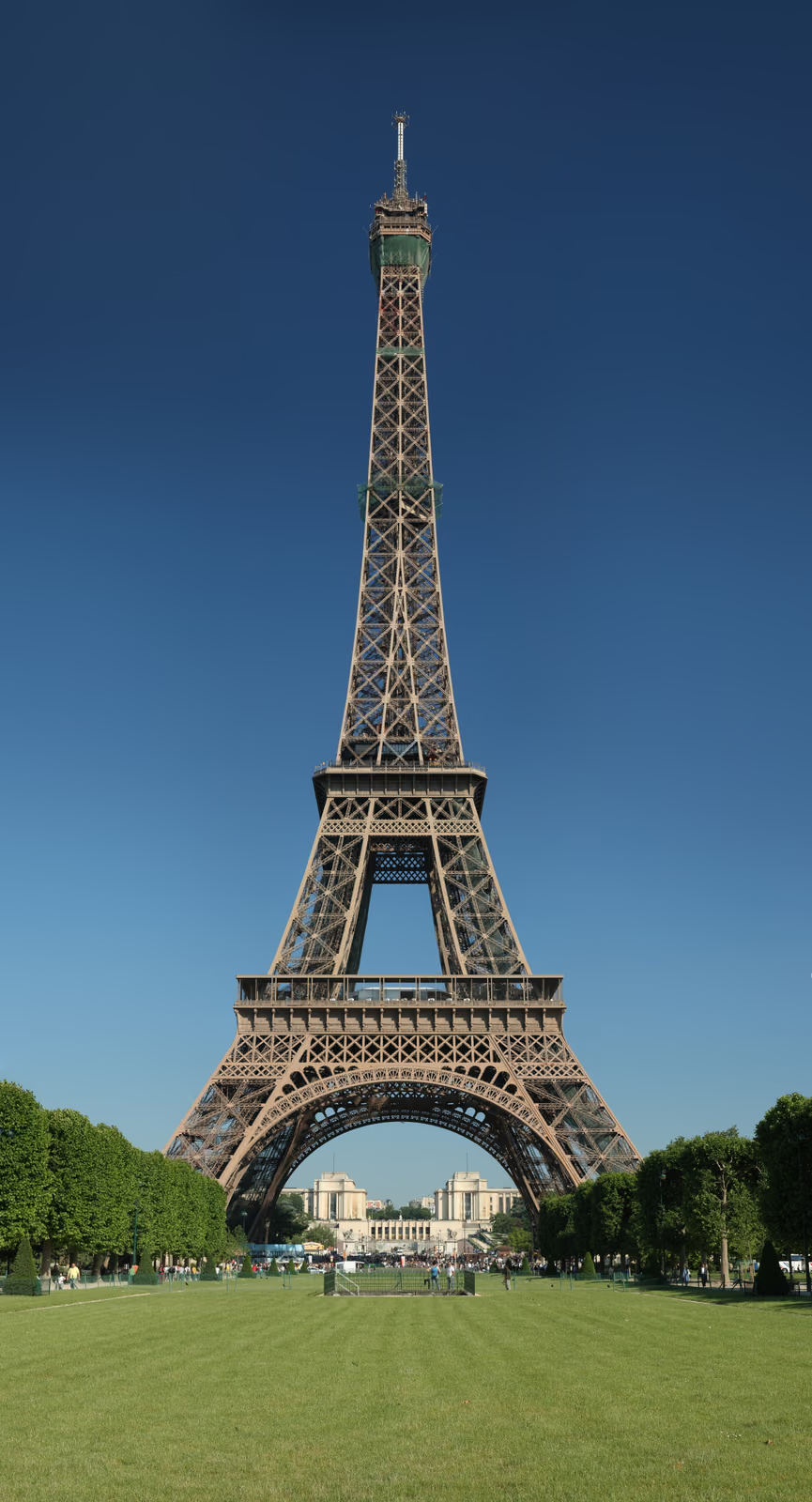
Eiffel's engineering firm won an 1886 competition for a centrepiece to the 1889 Exposition Universelle, marking the centenary of the French Revolution. The design itself was not personally his: senior engineers Maurice Koechlin and Émile Nouguier produced the first calculations and sketch — four latticed iron legs curving inward to meet a single shaft — and Stephen Sauvestre, head of Eiffel's architecture office, added the decorative arches at the base, the glazed first-floor pavilions and other ornament that made the engineering presentable to a Beaux-Arts jury. Eiffel bought the patent from his own employees and built it under his company's name in twenty-six months, using some 18,000 prefabricated wrought-iron parts and two and a half million rivets, most fitted on site by riveting teams working from movable scaffolding. Parisian critics condemned it as a "truly tragic street lamp" before construction finished; it was kept beyond its planned twenty-year demolition only because the army found it useful for radio transmission. Classified a monument historique in 1964 and inscribed within the UNESCO listing for the banks of the Seine in 1991.
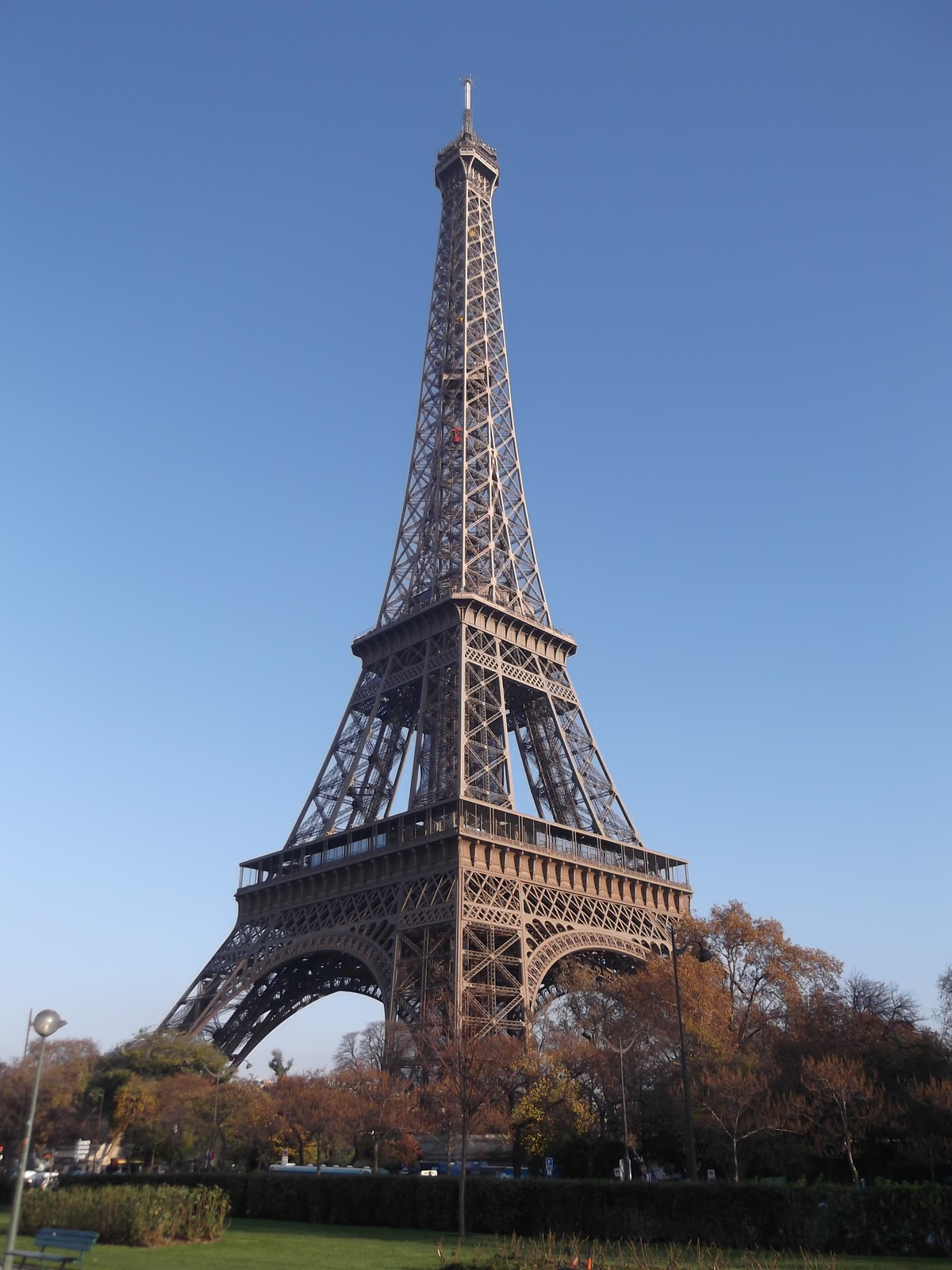
Wikidata Q243 · Commons: Tour Eiffel Wikimedia Commons.jpg · Photo: Benh Lieu Song · Licence: CC BY-SA 3.0