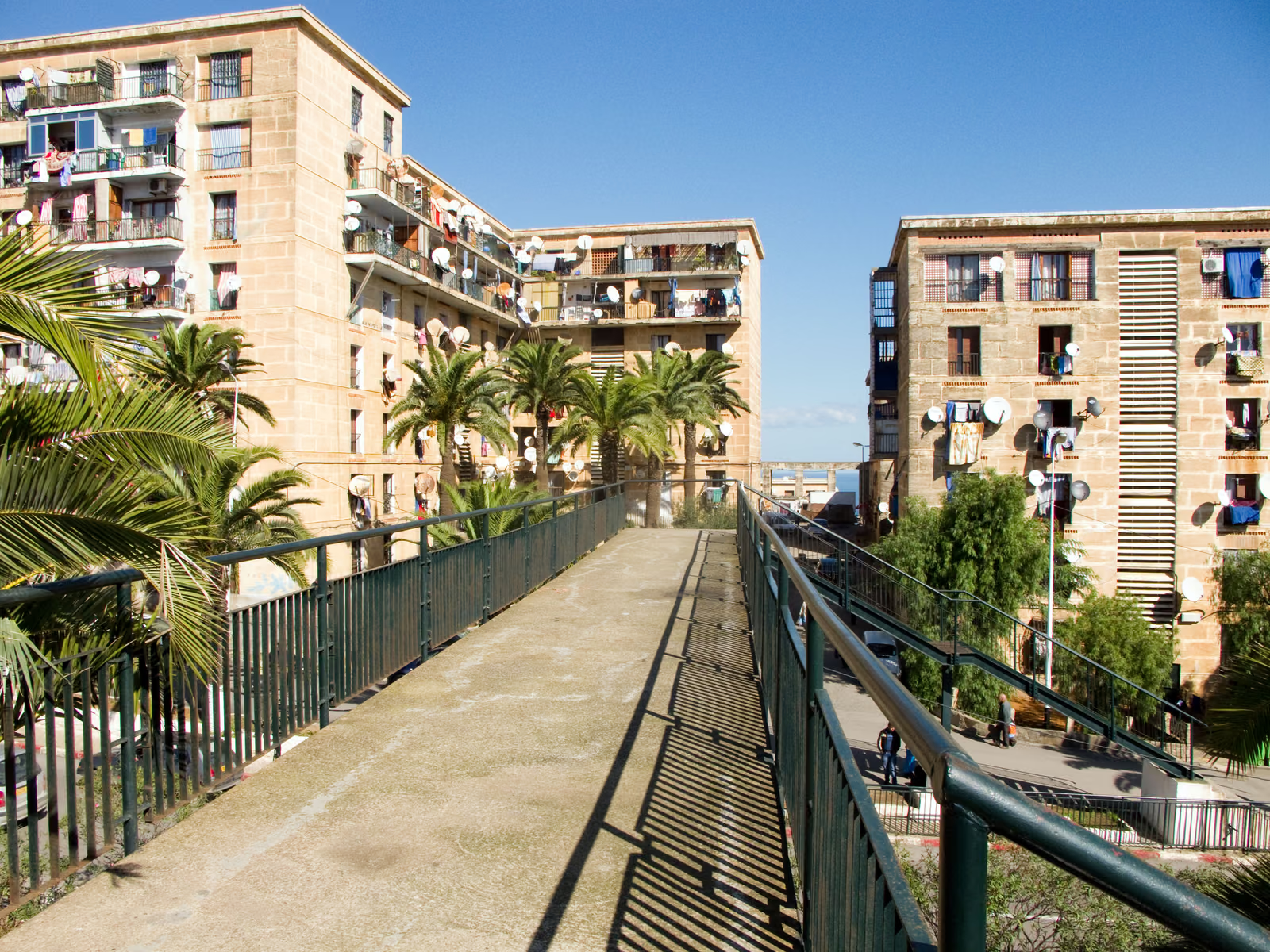
Jacques Chevallier became mayor of Algiers in 1953 on a promise of "symbiosis" between the city's communities, made Fernand Pouillon his chief architect, and set him to work on the bidonvilles. Diar el-Mahçoul — "houses of the fulfilled promise" — was the second of three estates and went up between 1953 and 1955 on the heights above the bay. Pouillon built it in load-bearing cut stone rather than concrete panels, because a quarry and a stonecutting yard on site were cheaper than a panel factory, and because he wanted mass housing to have the weight and the shadow of a masonry city. The blocks step down the slope around linked courts, with deep loggias, generous stairs and planted terraces. Seventy years on the stonework is still doing its job, buried under satellite dishes and laundry. It carries no protection of any kind.
Diar el-Mahçoul was built by the colonial municipality of Algiers across the outbreak of the Algerian war of independence in November 1954, and its plan was segregated. Published research on the three Algiers estates records that Diar el-Mahçoul combined European and Algerian Muslim dwelling types in separate structures — about 900 units for Algerian Muslims and 650 for Europeans — with the two districts divided from one another by roads. Its companions were segregated outright: Diar es-Saada housed Europeans only, Climat de France an exclusively Muslim population. Pouillon was working for a mayor who described this programme as symbiosis. Algeria became independent in 1962; Pouillon, expelled from the French Order of Architects in September 1961 for a breach of professional ethics and so barred from practice there, returned to work for the independent state from 1966.
Wikidata Q3026326 · Commons: Alger Diar-El-Mahcoul IMG 1147.JPG · Photo: Poudou99 · Licence: CC BY 3.0