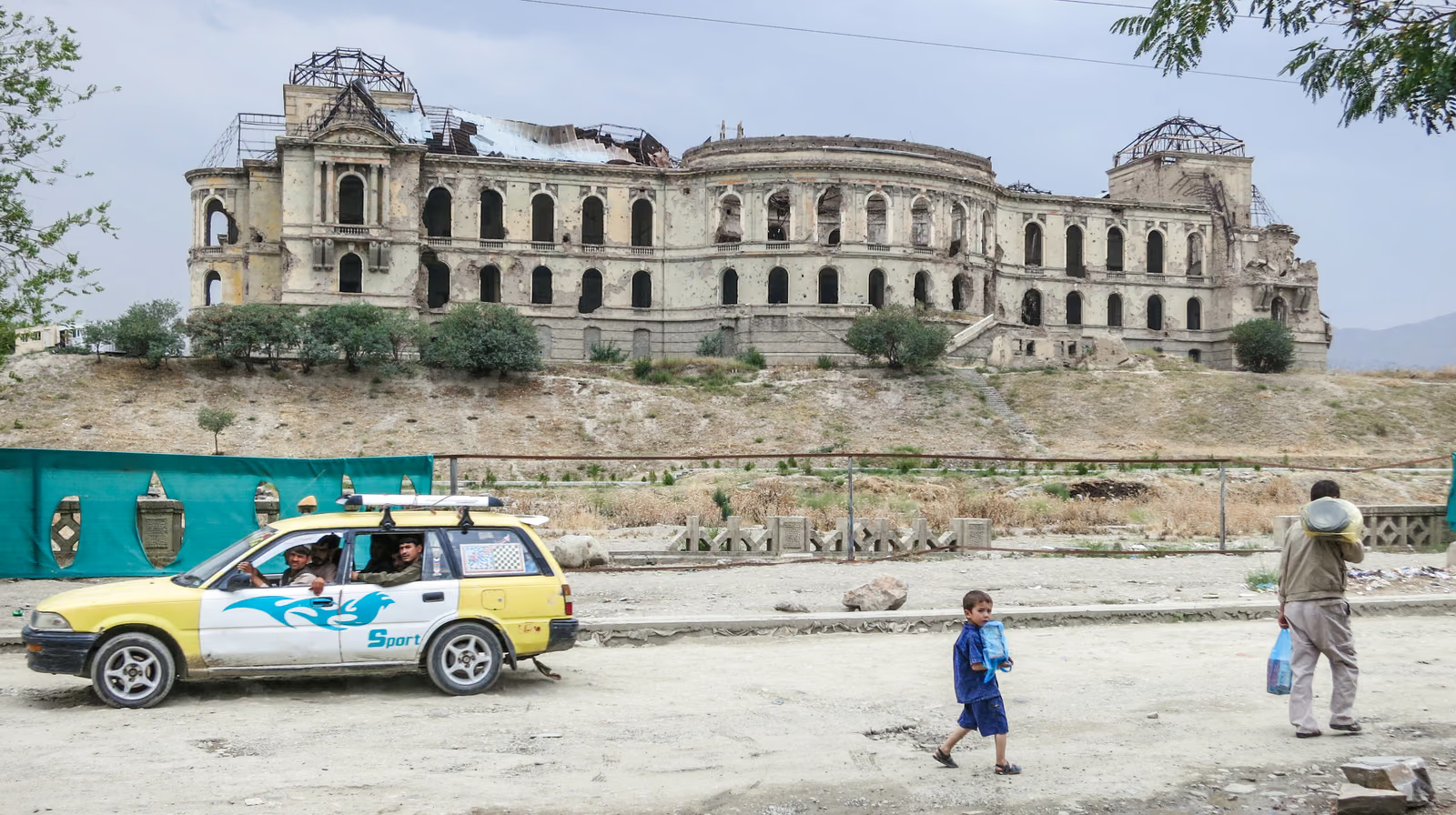
A European palace put on an Afghan hill to announce a European future. Amanullah Khan invited twenty-two German and French architects to Kabul and gave them a hilltop sixteen kilometres from the city on which to build the seat of a parliament for a country that did not yet have one; German engineer Walter Harten led the team, with the French architects recorded as A. and M. Godard also credited. What they produced is unhesitatingly neoclassical — a U-plan of 150 rooms, three storeys, long round-arched arcades, a central curved bay under a mansard — and it was the most technically advanced building in Afghanistan when it opened in 1927. Two years later Amanullah was forced from the throne and the reform programme collapsed with him. The photograph here dates from 2013 and shows the shell as war left it; the palace was restored between 2016 and 2020.
The palace stood unused and partly unfinished for years after religious conservatives under Habibullah Kalakani forced Amanullah Khan from power in 1929 and halted his reforms. It later housed the medical school of Kabul University, a warehouse and several smaller ministries. It was gutted by fire on 14 December 1968, restored to hold the Ministry of Defence in the 1970s and 1980s, and set on fire again during the communist coup of 1978. Tank fire damaged much of it during Shahnawaz Tanai’s failed coup attempt on 6 March 1990, and heavy shelling by rival Mujahideen factions fighting for control of Kabul during the 1990s civil war left it a gutted ruin. It was used as a refugee settlement and nomad camp until the early 2000s. Restoration began in spring 2016 at a cost of sixteen to twenty million dollars; some six hundred tonnes of debris were removed, over eighty engineers and architects worked on the project of whom twenty-five per cent were women, and most major work was complete by July 2019 for the centenary of Afghan independence.
Wikidata Q902222 · Commons: Darul Aman Palace in Kabul.jpg · Photo: Ninaras · Licence: CC BY 4.0