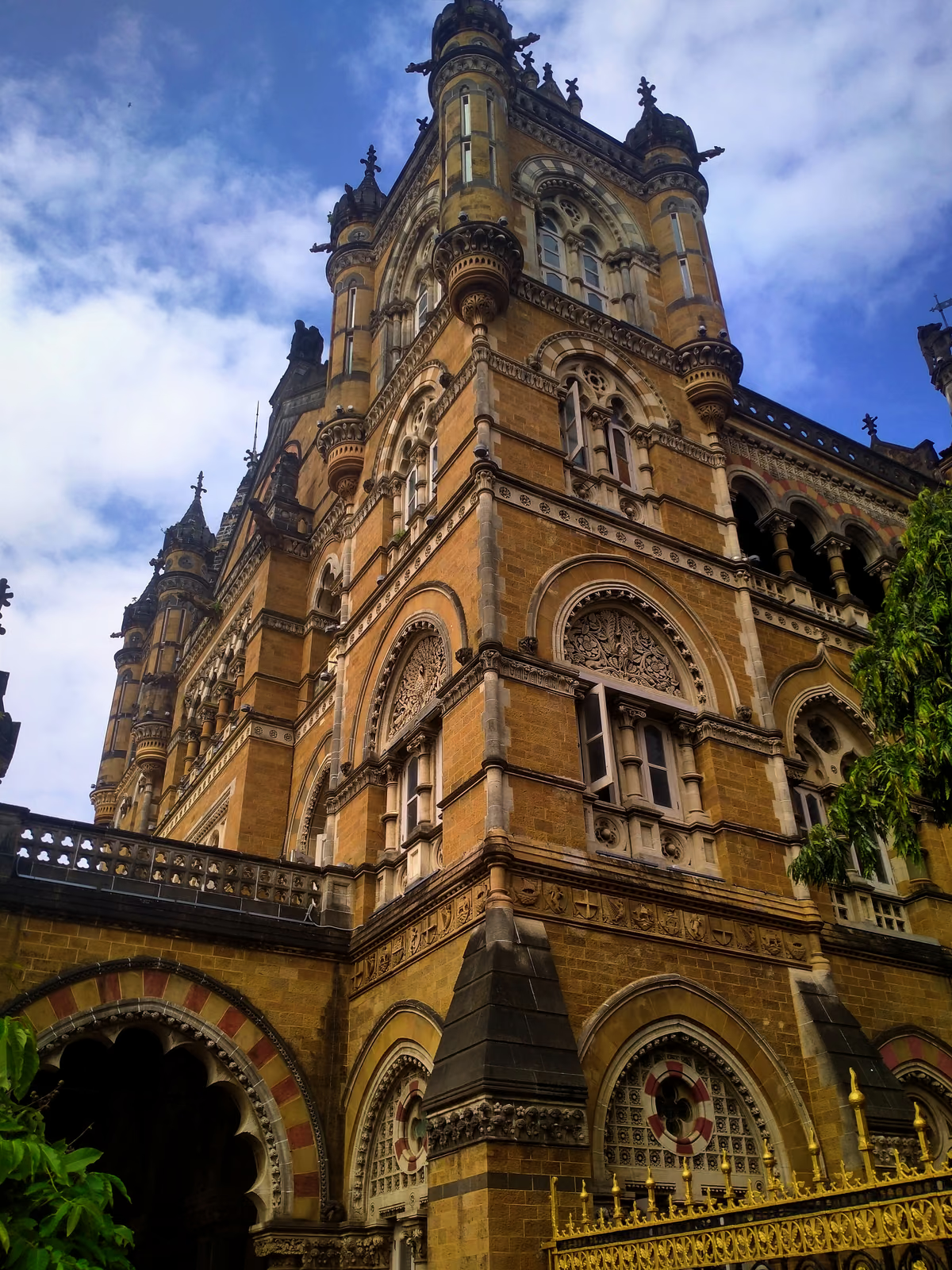
Stevens borrowed the section of a European cathedral and put trains under it. Ten years in building, from 1878 to 1888, the terminus is Venetian Gothic in its banded arches and rose windows, Indian in almost everything carved: the ornament was executed by students and craftsmen of the Bombay School of Art under John Lockwood Kipling, and the foliage, peacocks, monkeys and portrait roundels come out of local pattern rather than a European copybook. A ribbed dome on eight arches sits over the central booking hall, crowned by a fourteen-foot figure of Progress — the first known use of a dome of that kind on a Gothic Revival building. It cost £260,000, the most spent on any building in Bombay at the time. The station has been renamed twice since independence, in 1996 and again in 2017, and was inscribed as a World Heritage Site in 2004.
The terminus was built as the passenger station and head office of the Great Indian Peninsula Railway, a British company whose network was laid out to move cotton and troops as much as passengers, and it was named Victoria Terminus for Queen Victoria — the station opened on the day of her Golden Jubilee in 1887, the year before the building was finished. Frederick William Stevens was paid 1,614,000 rupees for the design. It was renamed Chhatrapati Shivaji Terminus in March 1996 by the Maharashtra government, after the seventeenth-century Maratha ruler, and Chhatrapati Shivaji Maharaj Terminus in 2017; the initials CST and the older VT are both still in daily use. UNESCO inscribed it in 2004, citing it as an outstanding example of Victorian Gothic Revival architecture in India blended with themes derived from Indian traditional architecture.
Wikidata Q235884 · Commons: Chhatrapati Shivaji Maharaj Terminus , 2025 (front view).jpg · Photo: SURYATAPA CHATTERJEE · Licence: CC BY-SA 4.0