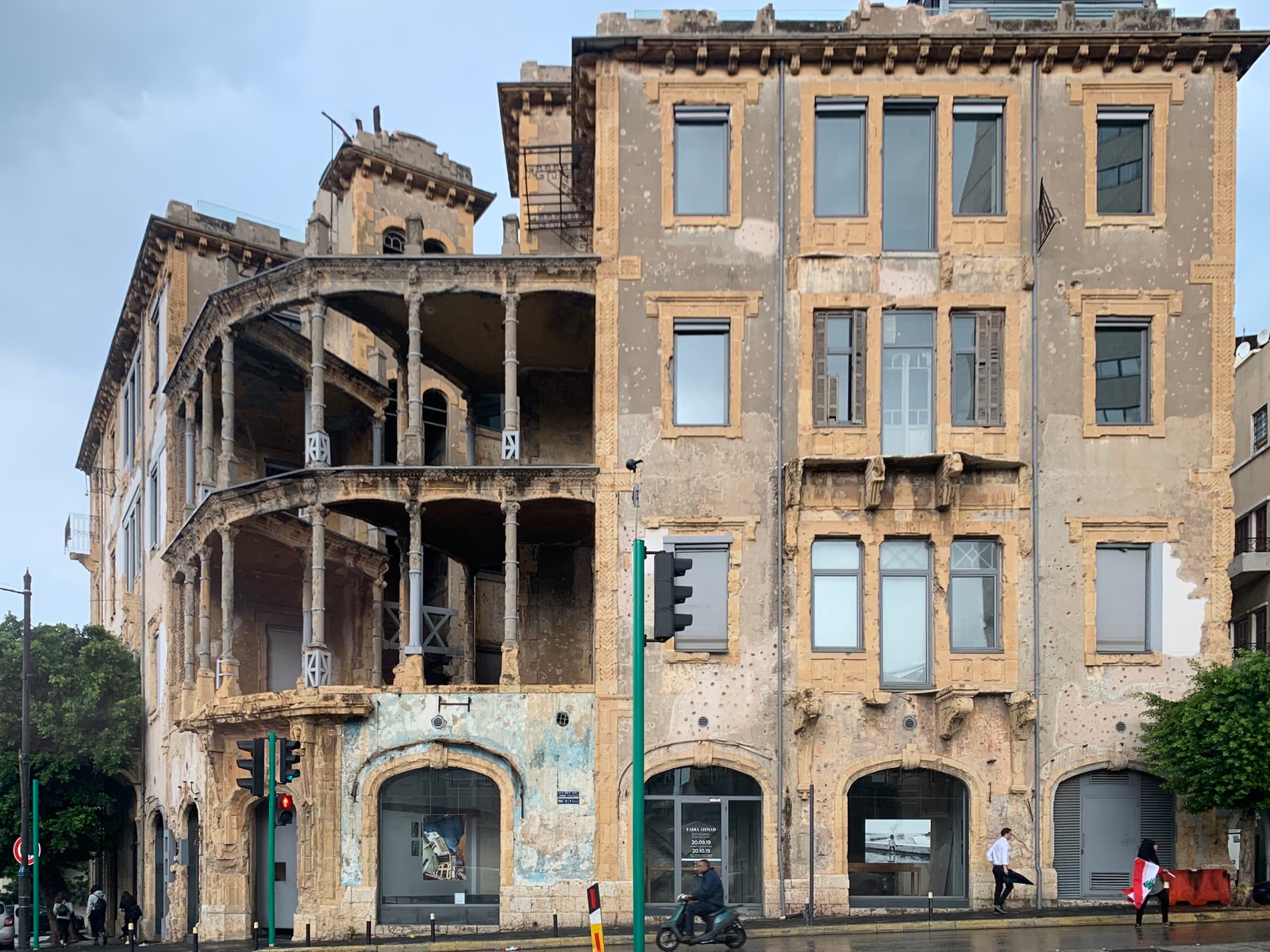
Nicholas and Victoria Barakat commissioned an apartment house on the Damascus road in 1924 from Youssef Aftimus, by then the most established architect in Beirut. Fouad Kozah added two more storeys in 1932 and gave the building the form it has now: two four-storey blocks of ochre Deir el Qamar limestone — the stone that earned it the name of the Yellow House — set either side of an atrium open to the sky, their facades joined by a colonnade of thin shafts carrying stacked, curving loggias, with a passage running beneath to a garden behind. The central axis stays open to the sky for its whole length, from the front courtyard through to the garden. Fifty years later that openness made the house a weapon. It stood on the demarcation line at the Sodeco crossroad, and the militiamen who occupied it could shoot through the depth of the building from cover. It was left a shell, and is now Beirut’s museum of itself.
During the Lebanese Civil War the Barakat Building stood on the demarcation line that divided Beirut, at the Sodeco crossroad. Christian militiamen occupied it and used it as a sniper position; its open plan let a gunman fire through the depth of the building while staying under cover. When the owners moved to sell, the house was sentenced to demolition in 1997, and was saved by a public campaign led by the architect Mona Hallak, who had first examined it in 1994. In 2003 the municipality of Beirut issued a decree of expropriation for public interest. Youssef Haider was commissioned in 2009 to lead the restoration; planning and works cost eighteen million US dollars, and the building opened as Beit Beirut on 28 April 2016. It reopened temporarily in August 2017, still lacking staff, services and direction.
Wikidata Q132174477 · Commons: Beit Beirut 2019.jpg · Photo: Onceinawhile · Licence: CC BY-SA 4.0