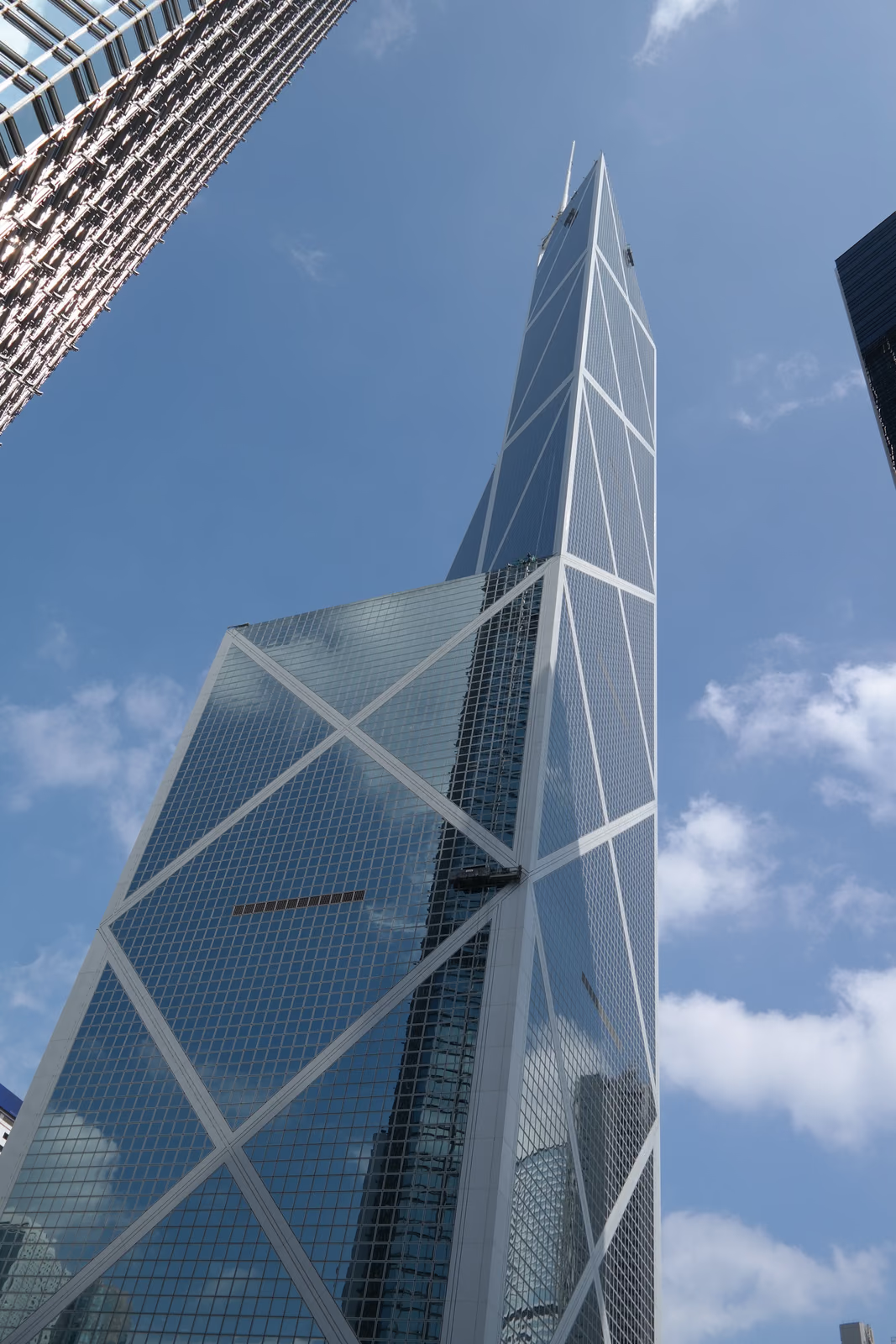
The commission came to Pei's father, Tsuyee Pei, a former general manager of the Bank of China, rather than to Pei directly, at a moment — a decade before the 1997 handover to China — when Beijing wanted a Hong Kong headquarters that would outbuild every colonial-era tower on the skyline. Pei's answer was structural rather than decorative: four composite steel-and-concrete columns at the corners of a square plan pick up the loads through a triangulated truss visible on every face, and as the tower rises it drops one triangular prism after another, so the square base tapers to a single triangular shaft crowned by a mast. The bracing did double duty as wind and seismic resistance, letting Pei skip the internal steel frame most towers of its height still needed, and made it, briefly, the tallest building outside the United States. Locally the sharp angles and prominent X-braces read differently: without consulting feng shui masters, an omission unusual for a major Hong Kong project, the tower acquired a reputation as a "vertical knife" whose corners point at neighbours including Government House and the HSBC headquarters across the harbour view.
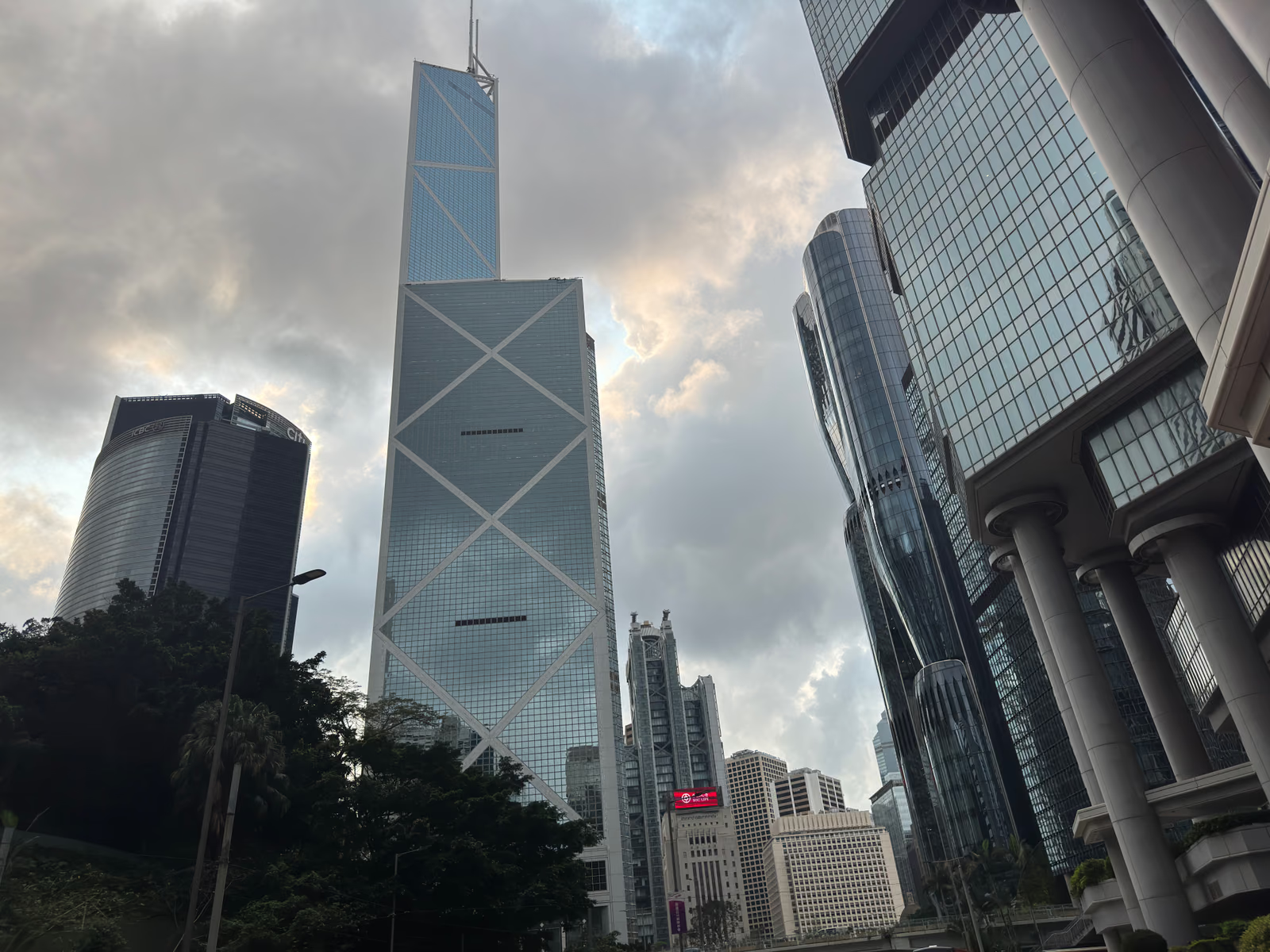
Wikidata Q214855 · Commons: File:Looking up to the Bank of China Tower in Hong Kong.jpg · Photo: Choinowski · Licence: CC BY-SA 4.0