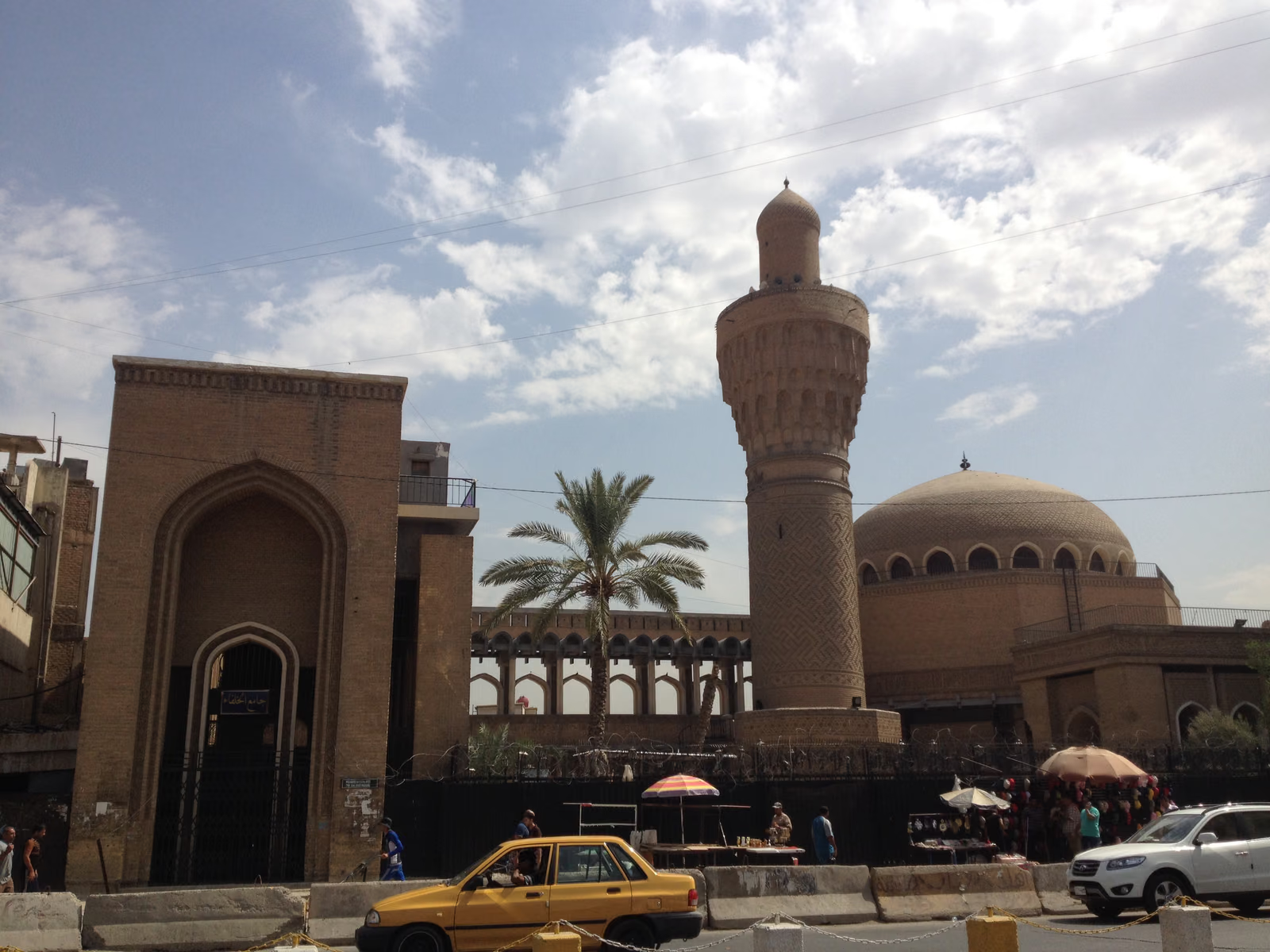
In 1960 the Ministry of Awqaf handed Mohamed Makiya his first major public commission and a difficult brief: build a Friday mosque on the site of a tenth-century Abbasid foundation near the Suq al-Ghazl, and keep the thirteenth-century minaret that is the only medieval fabric left in Baghdad from the caliphate. Makiya fought for two years, unsuccessfully, to enlarge the cramped site. What he built instead is a set of separate pieces — a domed prayer hall and three brick porticoes — each sized and positioned against the minaret, which he set in a sunken court so that its base could be read. The brickwork answers the medieval shaft's muqarnas galleries without imitating them. It is the founding statement of the argument Makiya spent fifty years making.
The Khulafa Mosque belongs to the building programme of the Iraqi Development Board, which in the 1950s spent oil revenue on a modern capital and commissioned foreign architects on an extraordinary scale: Frank Lloyd Wright produced an unbuilt plan for a Baghdad opera house and cultural centre, Walter Gropius and The Architects Collaborative designed the University of Baghdad, Gio Ponti built the Development Board's own headquarters, and Le Corbusier's gymnasium was completed posthumously in 1980. Iraqi architects — Makiya, Rifat Chadirji, Hisham Munir, Qahtan Awni, Ellen and Nizar Jawdat — worked alongside and against that programme, and it was Nizar Jawdat's family connections that brought Gropius to Baghdad in the first place.
Wikidata Q12204233 · Commons: File:مسجد الخلفاء في بغداد.jpg · Photo: Osamah Ibrahim · Licence: CC BY-SA 3.0