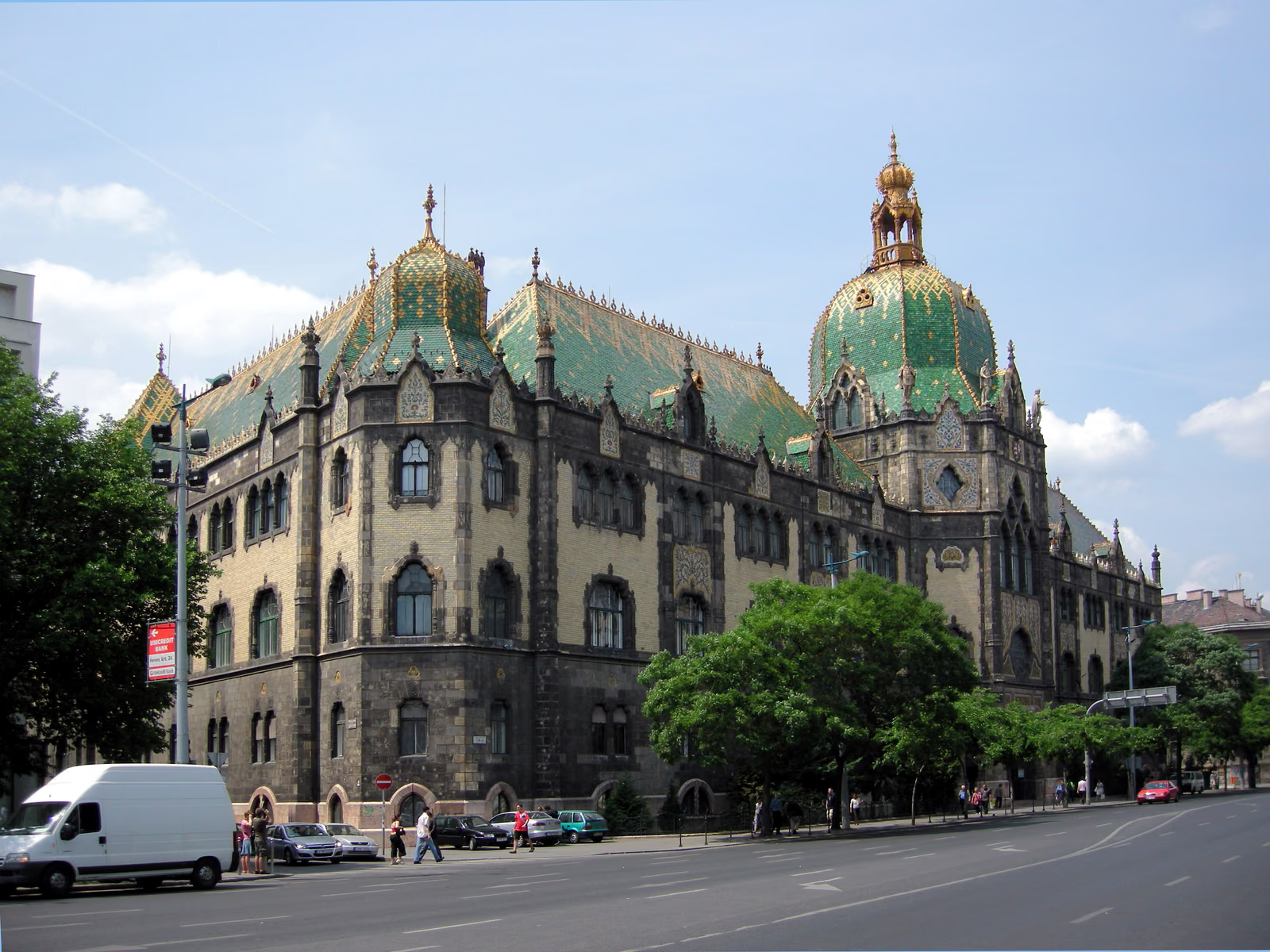
Lechner trained in Pest and Berlin and spent his early career on competent French-inflected apartment blocks before deciding that Hungary needed a modern architecture that was recognisably its own. He looked for it first in Hungarian folk embroidery and later, following the linguistic theories current in Budapest, in Indian and Persian ornament, which he believed shared an ancestry with Magyar pattern. The vehicle was ceramic: he worked repeatedly with the Zsolnay factory at Pécs, whose frost-proof pyrogranite let him carry saturated colour and relief across roofs and facades that would otherwise have gone grey in the Danube winter. Beneath the tilework his buildings are matter-of-fact iron-and-brick structures. He died largely unbuilt in his last decade, having failed to convert the profession he had scandalised.