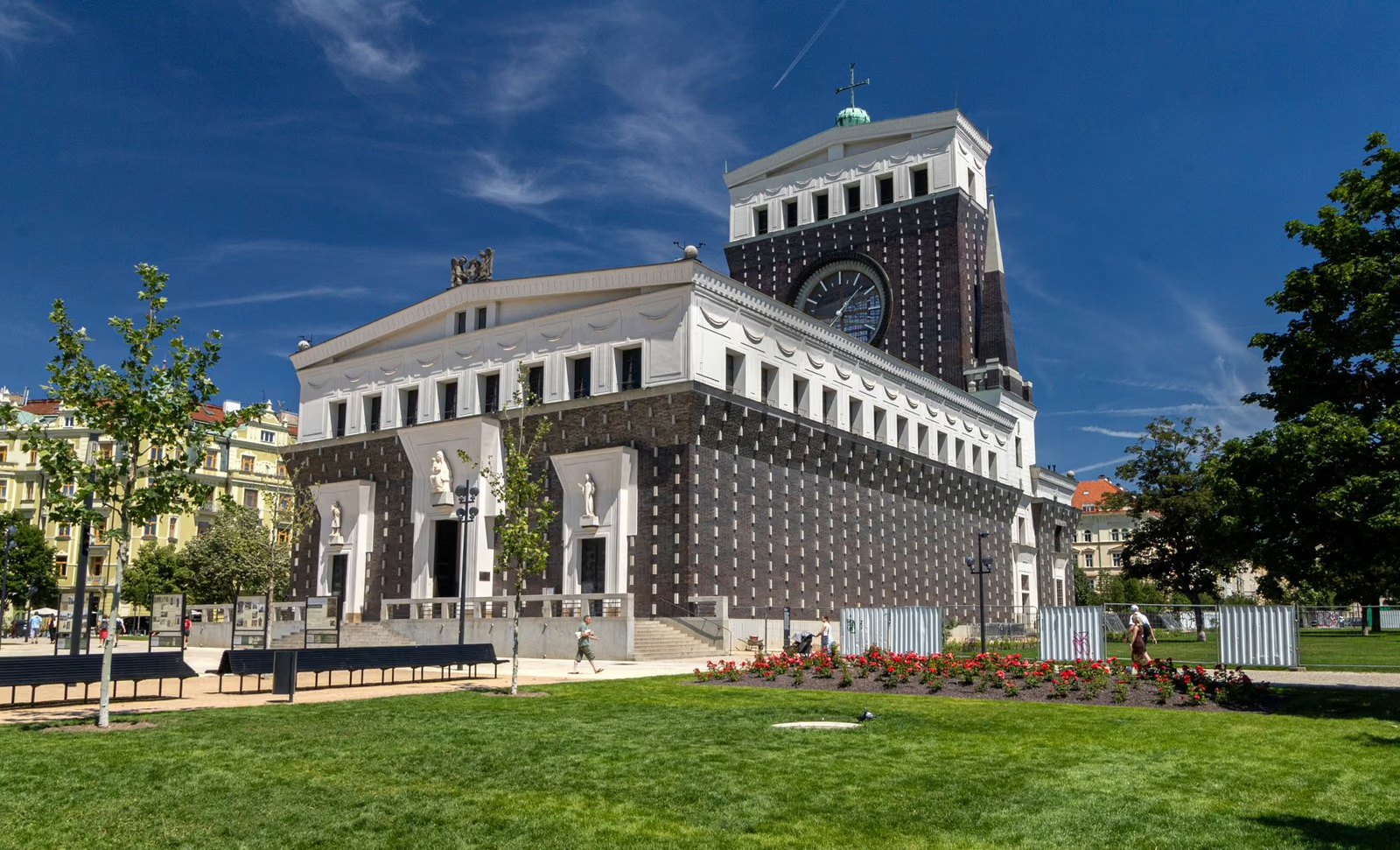
A joiner's son from Ljubljana, Plečnik was picked out by Otto Wagner in Vienna and built the Zacherlhaus there before the First World War. He then worked in three cities in succession: Prague, where Masaryk gave him the rebuilding of the castle for the new republic, and Ljubljana, which he redrew almost single-handedly with bridges, embankments, a market, a cemetery and a library. He refused the label the century offered him. Trained inside the Secession, he kept the column, the architrave and the axis, then handled them with such freedom — a Doric order in raw brick, a pediment carried on stacked stone drums — that the result reads neither as revival nor as modernism. Comparisons to Gaudí in Barcelona are commonplace and roughly fair.