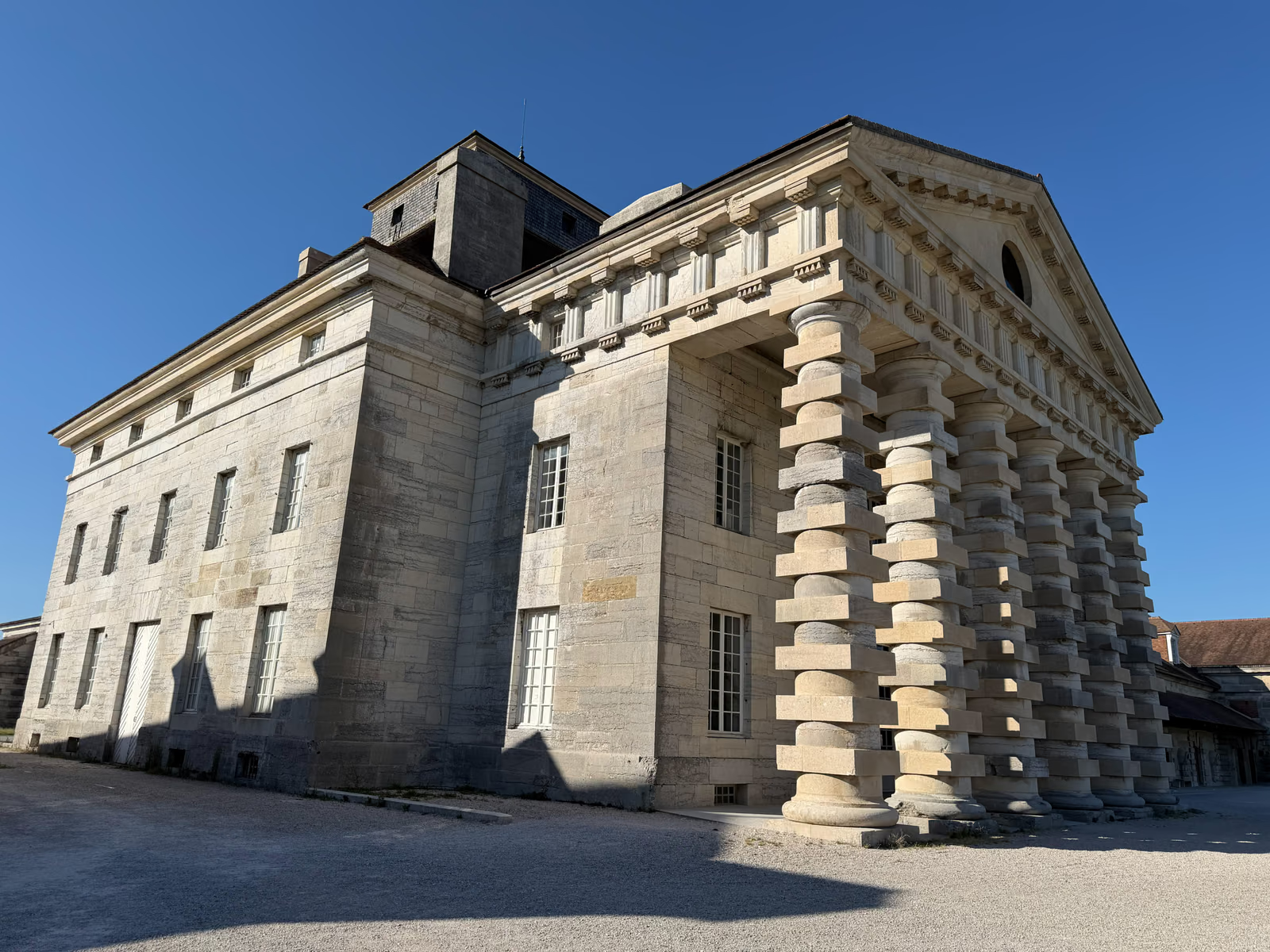
Ledoux trained under Jacques-François Blondel and built his career on royal and speculative commissions in Paris and the Franche-Comté. His architecture strips classical language back to elementary solids — cylinders, cubes, pediments carried on unfluted banded columns — and then loads those solids with programme: a saltworks laid out as a half-circle of supervision, toll gates ringing Paris like propylaea, a theatre at Besançon whose stepped auditorium did away with the boxes of privilege. Imprisoned during the Terror as an architect of the hated tax farm, he spent his last years elaborating an unbuilt ideal city at Chaux, published as engravings in 1804. Nineteenth-century critics read those plates as megalomania; twentieth-century ones read them as the beginning of modern architecture. Both were looking at the same drawings.