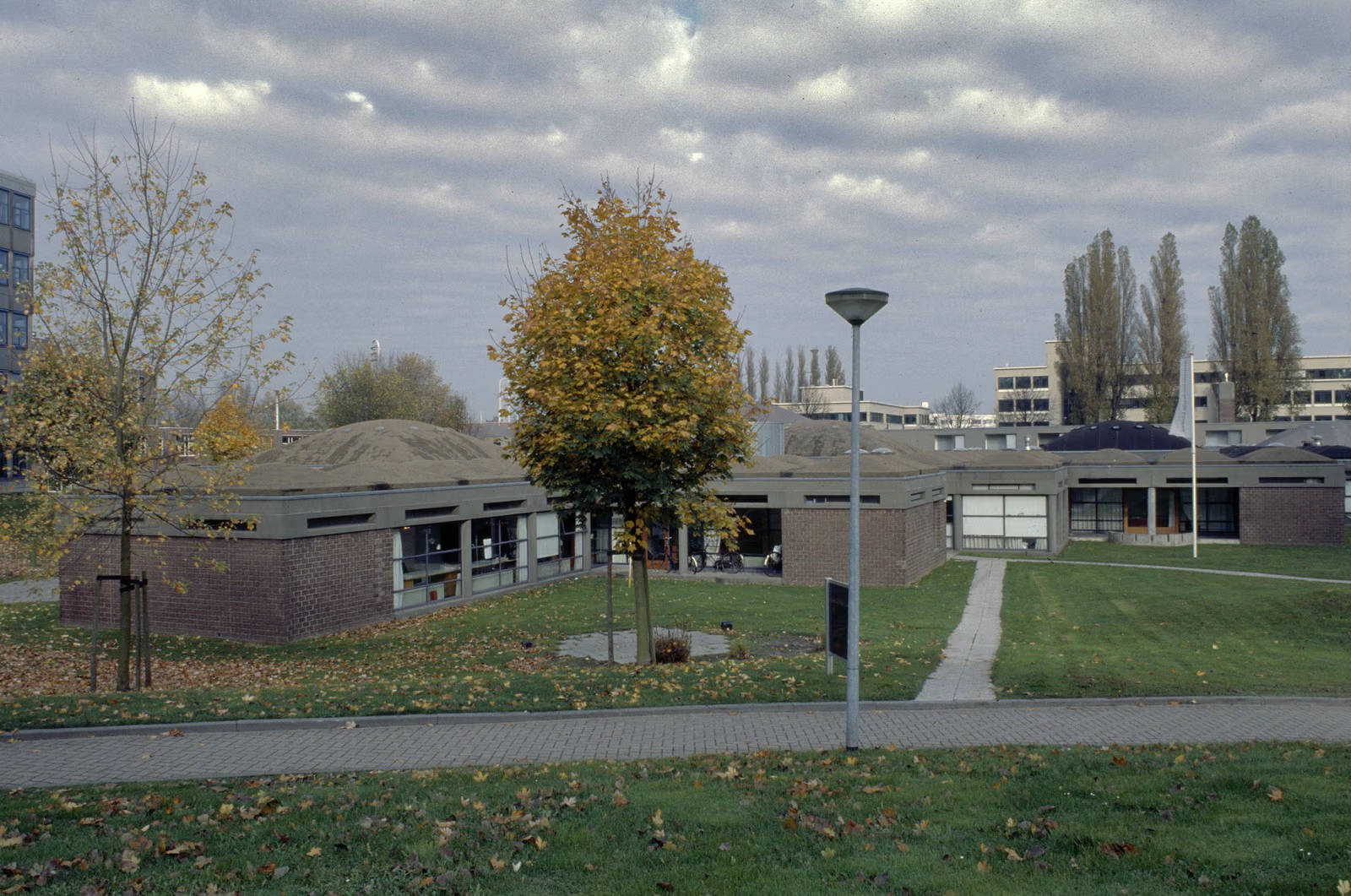
Van Eyck sat out the war studying in Zurich, returned to Amsterdam in 1946 and spent the next two decades designing several hundred municipal playgrounds — small, exact interventions in bombed and leftover ground. Through CIAM and then Team 10 he attacked functionalist planning for treating inhabitants as statistics, arguing instead for places and occasions with a clear threshold between them. He edited the magazine Forum with Herman Hertzberger and Jaap Bakema, taught at Delft, and read the ethnography of the Dogon and the Pueblo closely without imitating their forms. His buildings — the Amsterdam orphanage, the Sonsbeek sculpture pavilion, the Hubertus House for single mothers — are assembled from repeated small units gathered around thresholds rather than composed as single objects. He refused every label offered him.