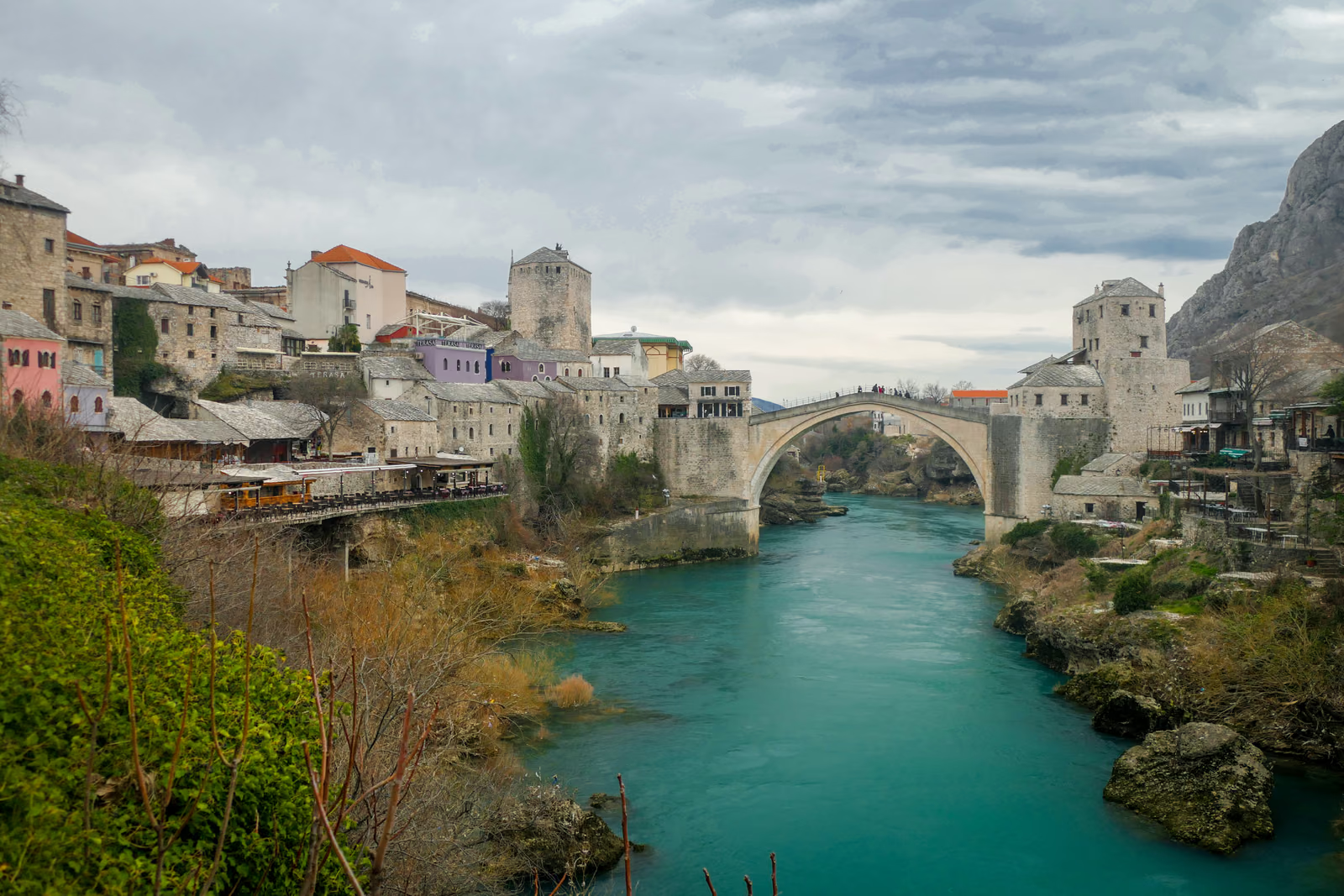
The Ottoman geographer Katip Çelebi recorded that the wooden bridge Hayruddin was sent to replace "swayed so much that people crossing it did so in mortal fear". His answer was a single stone arch thrown clear across the Neretva gorge, with no pier in the water: the abutments are keyed into the limestone cliffs and rise more than six metres before the arch springs. Work began in 1557 and the inscription dates completion to the Muslim year 974, between July 1566 and July 1567. On completion it was among the widest arches yet built anywhere, and the townspeople took their name from it — mostari, the bridge keepers, who manned the two towers at either end. Almost nothing is documented about how it was made; the mortar is traditionally said to have been mixed with egg white. What survived instead were the tower gates, the ribbed roadway that still gives a foothold on the climb, and the name of the builder.
During the Croat–Bosniak War the Army of the Republic of Bosnia and Herzegovina used the bridge as a supply route, and on 9 November 1993 it was shelled and destroyed by the Croatian Defence Council. The arch was rebuilt to the original design, largely from stone quarried locally and blocks recovered from the river, under a programme coordinated with UNESCO and the World Bank; it reopened on 23 July 2004, and the old town around it was inscribed as a World Heritage Site in 2005. In 2017 the appeals chamber of the International Criminal Tribunal for the former Yugoslavia found that the bridge had been a legitimate military target at the time it was destroyed.
Wikidata Q188528 · Commons: File:Mostar bridge cloudy.jpg · Photo: Hibasi · Licence: CC BY-SA 4.0