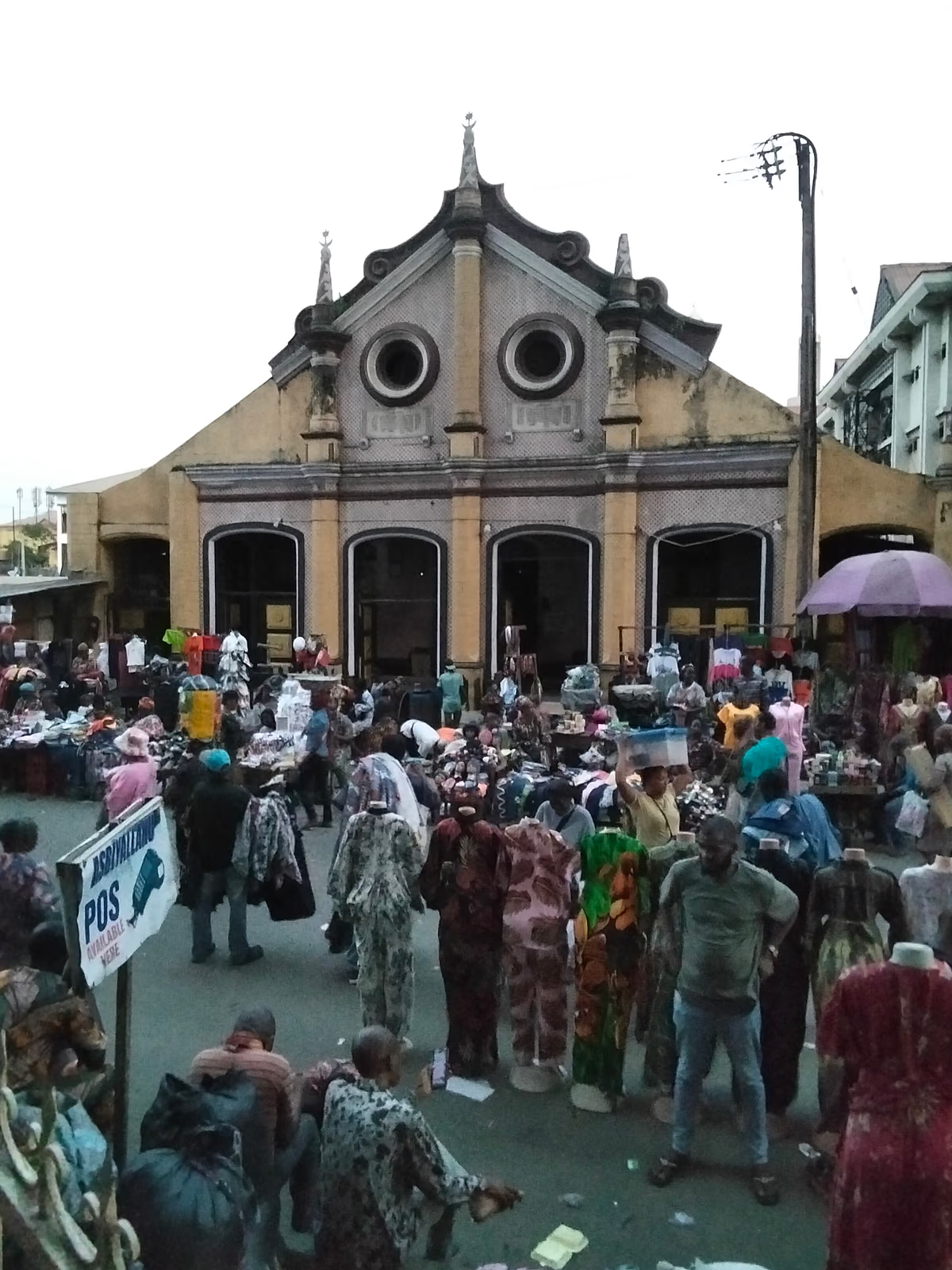
Construction began in 1891 on Martins Street, Lagos Island, financed by the merchant Mohammed Shitta and directed by João Baptista da Costa, a Brazilian returnee builder, with a local builder named Sanusi Aka. The result is the clearest surviving statement of the Afro-Brazilian manner in Lagos: a symmetrical stuccoed front with moulded pilasters, balustrades and imported glazed tiles, a Salvador church facade reasoned into a mosque. The opening on 4 July 1894 was a set-piece of late-nineteenth-century Lagos: the colonial governor Sir Gilbert Carter presided, Oba Oyekan I attended alongside the pan-Africanist Edward Wilmot Blyden and the English convert Abdullah Quilliam, who represented Sultan Abdul Hamid II. The Sultan made Shitta a Bey of the Ottoman Order of the Medjidie, and the compound name Shitta-Bey has attached to the building ever since.
The Brazilian manner reached Lagos with the Agudá — formerly enslaved people from Brazil and their descendants who returned to the Bight of Benin across the nineteenth century, many after the 1835 Malê revolt in Salvador and the deportations that followed it. They came back carrying trades they had been forced to learn in Bahia and Pernambuco: bricklaying, carpentry, lime stucco, tile-setting. Those trades built much of nineteenth-century Lagos, and the Shitta-Bey Mosque is their most complete surviving work. The building therefore records two things at once: an architectural language carried back across the Atlantic by people who had been shipped the other way, and the patronage of a Muslim merchant elite operating inside a British colonial city — the governor presided at the opening, and a delegation from the Ottoman Sultan conferred a title. Almost nothing is recorded of da Costa's own life.
Wikidata Q48791511 · Commons: File:Shitta Bey Mosque, Lagos Island, Lagos.jpg · Photo: Beendy234 · Licence: CC BY-SA 4.0