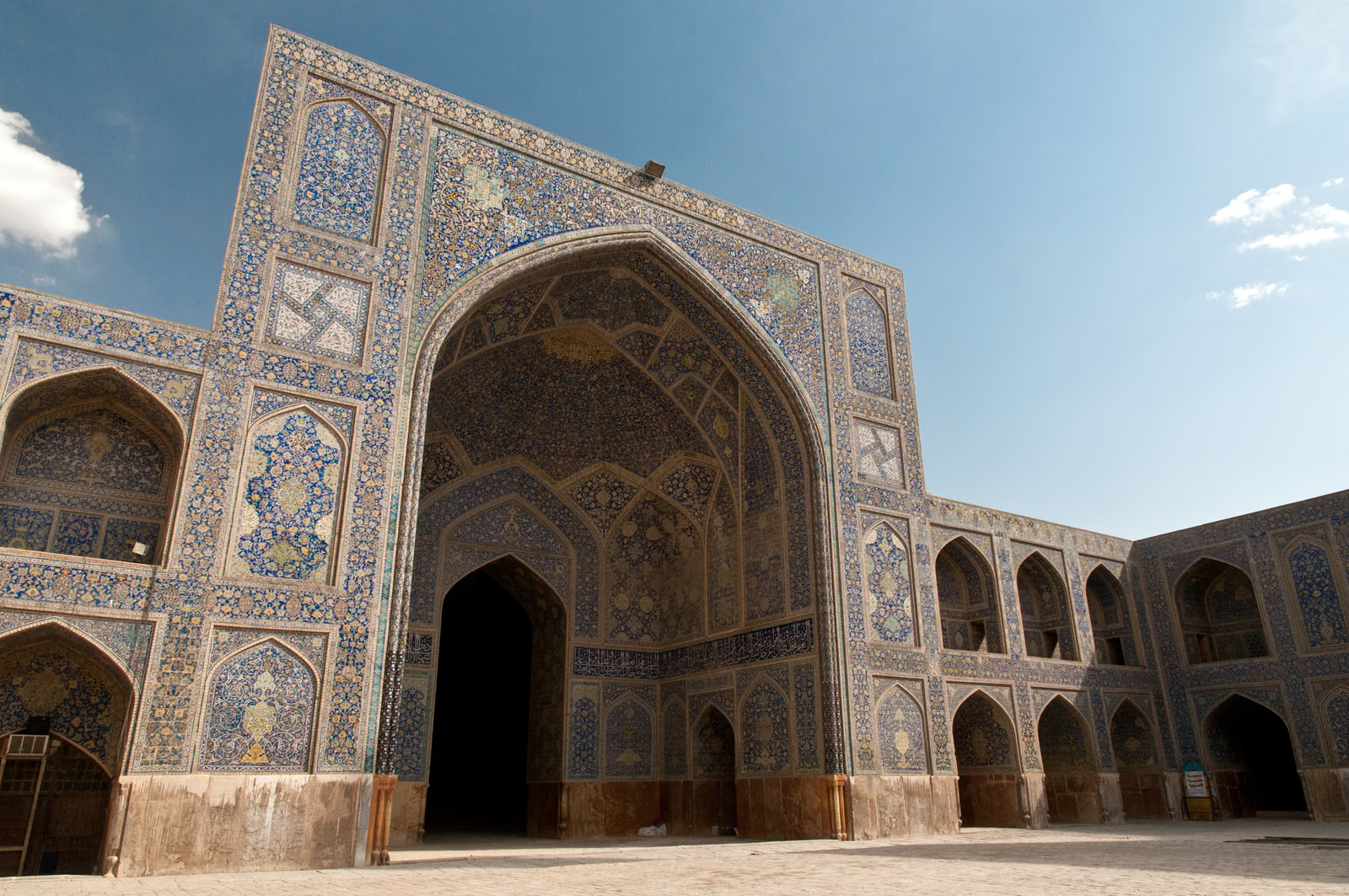
The mosque had to face two directions at once. Its portal belongs to the Naqsh-e Jahan maidan and must sit square on that axis; its prayer hall belongs to Mecca and must sit forty-five degrees off it. Ali Akbar Isfahani resolved the conflict inside the entrance: you pass under a muqarnas half-vault, turn through a vestibule, and emerge into a courtyard that has quietly rotated beneath you, so that the shift is experienced as arrival rather than as a fault. Begun in 1611 for Shah Abbas I, the main fabric was finished by about 1629 and the tilework continued to roughly 1638. To meet the deadline the builders largely abandoned cut-tile mosaic for the faster seven-colour haft rangi technique, painting several glazes onto one tile — a compromise that changed the surface of Persian architecture for two centuries. The architect’s name is inscribed above the entrance doorway with Muhibb Ali Beg Lala as supervisor.
Wikidata Q643098 · Commons: 2017-09-5 Iran, Esfahan, Shah Mosque.jpg · Photo: Laurens R. Krol · Licence: CC BY 4.0