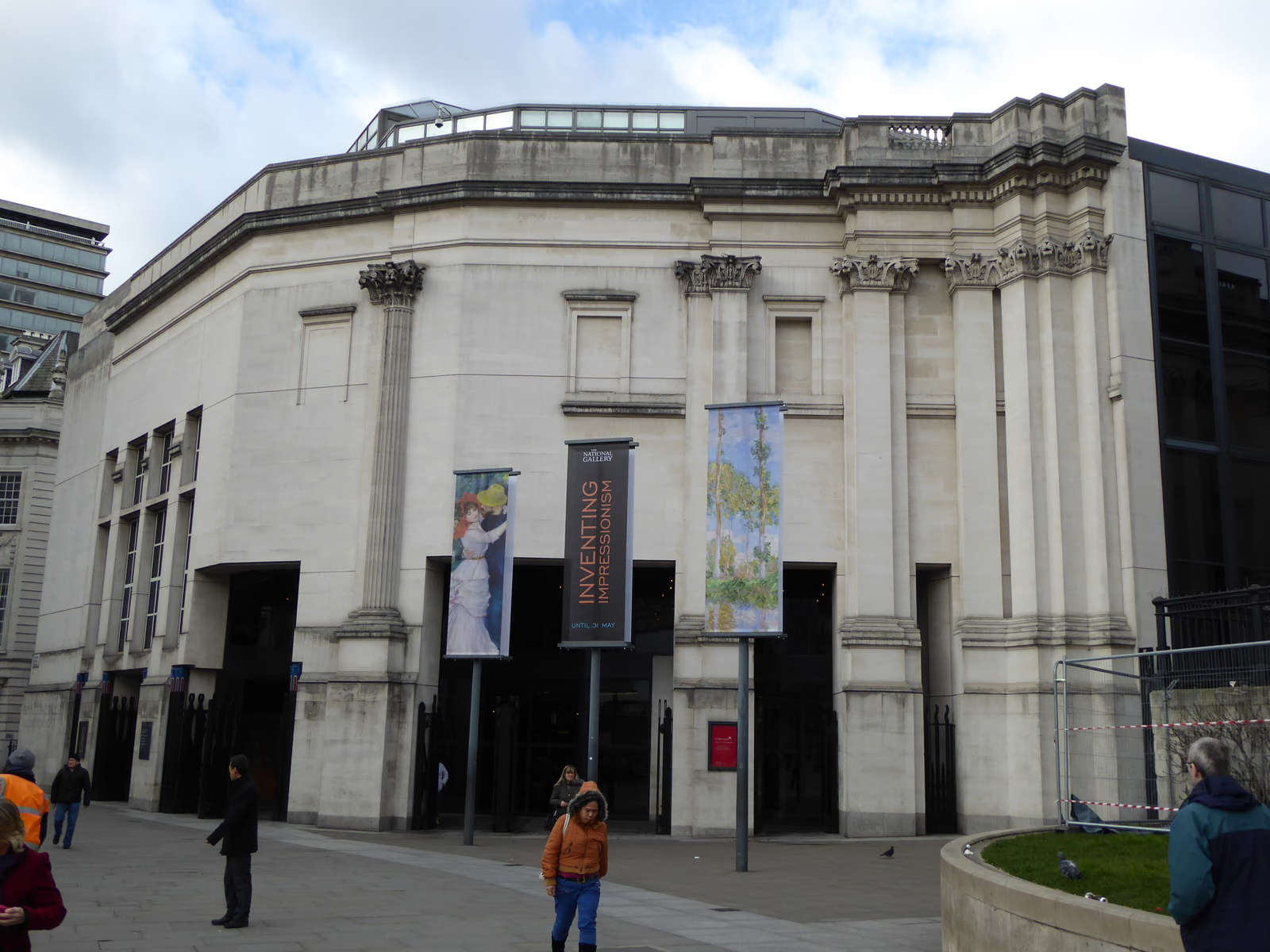
The National Gallery's trustees held two competitions for this extension before choosing Venturi, Scott Brown and Associates in 1986, after a first-round entry by another practice was famously condemned by the Prince of Wales as a "monstrous carbuncle on the face of a much-loved and elegant friend" — a phrase that outlived the design it killed. Scott Brown, principal-in-charge on the project alongside Venturi, answered the client's real problem: a building large enough to hold the Gallery's early Renaissance collection without competing with William Wilkins's 1838 neoclassical facade next door. The solution quotes that facade directly — Corinthian pilasters marching across the new stone front — but lets the order thin out and finally disappear as the wall turns the corner toward Trafalgar Square, a joke about classical convention only a trained eye registers. Inside, top-lit enfilade galleries modelled on Soane and Brunelleschi lead visitors up a deliberately theatrical staircase to the paintings. Built between 1988 and 1991 at a cost of some £35 million funded by the Sainsbury family, it was given Grade I listed status in 2018.
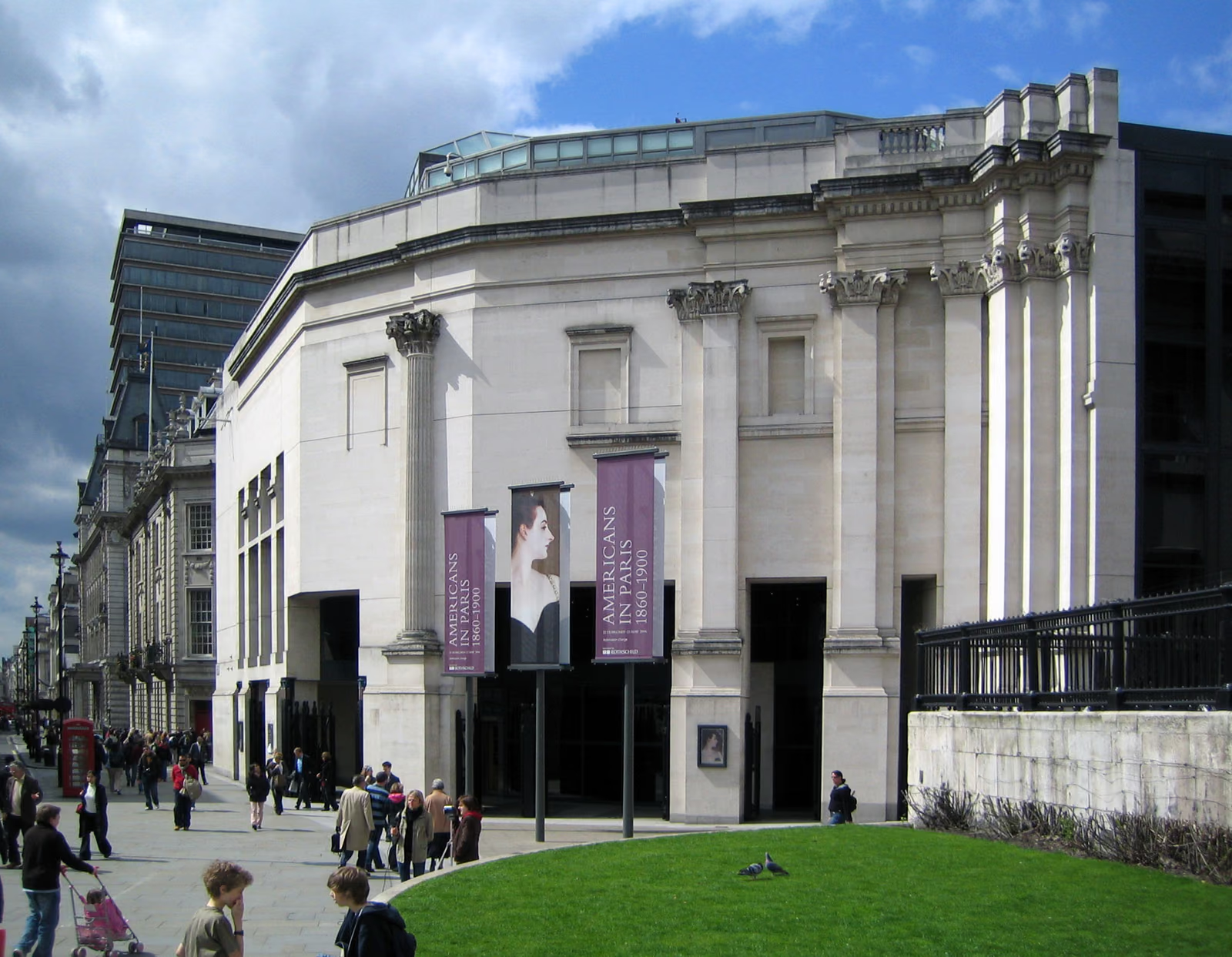
Wikidata Q52984670 · Commons: File:Sainsbury Wing, National Gallery, London, March 2015 (01).JPG · Photo: Ardfern · Licence: CC BY-SA 3.0