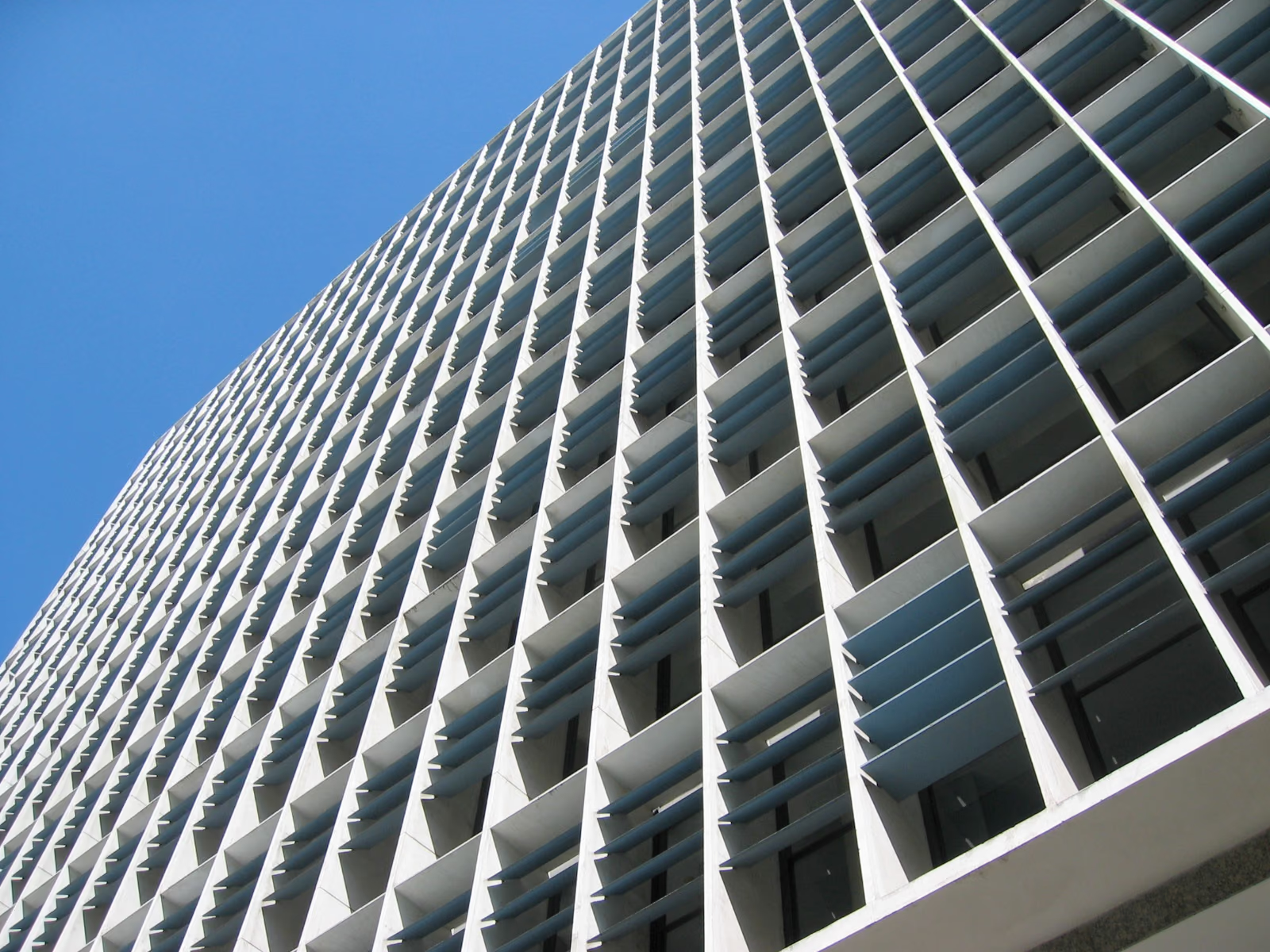
The 1936 competition for the Ministry of Education and Health was won by an eclectic scheme from Arquimedes Memória. Lúcio Costa used his standing in the Vargas government to have the result set aside and to assemble his own team instead — Affonso Eduardo Reidy, Carlos Leão, Jorge Machado Moreira, Ernani Vasconcellos, the landscape architect Roberto Burle Marx and Costa's young intern Oscar Niemeyer — and invited Le Corbusier from Switzerland as consultant. Building ran from 1939 to 1945. It was the first modernist public building in the Americas, on a scale larger than anything Le Corbusier had then built, and it settled the vocabulary Brazilian architecture would use for the next forty years: a slab on pilotis, glass on both long faces, blue curved forms on the roof hiding the water tanks, tropical gardens by Burle Marx, azulejo murals and paintings by Cândido Portinari, and the world's first adjustable brise-soleil turning the northern glass wall into a working machine.
Palácio Capanema was commissioned in 1936 by the government of Getúlio Vargas, who had taken power in the 1930 Revolution and ruled from 1937 as dictator of the Estado Novo. English Wikipedia records that Vargas jailed leftist opponents, copied elements of Italian fascism in refounding Brazil as an authoritarian state, and "dabbled with loyalty to the Axis" as fascism reached its peak in Europe. Its own design team was left-leaning — Niemeyer was an active member of the Communist Party of Brazil — commissioned all the same to build this government's flagship monument. Construction ran through 1939 to 1945, the whole span of the Second World War, and the building was finished the same year the Brazilian Army forced Vargas to resign, on 29 October 1945, ending the dictatorship that had commissioned it.
Wikidata Q2598551 · Commons: MESP1.JPG · Photo: Imagens AMB · Licence: PD