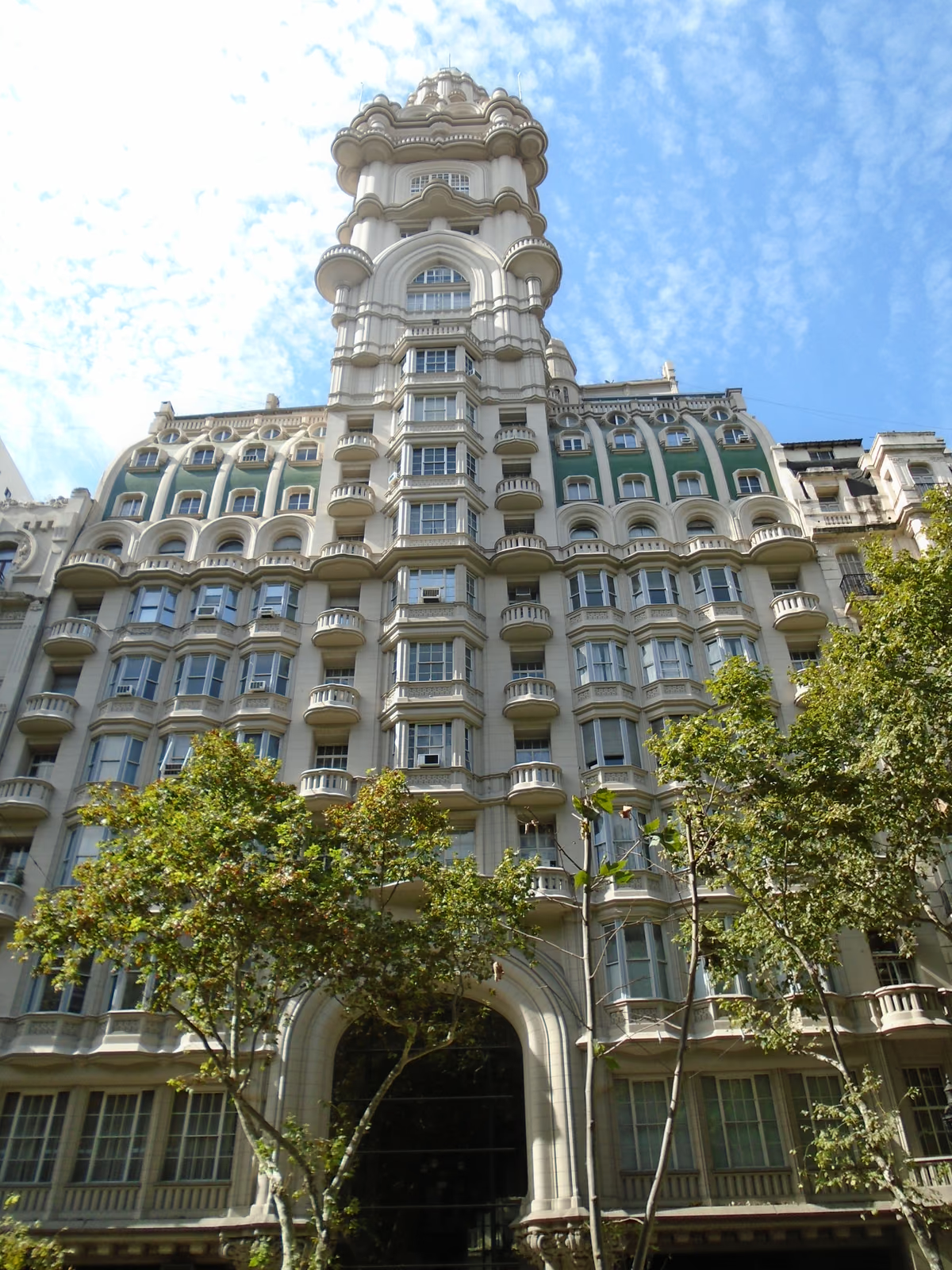
Mario Palanti drew the Barolo from 1919 and it opened on 7 July 1923, the tallest building in Buenos Aires until the Kavanagh overtook it in 1935 and, at a hundred metres, second in South America only to its own Montevideo twin, the Palacio Salvo. It swallowed 650,000 kilos of steel, 3,500,000 bricks and 70,000 barrels of Portland cement. The client, the textile manufacturer Luis Barolo, died before it opened. Palanti designed everything down to the door handles, lamps and lift cages, and threaded the whole building with references to Dante's Divine Comedy. What the eye actually registers is stranger than any of that: rank on rank of bow-fronted balconies under green-glazed half-domes, a vocabulary Spanish Wikipedia calls a brush with Art Nouveau and Art Deco that ends as an idiom of Palanti's own, drawing on Gothic and on the Islamic architecture of India. It was declared a National Historic Monument in 1997.
Wikidata Q571763 · Commons: Palacio Barolo 10.jpg · Photo: Eugenio Hansen, OFS · Licence: CC BY-SA 4.0