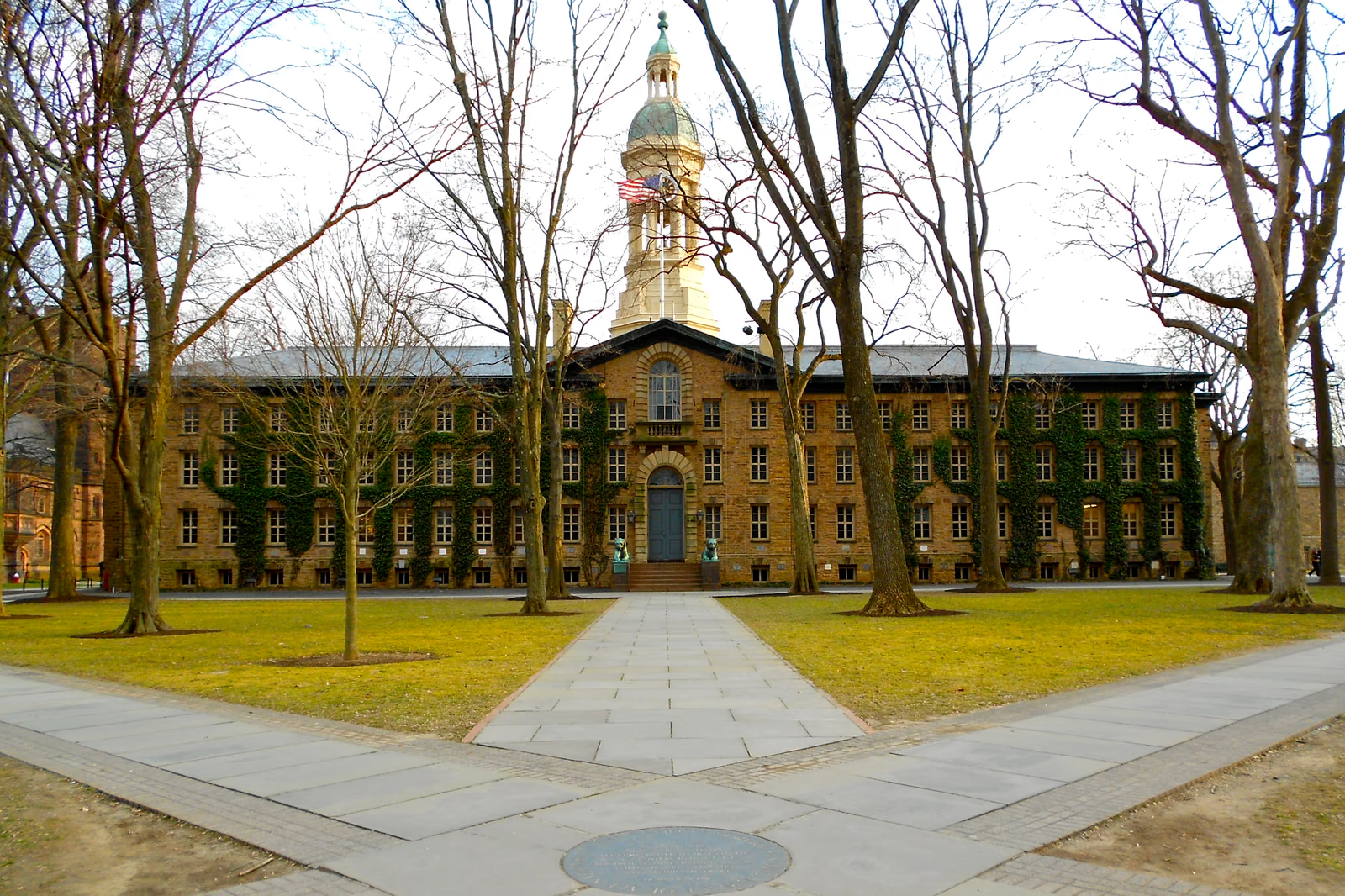
Nassau Hall was, at its completion in 1756, the largest building in the American colonies built for a single institution — one long sandstone block holding the whole College of New Jersey, later Princeton, under one roof. It served as more than a school. Continental troops and then British troops occupied it in 1776; the following January, Alexander Hamilton's artillery fired on the building during the Battle of Princeton, and a cannonball is said to have decapitated a portrait of George II hanging inside. From June to November 1783 the Continental Congress met in its library, making the hall briefly the capital of the United States, in session when word arrived that the war had ended by treaty. Fire gutted the interior twice, in 1802 and 1855; Benjamin Latrobe rebuilt it the first time and John Notman the second, adding the cupola and italianate details visible today. The sandstone walls and the scar from that cannonball, on the building's south side, are original.
Wikidata Q6967574 · Commons: File:Nassau Hall Princeton.JPG · Photo: Smallbones · Licence: CC0