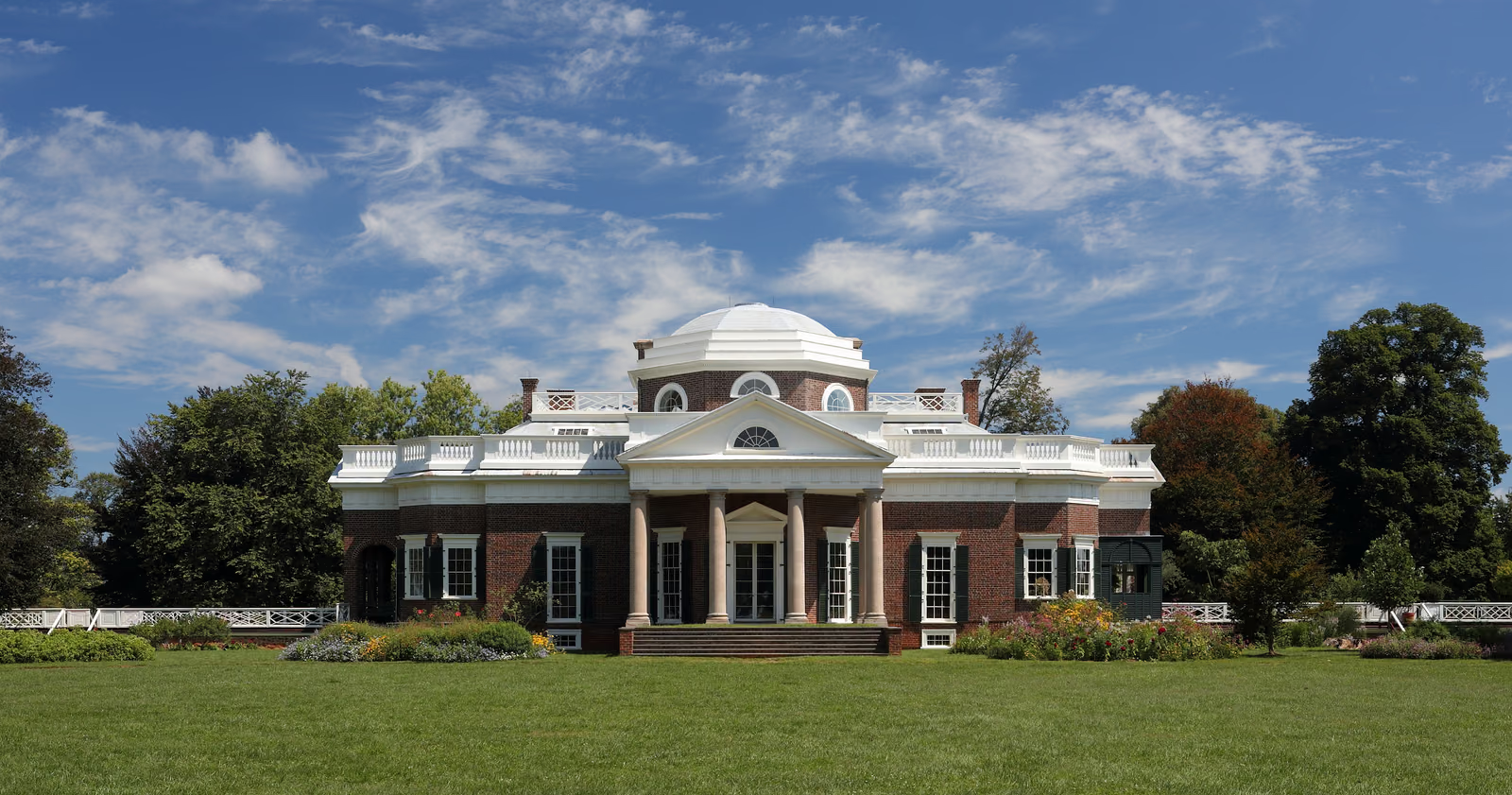
Jefferson began building on the mountaintop he called Monticello in 1768 and never really stopped. The first house, a compact block with a stacked double portico, went up while he was reading Palladio; after five years in France he pulled much of it down and rebuilt from 1794, absorbing what he had seen at the Hôtel de Salm in Paris and adding the low dome over the parlour, the first on an American house. The result is deliberately deceptive. From the west lawn it reads as a single storey, because Jefferson hid the mezzanine behind the entablature, put the staircases in narrow side passages, and buried the kitchens, dairy and stables in service wings dug into the slope so that the household ran out of sight. Brick was fired on site and timber cut on the estate, both worked by enslaved labour. The house was substantially complete by 1809, though he kept altering it until his death in 1826.
Monticello was built by the people Jefferson enslaved. About 150 enslaved men, women and children worked the plantation at any one time, and the crafts that produced the house were theirs: enslaved workers dug the clay and fired the brick, cut and joined the timber, and from 1794 ran a nailery on Mulberry Row staffed by boys aged roughly ten to sixteen. Jefferson freed two people during his lifetime and five in his will, all members of the Hemings family. In 2000 the Thomas Jefferson Foundation, which has owned the site since 1923, concluded that he was the father of Sally Hemings's children; the Foundation has since restored the Mulberry Row structures and the South Wing room associated with Hemings, and its Getting Word project has recorded the testimony of descendants of the enslaved families.
Wikidata Q199618 · Commons: File:Thomas Jefferson's Monticello.JPG · Photo: Martin Falbisoner · Licence: CC BY-SA 3.0