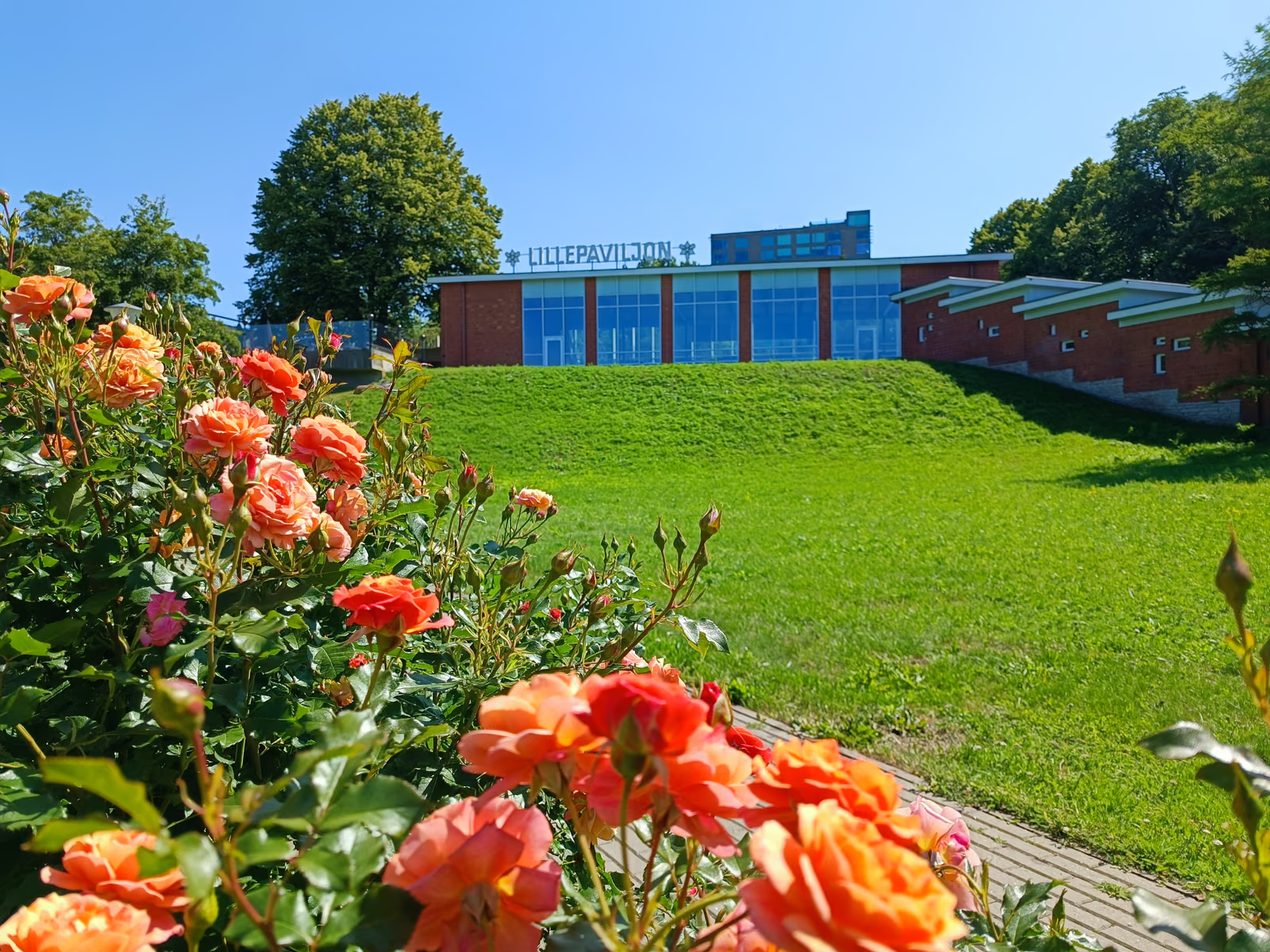
Valve Pormeister was a landscape architect at the state agricultural design institute, brought in to green the steep ground below the new Song Festival Grounds on Pirita tee. She and Henno Sepmann worked up eight variants for the exhibition hall and put them to the agriculture minister Edgar Tõnurist, who chose the one that gave most ground to the trees. Pormeister therefore designed both the landscape and the building. Where the practice of the day was to clear a site and replant afterwards, she threaded a low brick hall between the alders already standing on the escarpment. The entrance wing steps down the slope in a diagonal, like a run of rapids; the closed north wall carries small windows placed off any grid, and the south and south-east faces are glass from floor to eaves — an extent of glazing almost unheard of in post-Stalinist building. It was her first major work and it made her name.
The pavilion was not a free commission. It was built as one element of a state programme, adopted by the Central Committee of the Estonian Communist Party in 1957 and by the Council of Ministers of the Estonian SSR, to extend the Song Festival Grounds and the exhibition of economic and cultural achievements for the twentieth anniversary of Soviet Estonia. Pormeister worked inside the state design institutes for her whole career and was decorated by that state: the Prize of Soviet Estonia in 1965 and 1967, the title of Honoured Architect of the Estonian SSR, and the USSR State Prize. She was later awarded the Order of the White Star by the restored Republic of Estonia.
Wikidata Q16410125 · Commons: Lillepaviljon 2023.jpg · Photo: Liblikuefekt · Licence: CC BY-SA 4.0