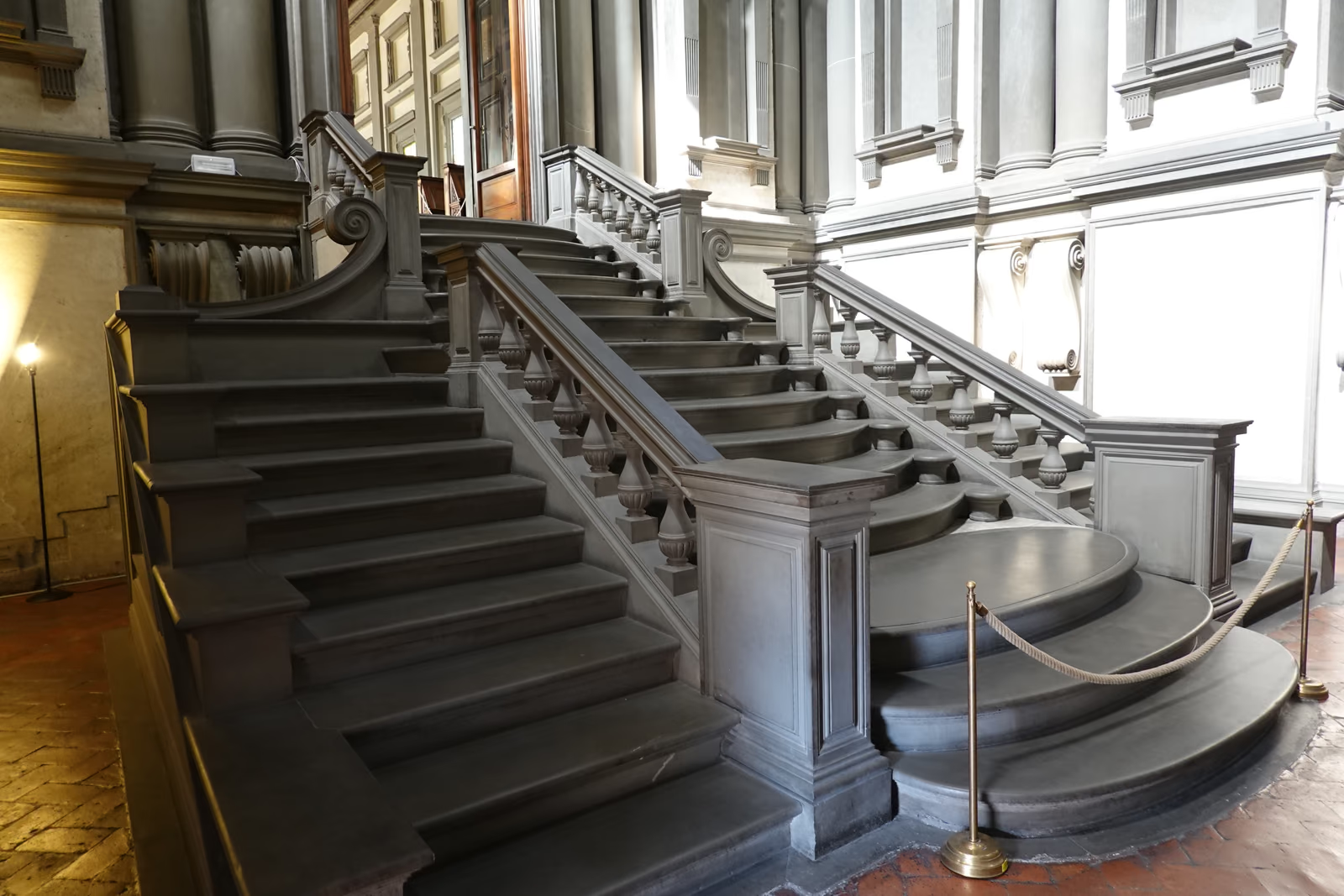
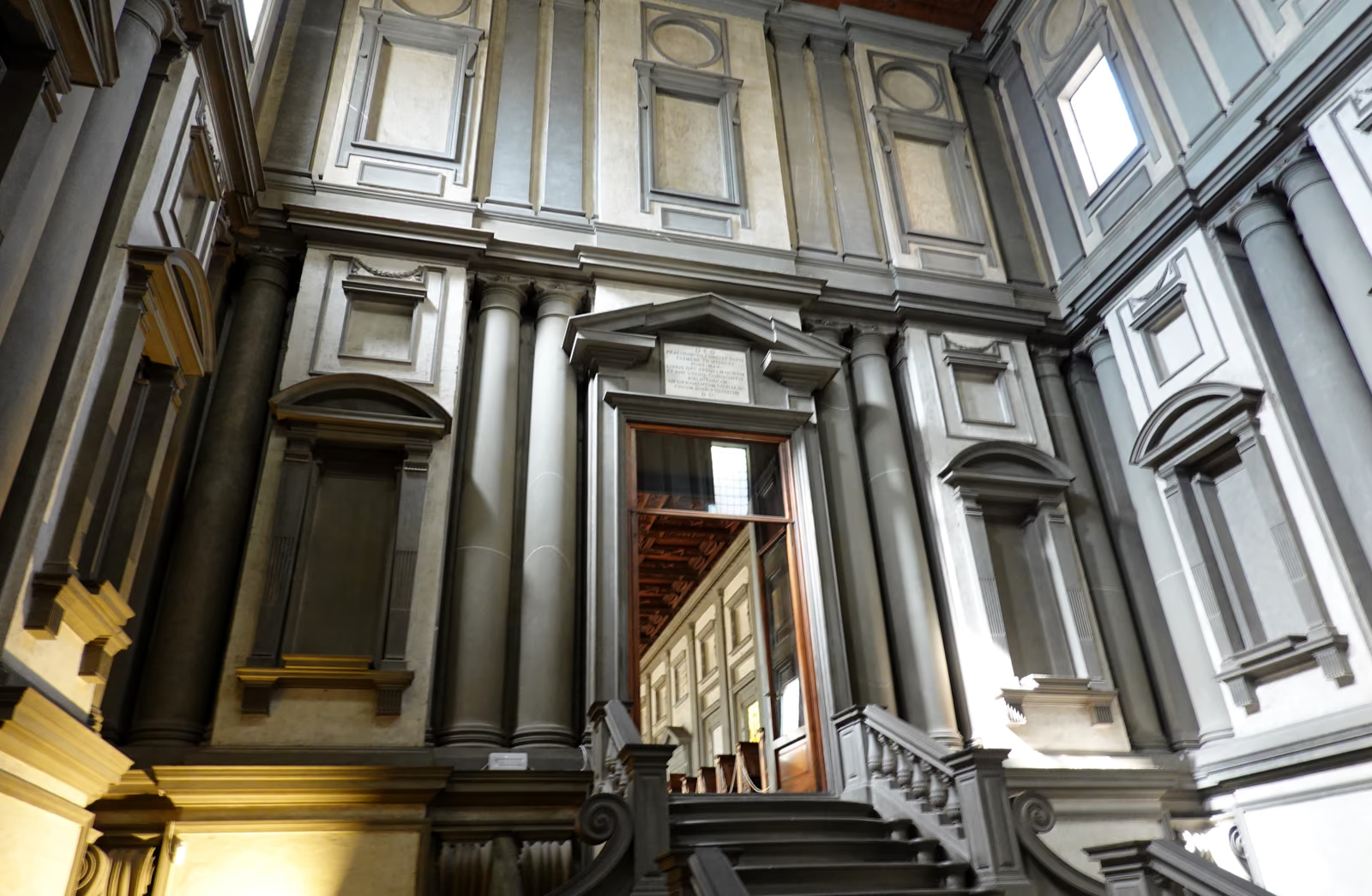
Michelangelo began the Laurentian Library in 1524 for Cardinal Giulio de' Medici, later Pope Clement VII, to house the family's manuscripts at San Lorenzo, but he left Florence for good in 1534 with the vestibule unbuilt and its staircase undesigned. Working from Rome, he sent instructions and, eventually, a small clay model; Bartolomeo Ammannati and Giorgio Vasari built the actual stair in 1559 from that model and his letters, since none of the assistants left behind could otherwise read his intentions. What resulted breaks every rule of the room around it: three flights of grey pietra serena treads pour down from the library door like a solid, curved and convex where a stair should be straight, flanked by volutes that read as furniture rather than structure. The vestibule itself does the same work on the walls, recessing paired columns into blind niches and tapering windows into triangular pediments as if the classical orders were sculpted from a single block rather than assembled. Read since as a founding text of Mannerism, it is a room designed by an architect who had, by then, spent four decades carving marble.
Wikidata Q856419 · Commons: File:Staircase of the Laurentian LIbrary, 15th century, designed by Michelangelo; Florence (2) (48768620157).jpg · Photo: Richard Mortel · Licence: CC BY 2.0