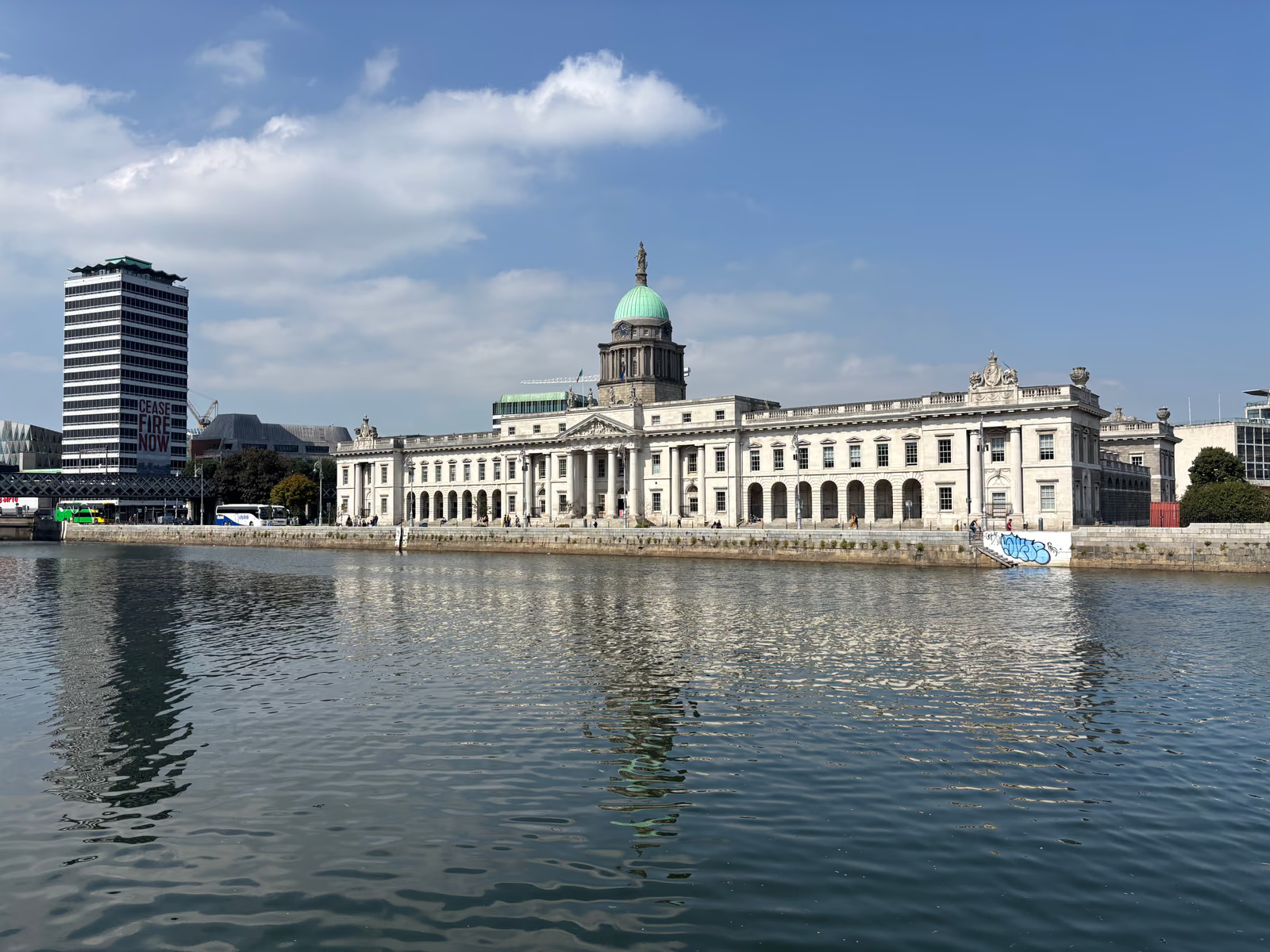
Beresford's decision to move Dublin's customs downriver of the old city was fought by the Corporation and by merchants who saw their quays devalued, and the laying of the foundations was disrupted by a mob several thousand strong. Gandon built anyway, on reclaimed ground, with every available mason in the city engaged on the work. The result is a long river front held down by a rusticated arcade and lifted at the centre by a four-column portico and a dome carrying Henry Banks's figure of Commerce; Edward Smyth carved the keystone heads personifying Ireland's rivers, still the best-loved thing about the building. It cost £200,000 and opened in November 1791. In 1921 it was burned out and the dome collapsed; the Free State restoration rebuilt that dome in Irish Ardbraccan limestone instead of English Portland stone, so it reads distinctly darker than the walls below — a repair that was also a statement. Gandon's interiors were lost entirely, but the exterior remains the finest neoclassical composition in Ireland.
On 25 May 1921, during the Irish War of Independence, the Dublin Brigade of the IRA occupied and burned the Custom House, which by then housed the Local Government Board for Ireland. The object was to destroy the tax and local-government records on which British administration in Ireland depended. Gandon's interiors were destroyed, the dome collapsed, and an irreplaceable body of archives was lost. The operation achieved its aim but cost the IRA heavily: a large number of Volunteers were captured during the attack or the withdrawal. The building was restored under the Irish Free State, and the dome deliberately rebuilt in Irish limestone.
Wikidata Q2300561 · Commons: Custom House from the Liffey, Dublin, Ireland, August 2025.jpg · Photo: Mathieu Chollet · Licence: CC BY-SA 4.0