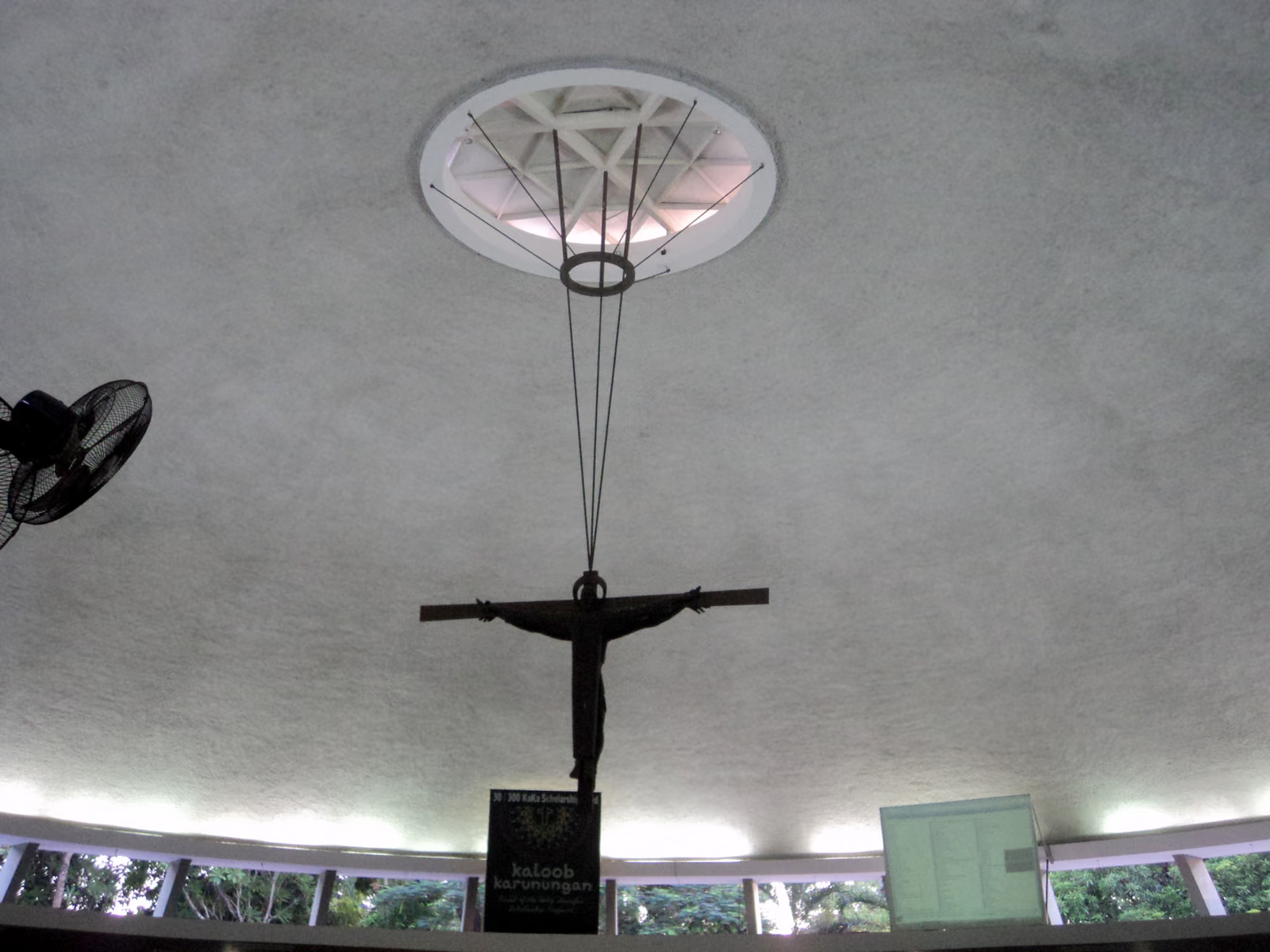
Leandro Locsin was twenty-seven and had built nothing when the chaplain of the University of the Philippines asked him for a campus chapel. What he produced in 1955 was a circular room under a thin concrete shell dome with the altar in the middle of the congregation rather than at one end — a plan the Second Vatican Council would endorse only a decade later. The engineering was by Alfredo Juinio, and the shell is a few centimetres thick across most of its span. The building was made with a group of collaborators who would each later be named National Artists of the Philippines: Vicente Manansala and Carlos Francisco painted the Stations of the Cross, Napoleón Abueva carved the crucifix and the marble altar, Arturo Luz laid the floor. It is a National Historical Landmark and a National Cultural Treasure, and it is where Locsin’s whole career starts.
Wikidata Q7137447 · Commons: Church of the Holy Sacrifice UP Diliman.JPG · Photo: Nickrds09 · Licence: CC BY-SA 3.0