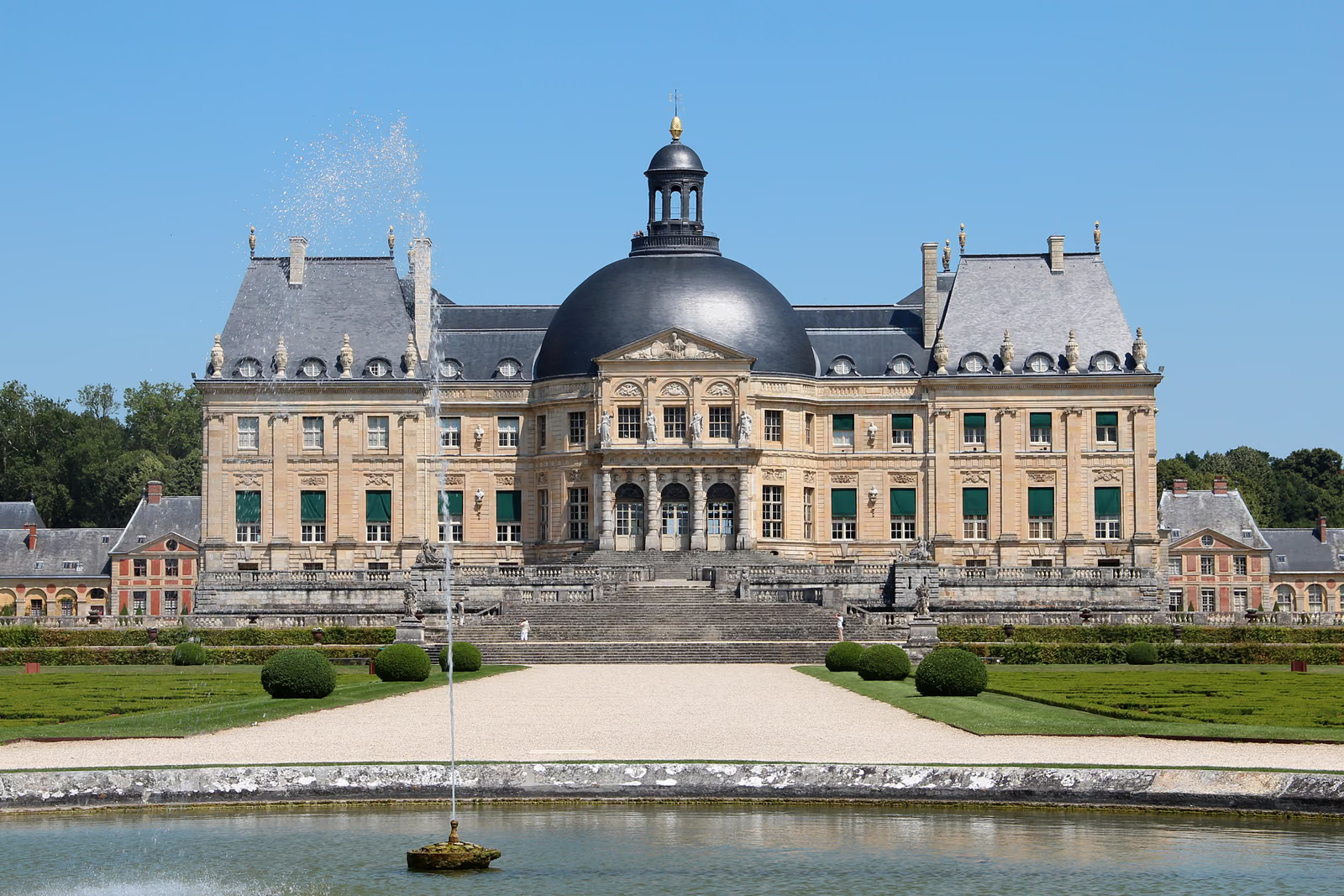
Vaux is the building in which the three disciplines of the French grand siècle were first run as one operation. Le Vau took the plan, Charles Le Brun the painted interiors and André Le Nôtre the garden, and the three were coordinated so tightly that the oval salon reads as the hinge between a forecourt and a two-kilometre axis of water. The move that made the house famous is the salon itself: rather than sit behind the facade, it bulges through it, so the garden front is a single swelling mass under a dome instead of a flat screen of windows. Everything above is subordinate — pilasters stop, the roof breaks, the skyline steps down. Louis XIV attended the inauguration in August 1661, arrested Fouquet three weeks later, and took Le Vau, Le Brun and Le Nôtre to Versailles, where they built the same idea at four times the size.
The estate was assembled by force and paid for from a contested purse. To clear ground for the garden Fouquet bought and demolished three villages, and the displaced villagers were then put to work maintaining the grounds; contemporary accounts put the workforce at 18,000 and the cost at as much as 16 million livres. Fouquet was arrested on 5 September 1661, three weeks after the inauguration, on charges of embezzlement and lèse-majesté brought by Jean-Baptiste Colbert, tried over three years, and sentenced to banishment — commuted by the king to life imprisonment. He died in the fortress of Pignerol in 1680. The house was sealed and its tapestries, statuary and orange trees carried off to Versailles.
Wikidata Q739976 · Commons: File:0 Maincy - Château de Vaux-le-Vicomte (2).JPG · Photo: Jean-Pol GRANDMONT · Licence: CC BY-SA 3.0