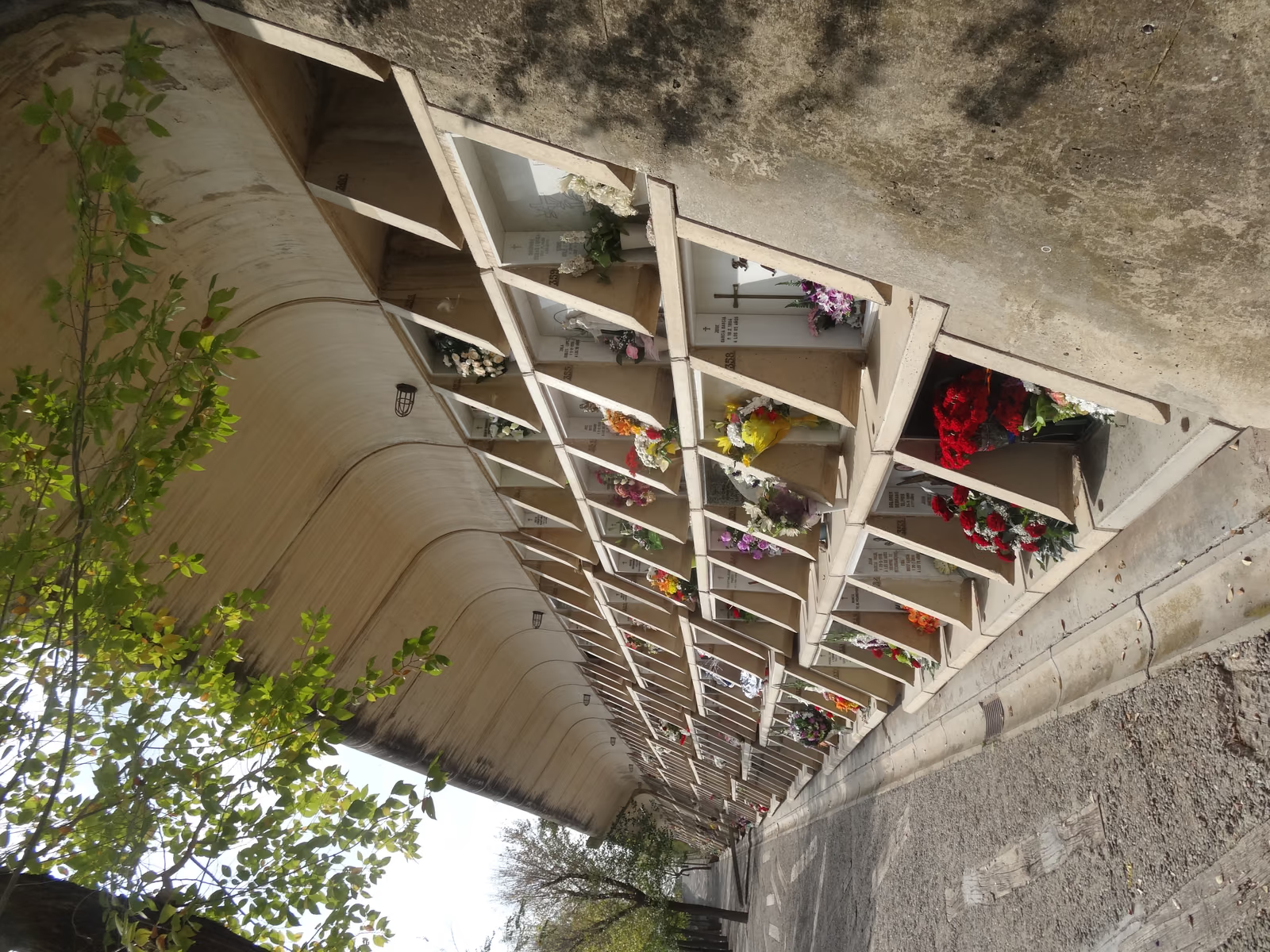
Pinós and Miralles won the competition in 1984 and built the cemetery between 1985 and 1994. Instead of a walled enclosure on flat ground, they cut a shallow ravine into the hillside and made the retaining walls themselves the burial niches, so that the visitor walks downwards between the dead rather than past them; the Catalan name for the project, a riu de vides, a river of lives, describes the section rather than a metaphor. The concrete is left raw and the niche fronts rake outwards to shed rain and take flowers, which is why the wall reads as a set of tilted shelves rather than a grid. Weathering steel is used for gates and edges and rusts deliberately; timber railway sleepers are set into the ground plane in a loose scatter. The work is jointly authored — the standard credit is Miralles–Pinós — and it is often, wrongly, attributed to Miralles alone.
Wikidata Q5994387 · Commons: File:Nou cementiri d'Igualada - 2014 - 02.JPG · Photo: Jordiferrer · Licence: CC BY-SA 4.0