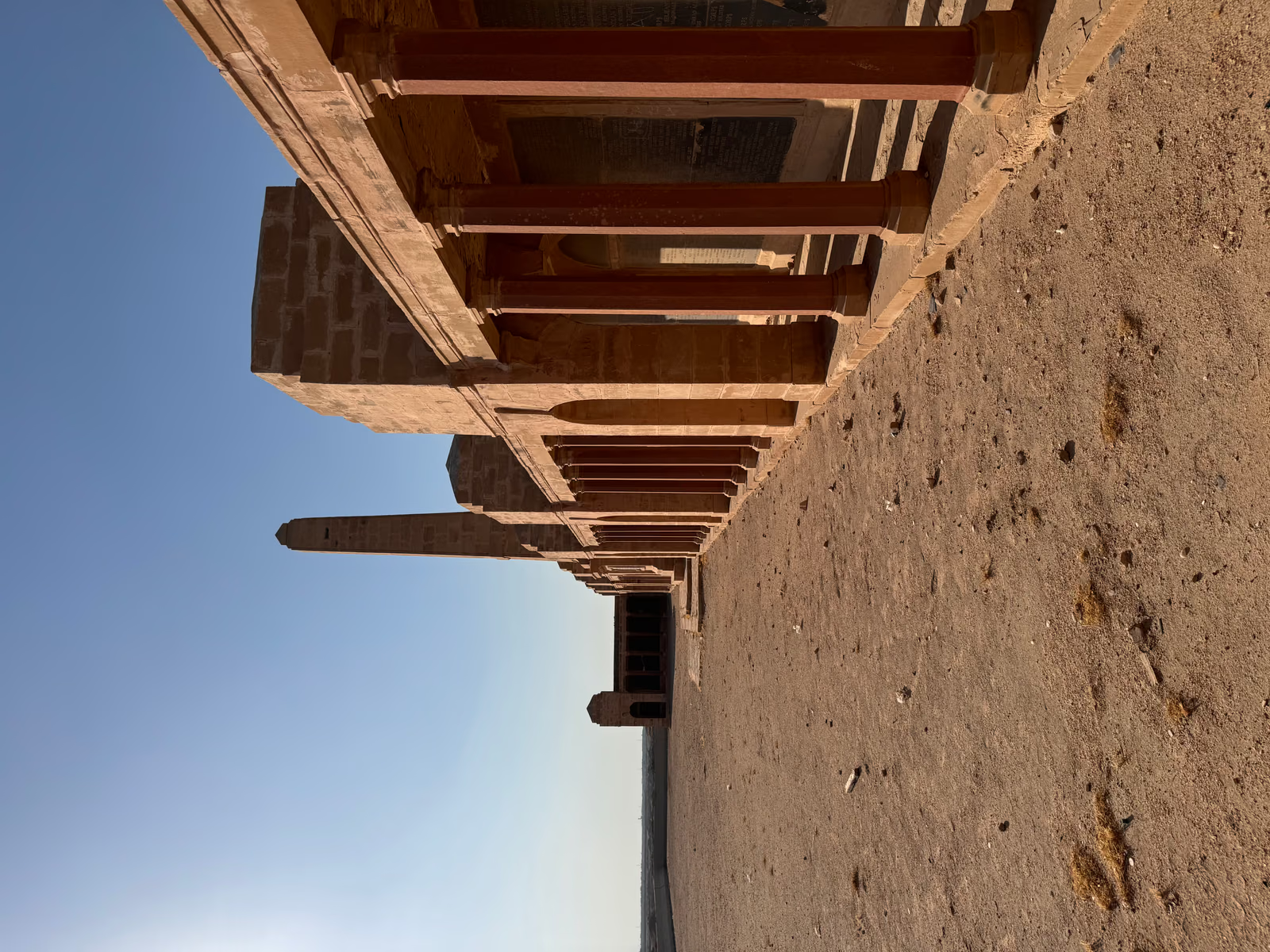
Unveiled in March 1929, the Basra Memorial is the Imperial War Graves Commission's record of the Mesopotamian campaign, in which Britain invaded Ottoman Iraq and then governed it under mandate. It names the missing of 1914 to 1921 across sixty-eight panels, and the way it names them is part of its history: of 40,682 dead commemorated, 7,385 British personnel and Indian officers are listed individually, while 33,256 Indian non-commissioned soldiers appear only by unit. Edward Prioleau Warren, an English Gothic Revivalist with almost no other work outside Britain, gave it a long stone-and-brick colonnade around a court. The building has since been moved once and left almost unvisitable, so that a monument built to make a war legible has itself become hard to read.
The memorial originally stood about eight kilometres north of Basra, near the Shatt al-Arab. In 1997 the Iraqi government moved the entire structure south-west, away from the river and onto ground that had been a battlefield of the 1991 Gulf War. The Commonwealth War Graves Commission lost regular access to the site during the wars that followed; the Daily Telegraph reported vandalism in 2013, with the Cross of Remembrance and a number of bronze plaques missing, and the surrounding land has been worked for gravel and sand. Around sixty-two of the sixty-eight panels are reported to survive and remain readable.
Wikidata Q6967066 · Commons: File:Basra Memorial Side View.jpg · Photo: BMarinca · Licence: CC BY-SA 4.0