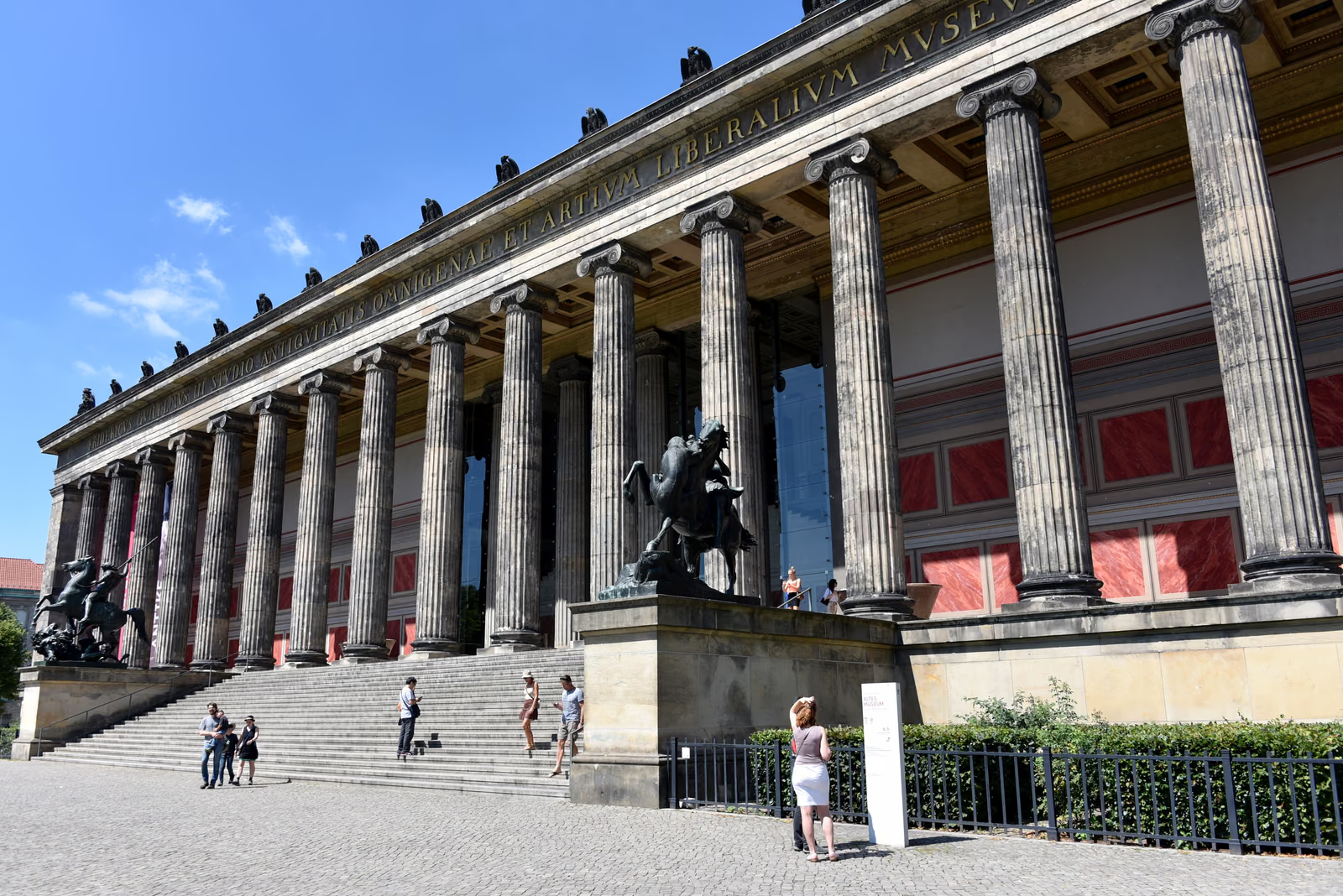
Schinkel had studied under Friedrich Gilly and began as a painter before Prussia's post-Napoleonic reconstruction gave him architecture as his real practice. King Frederick William III approved his design for a public museum on the Lustgarten in 1823; the cornerstone was laid on 9 July 1825 and the museum opened on 3 August 1830, the first in Prussia built expressly to display art to the public rather than a royal household. The plan sets a two-storey block, containing picture galleries above and antiquities below, behind a screen of eighteen fluted Ionic columns spanning the entire width of the façade — the portico is not an entrance porch but an open loggia, a place to stand and look back across the Lustgarten before entering. A broad open staircase rises between the columns to a terrace, and at its centre a top-lit rotunda twenty-three metres high, ringed by twenty Corinthian columns, quotes the Pantheon directly. Eighteen sandstone eagles crown the entablature. American bombing and a 1945 ammunition explosion gutted the building; it was rebuilt in stages from 1951 to 1966, and the rotunda's murals were restored in 1982. Museum Island became a UNESCO World Heritage Site in 1999.
Wikidata Q156722 · Commons: File:Altes Museum in Berlin, Germany.jpg · Photo: Osama Shukir Muhammed Amin FRCP(Glasg) · Licence: CC BY-SA 4.0