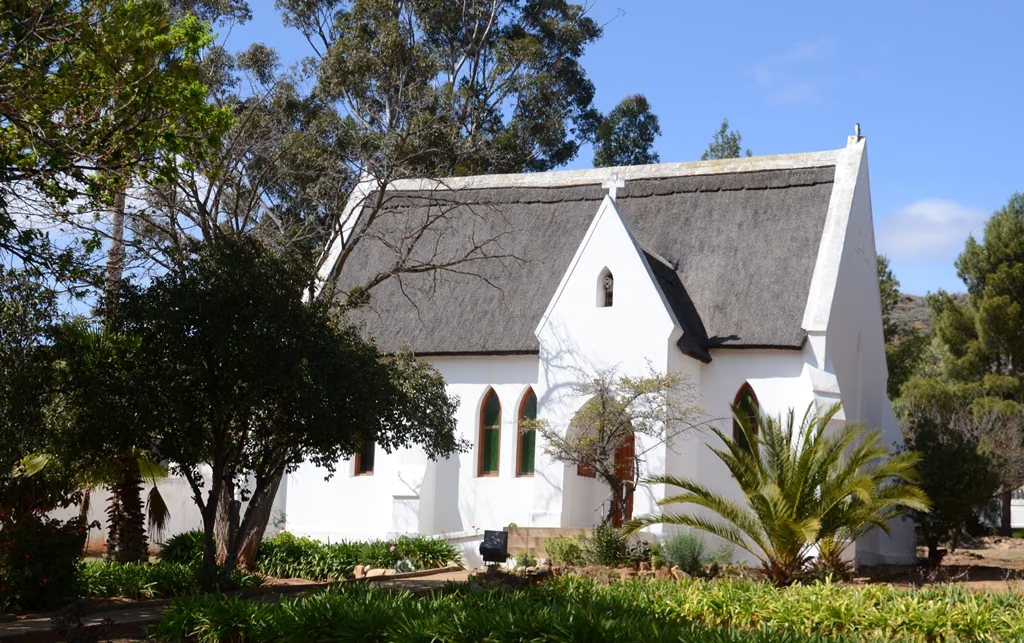
All Saints was built in 1869 at Uniondale in the Western Cape, one of at least forty churches attributed to Sophy Gray across the twenty-five years her husband was bishop of Cape Town. It is typical of her manner, and shows how little that manner amounted to simple copying. The plan sets a nave twice the width of the chancel; the corners are held by diagonal buttresses; three narrow lancets light the east wall; and the roof, pitched at more than fifty-five degrees, is thatched and carried on twelve scissor trusses. The steep pitch is English ecclesiological Gothic, out of the pattern books she packed in 1847, but the thatch and the local stone are Cape practice, and the building belongs to neither place exactly. Her authorship of these churches is contested — only eleven of her drawings survive — and the debate is set out in the dossier's sources. All Saints is a declared national heritage site.
Robert Gray was sent to Cape Town in 1847 to build a colonial diocese covering the Cape, the Orange Free State, Natal, Tristan da Cunha and St Helena. Ten Anglican churches stood in South Africa when the Grays arrived; sixty-three stood when he died twenty-five years later, and at least forty of the new ones are attributed to Sophy Gray. The building programme followed British settlement across the colony. The couple's own household at Bishopscourt occupied a farm once held by Jan van Riebeeck, and Sophy Gray ran her school in its former slave quarters. All Saints was built in 1869 for the settler congregation of Uniondale.
Wikidata Q30621872 · Commons: File:Uniondale, All Saints Church.JPG · Photo: Suzi-k · Licence: CC BY-SA 3.0