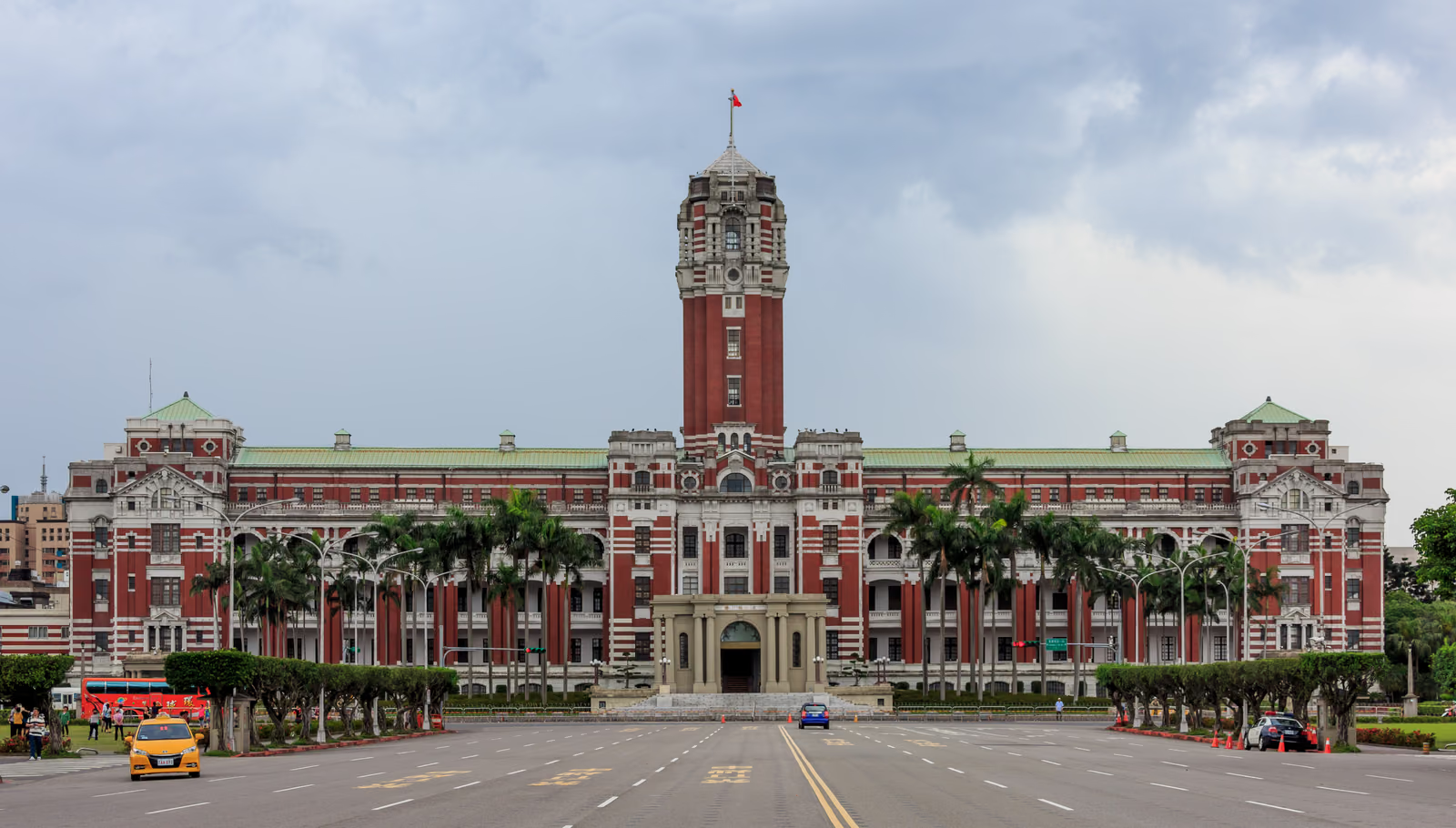
Uheiji Nagano was a pupil of Kingo Tatsuno and, for most of his career, the house architect of a bank. He entered the Bank of Japan as an engineer in 1897 and designed or supervised its Osaka, Kyoto and Otaru branches; after fifteen years in private practice he returned in 1927 to run the head-office extension, which was finished the year after his death. His idiom was the classicism the Meiji state used to look solvent: masonry orders, rusticated bases, disciplined symmetry. He took the leading award in the competition for the Office of the Governor-General of Taiwan, generally counted as Japan's first open architectural contest, though the executed building was substantially revised in Tokyo. In 1917 he was elected first president of the Japan Institute of Architects, and pressed for legislation to make architecture a licensed profession.