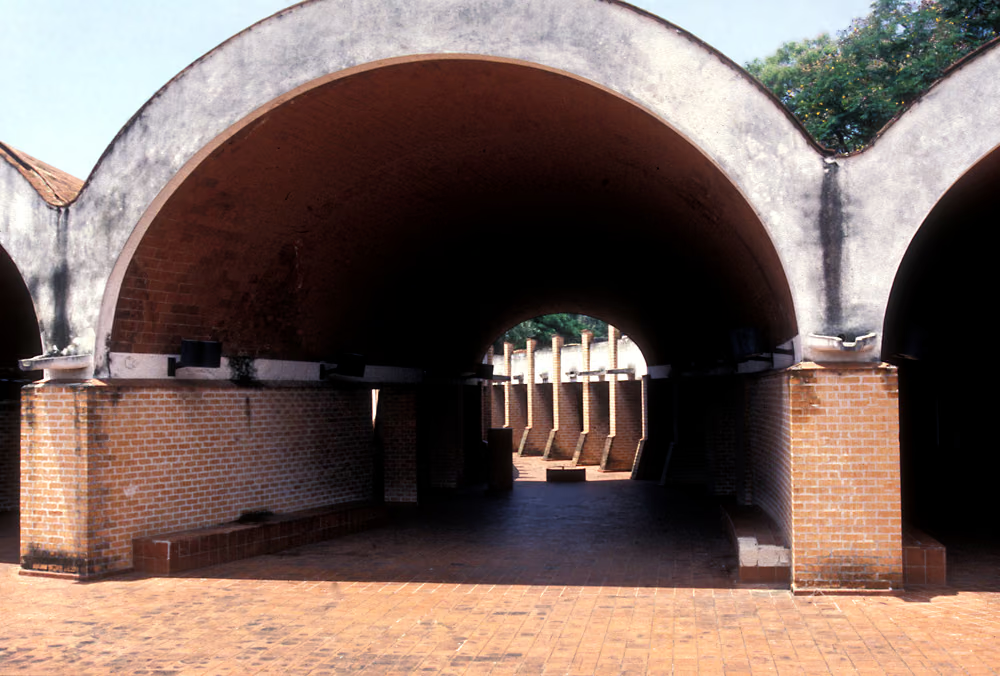
Born in Camagüey, Porro returned to Cuba after the revolution of 1959 and was chosen by Fidel Castro to lead the design of the National Art Schools, the commission that defines him. Working with the Italians Roberto Gottardi and Vittorio Garatti, he set the project against the International Style, which the three read as the architecture of capitalism, and looked instead to Catalan vaulting, to Antoni Gaudí and to Afro-Cuban form. The US embargo, which made rebar and Portland cement expensive, turned that preference into a method: brick and terracotta, vaulted. Porro's School of Plastic Arts is planned as an archetypal African village of oval, top-lit studios strung along curving colonnades. He left Cuba in 1966 as the schools fell from favour, settled in Paris, and continued to build in France; he died there in 2014.