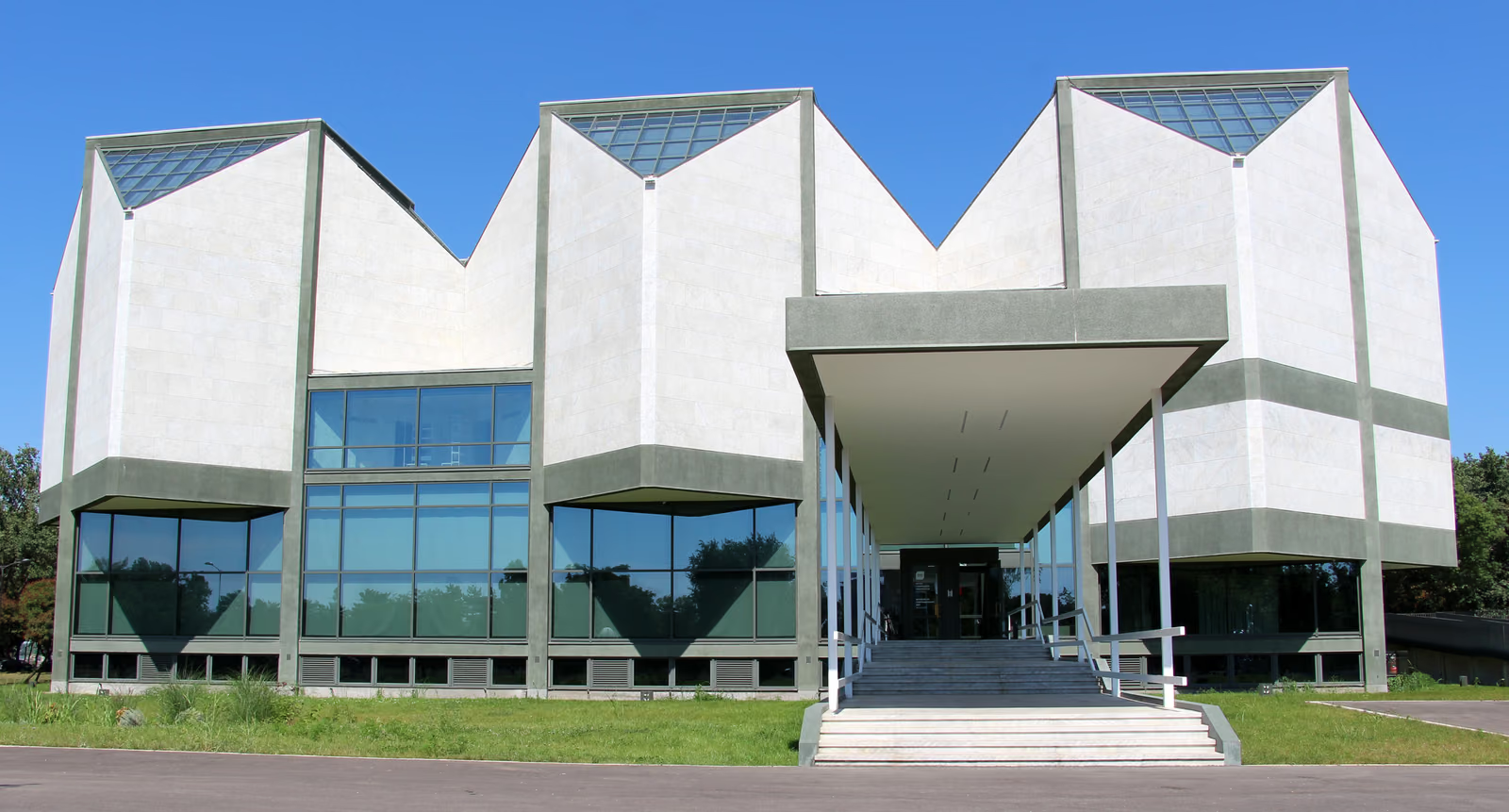
Raspopović graduated in Belgrade and spent her first decade inside the Yugoslav state design enterprises, where the work was industrial and unglamorous: a textile mill at Loznica, factory complexes at Jagodina, a cold store near Tetovo, a tuberculosis hospital at Prizren, the second phase of Belgrade airport, transmitter stations at Zlatibor. That grounding in production buildings shows in the two works that made her name. From 1960 she partnered Ivan Antić on the Museum of Contemporary Art in New Belgrade and the 21 October Museum at Kragujevac, both built from a repeated geometric cell — a faceted crystal in Belgrade, a cluster of cubes in Kragujevac — resolved with the flat efficiency of a factory shed. The partnership was short and produced nothing else. She was still consulting on the museum's restoration in her eighties.