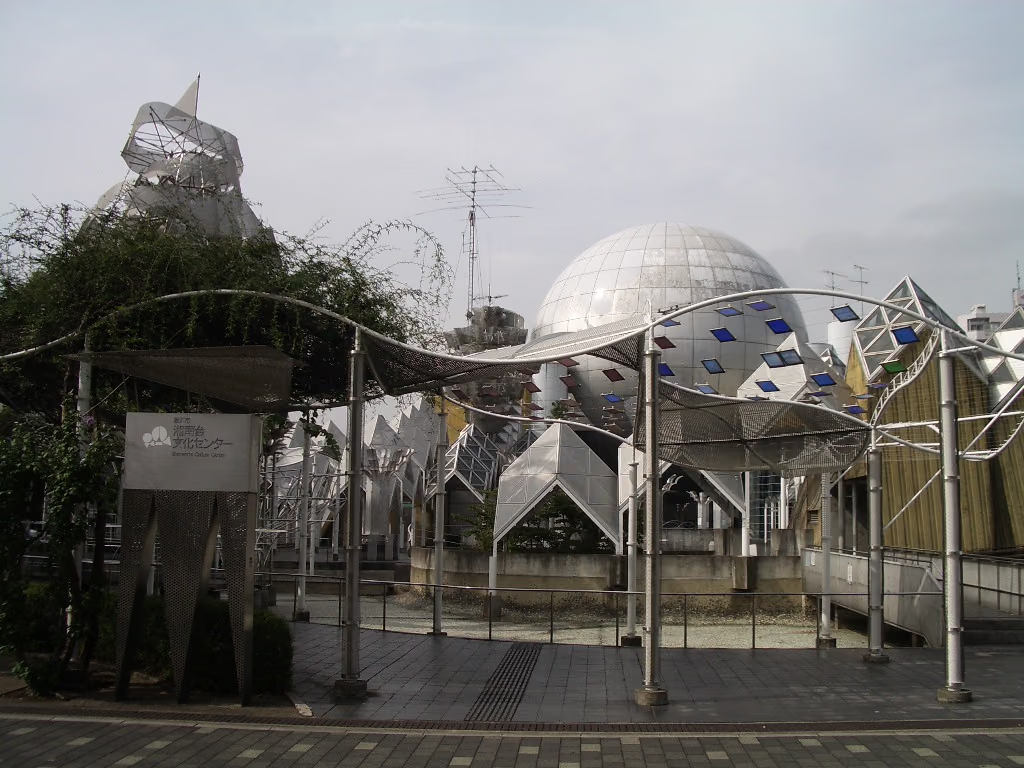
Itsuko Hasegawa graduated in architecture from Kanto Gakuin University in 1964, worked for Kiyonori Kikutake, then spent seven years with Kazuo Shinohara at the Tokyo Institute of Technology before opening her own studio in Tokyo. She describes her work as "second nature": buildings that behave like landscape and are shaped by the way a particular community actually lives. In practice that means perforated aluminium screens, light steel frames and metal spheres and canopies assembled into something closer to a park than a monument. She ran unusually long consultations with the residents who opposed the Shōnandai centre, and afterwards directed its children's museum for ten years. In 2018 she received the inaugural Royal Academy Architecture Prize, whose panel called her one of Japan's most important architects and noted how little recognised she had been.