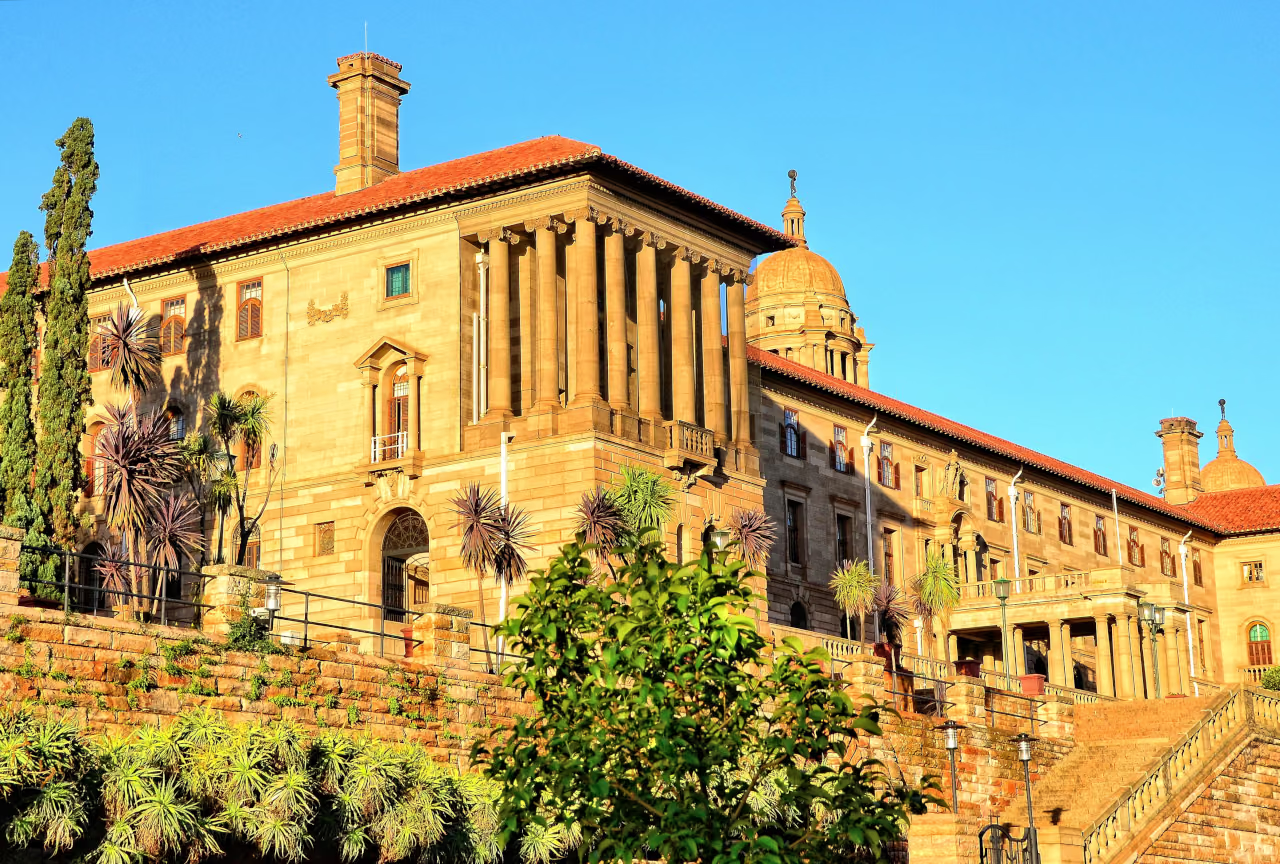
Herbert Baker trained under his cousin in Kent and at the Royal Academy Schools before sailing for Cape Town in 1892, where one of his first commissions was to rebuild Cecil Rhodes's house, Groote Schuur, after a fire. Rhodes sent him to Italy, Greece and Egypt to study classical architecture, and the Cape Dutch and Mediterranean idiom Baker brought back from that education, worked in local stone, made him the dominant architect of British South Africa for two decades: Rhodes Memorial and Rhodes House, banks, churches, and the semi-circular Union Buildings that he gave Pretoria as the new seat of a union built on excluding its Black majority from citizenship. He left South Africa in 1912 to design New Delhi's Secretariat buildings with Edwin Lutyens, later added the Bank of England and Tyne Cot Cemetery to his English work, was knighted in 1926, and died in England in 1946.